
What is a Cleaning Eye
A cleaning eye is a removable access fitting installed in drainage pipework to allow inspection, rodding and the removal of blockages without dismantling the pipe. It normally consists of an access opening closed by a screw cap, plug or removable cover. When opened, it provides a point through which suitable drain-cleaning equipment can be introduced.
In UK plumbing and drainage terminology, the fitting is also commonly called an access eye, rodding eye or cleaning access point. Cleaning eyes are particularly useful in above-ground soil and waste pipework, at the base of vertical stacks and in accessible sections of drainage systems. They provide maintenance access where a conventional inspection chamber would be unnecessary or impractical.
Although a cleaning eye is a relatively small component, its position and accessibility can significantly affect how easily a drainage system can be maintained. A correctly installed access fitting allows engineers to investigate localised obstructions while reducing the need to disconnect pipework or remove sanitary fittings.
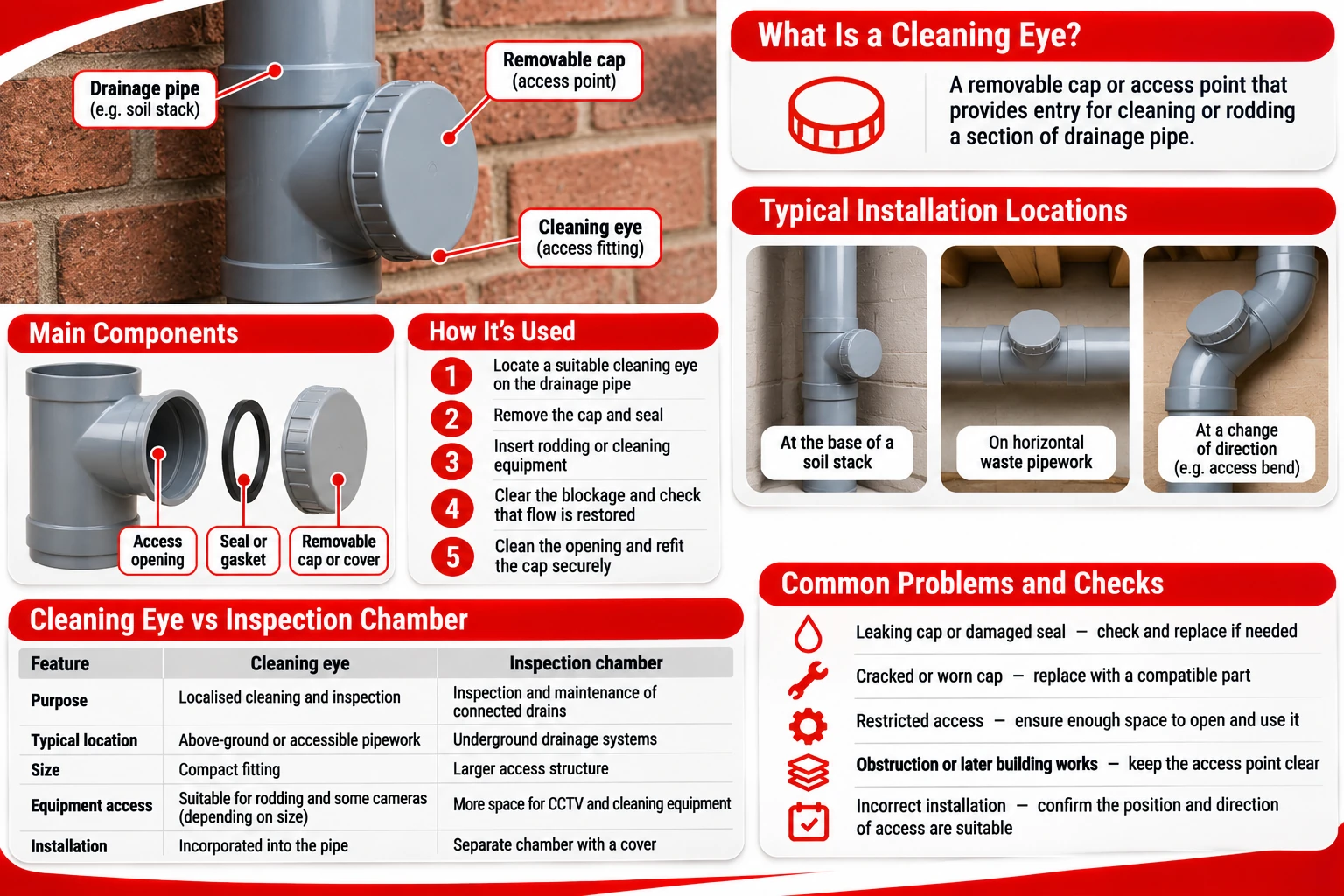
What Does a Cleaning Eye Look Like and How Does It Work?
A cleaning eye is usually incorporated into a specially manufactured pipe fitting, such as an access bend, access branch or access pipe section. The opening is sealed during normal operation and can be opened when cleaning or inspection is required.
In plastic drainage systems, access fittings commonly use threaded caps or removable covers with sealing arrangements. Cast iron systems may have bolted access plates or other removable closures. The precise construction depends on the manufacturer, pipe diameter and intended application.
A typical cleaning eye has several components:
-
Access opening: Provides an entry point into the pipe for suitable inspection or cleaning equipment.
-
Removable cap or cover: Closes the opening during normal drainage operation.
-
Seal or gasket: Helps maintain a watertight and odour-resistant closure where specified by the fitting design.
-
Fitting body: Connects the access point to the surrounding drainage pipework.
-
Retaining mechanism: Holds the cover securely in place, using threads, bolts or another approved arrangement.
The access opening is generally smaller than the full internal diameter of the pipe. This means that a cleaning eye provides maintenance access but does not necessarily accommodate every type of drain-cleaning equipment.
For example, a small access fitting on a 40 mm waste pipe may allow a flexible cleaning cable to enter but may not accommodate larger rodding equipment. A purpose-designed access fitting on a 110 mm soil pipe can provide access for a wider range of suitable tools, depending on the opening and the direction of entry.
The fitting must remain securely closed during normal operation. A damaged cap, missing seal or improperly tightened cover can allow wastewater to escape or foul air to enter the surrounding space.
Where Are Cleaning Eyes Installed in Drainage Systems?
Cleaning eyes are installed where maintenance access is required and where the opening can be reached safely. Their position should allow cleaning equipment to enter the pipe and travel towards the section most likely to require attention.
In buildings, cleaning eyes are frequently associated with soil stacks, waste pipes and changes in pipe direction. They may also be incorporated into drainage runs where access from another suitable point is unavailable.
Common installation locations include:
-
At the base of a soil stack, where access may be needed to clear obstructions in the lower section.
-
On accessible horizontal waste pipework, particularly where the pipe arrangement makes cleaning difficult.
-
Near certain changes in direction, using suitable access fittings that permit equipment to enter the relevant pipe section.
-
At selected junctions, where maintenance access is necessary for connected drainage branches.
-
Within accessible service areas or ducts, provided sufficient working space remains around the fitting.
The location must be considered alongside the direction of wastewater flow. An access opening positioned on the wrong side of a bend may make it difficult to guide a rod or cleaning cable towards the obstruction.
Cleaning eyes should not be hidden permanently behind plasterboard, fixed cabinetry or other finishes without suitable access provisions. If an access fitting is enclosed within a service duct, an appropriately positioned access panel may be needed to permit maintenance.
In England, Approved Document H provides guidance on drainage access arrangements under the Building Regulations. It addresses the need for suitable access to clear blockages and maintain drainage systems. The appropriate access arrangement depends on the pipe layout, location and type of drainage installation.
The following table shows how cleaning eyes compare with other common drainage access points.
| Access type | Typical location | Main purpose | Access characteristics |
|---|---|---|---|
| Cleaning eye | Above-ground soil or waste pipework | Localised cleaning and inspection | Removable cap or cover |
| Rodding eye | Selected drainage pipe locations | Introduction of drain-cleaning rods | Designed to provide rodding access |
| Access bend | Change in pipe direction | Cleaning around a bend | Access opening incorporated into the fitting |
| Inspection chamber | Underground drainage system | Inspection and maintenance of connected drains | Chamber accessed through a removable cover |
| Manhole | Larger or deeper drainage installations | Inspection and maintenance | Chamber designed for the relevant access requirements |
The terms cleaning eye and rodding eye are sometimes used interchangeably. However, the size, position and design of a particular fitting determine which cleaning methods it can accommodate.
How Is a Cleaning Eye Used to Clear a Blocked Drain?
A cleaning eye provides a direct route into the pipe, allowing an engineer to investigate a blockage without removing sections of the drainage installation. The method used depends on the pipe diameter, the suspected obstruction and the accessibility of the fitting.
Before opening the cap, the engineer should consider whether wastewater may be retained behind the blockage. If the pipe is full or partially surcharged, removing the cover can cause an uncontrolled discharge. Suitable precautions are particularly important on soil pipes carrying sewage.
A typical cleaning procedure involves:
-
Identifying the affected drainage section and locating a suitable cleaning eye.
-
Checking for signs of retained wastewater and preparing to contain any discharge.
-
Carefully removing the access cap or cover.
-
Introducing suitable rodding, flexible cleaning or inspection equipment.
-
Working towards the obstruction without applying excessive force to the pipe or fitting.
-
Removing or dislodging the blockage and checking that wastewater flows correctly.
-
Cleaning the access opening, inspecting the seal and securely refitting the cover.
Flexible drain-cleaning cables can be useful in smaller waste pipes, particularly where bends make rigid rods unsuitable. Larger drainage pipes may accommodate conventional rods or specialist mechanical equipment, provided the access opening and pipe arrangement are suitable.
A cleaning eye can also provide access for certain inspection cameras. However, the opening must be large enough for the camera head, and the equipment must be capable of navigating the pipe geometry.
High-pressure water jetting requires particular care. Not every cleaning eye is designed to accommodate jetting equipment, and introducing a jetting hose through an unsuitable opening can create a risk of wastewater discharge or damage. The engineer must assess the fitting, pipework and cleaning equipment before proceeding.
Once the obstruction has been removed, the cap should be refitted using the correct sealing components. Reusing a damaged gasket or leaving a threaded cover improperly seated can result in leaks during subsequent use.
Cleaning Eye vs Inspection Chamber: What Is the Difference?
Both cleaning eyes and inspection chambers provide access to drainage systems, but they are designed for different situations.
A cleaning eye is a relatively compact fitting incorporated directly into a pipe. It provides an opening for cleaning or limited inspection but does not create a separate chamber around the drainage connection.
An inspection chamber is a larger access structure, usually installed in an underground drainage system. It may provide access to several connected pipes and allow engineers to inspect junctions, channels and changes in direction.
The main differences are:
-
Size: Cleaning eyes are compact fittings, while inspection chambers occupy a separate underground space.
-
Location: Cleaning eyes are common in accessible pipework, whereas inspection chambers are generally associated with below-ground drainage.
-
Equipment access: Inspection chambers can provide more room for introducing suitable CCTV and cleaning equipment.
-
Maintenance: Cleaning eyes allow direct access to a selected pipe section, while chambers may serve multiple drainage runs.
-
Installation: A cleaning eye is incorporated into the pipework, whereas an inspection chamber requires a suitable chamber structure and cover.
Neither arrangement is automatically preferable. A cleaning eye may be entirely appropriate for a short, accessible waste pipe, while an inspection chamber may be necessary for a more complex underground drainage layout.
The important consideration is whether the access arrangement allows the drainage system to be inspected and cleared effectively.
Common Problems with Cleaning Eyes
Cleaning eyes are generally simple components, but they can develop faults that affect the drainage system’s performance or make maintenance difficult.
One common problem is a leaking access cap. This can occur when a seal deteriorates, the cover becomes damaged or the fitting is not correctly closed after cleaning. On a soil pipe, leakage may also allow unpleasant odours to enter a building.
Another problem is restricted access. A cleaning eye may be installed too close to a wall, floor or other obstruction, leaving insufficient room to remove the cap or introduce cleaning equipment. This can make an otherwise serviceable access point practically unusable.
Typical defects include:
-
Damaged or missing sealing gaskets.
-
Cracked plastic caps or access fitting bodies.
-
Corroded bolts on older metallic access covers.
-
Worn or damaged threads preventing secure closure.
-
Covers obstructed by later building alterations.
-
Incorrectly positioned access openings that make rodding difficult.
A damaged cleaning eye should be repaired using compatible replacement components. Where the fitting body itself is cracked or distorted, replacing the complete access fitting may be necessary.
The fitting should not be sealed permanently with adhesive, mortar or another material that prevents future removal. Doing so defeats its purpose and may create additional difficulties when the drainage system needs maintenance.
Routine inspection is particularly useful where cleaning eyes are located in service ducts, commercial premises or other areas where leakage might remain unnoticed.
A cleaning eye is an important maintenance feature rather than a device that prevents blockages. Its value lies in providing safe, practical access to the drainage pipe when cleaning or inspection becomes necessary. Correct positioning, suitable equipment access and a reliable seal help ensure the fitting remains useful throughout the service life of the drainage system.