

Key Points:
- Foul water drainage is strictly regulated in the UK due to its impact on public health, property safety, and the environment.
- Foul and surface water systems must remain separate to prevent pollution, flooding, and compliance issues.
- Older and off-mains properties often require closer inspection to confirm regulatory compliance.
- Early assessment and correct drainage solutions reduce long-term risk, disruption, and cost.
In the UK, foul water drainage is not simply a matter of pipes carrying waste away from a property. It is a regulated system governed by building regulations, environmental law, and local authority requirements. How wastewater is collected, transported, and discharged has direct implications for public health, environmental protection, and legal compliance. For this reason, foul water drainage must be designed, maintained, and altered in line with clearly defined rules, not treated as an informal or secondary part of a building.
When foul water drainage is installed incorrectly or allowed to deteriorate, the risks can be significant for both homeowners and businesses. Common consequences include recurring blockages, internal flooding, contamination of land or nearby watercourses, and costly enforcement action. In more serious cases, non-compliant drainage can invalidate insurance claims or delay property transactions, leaving owners responsible for remedial works that could have been avoided with early intervention.
Drainage regulations become especially critical during key moments in a property’s lifecycle. Repairs, extensions, and refurbishments often trigger the need to review existing drainage arrangements, particularly in older buildings. The same applies during property sales, when surveys or searches may uncover non-compliant foul water connections. Understanding how foul water drainage is regulated in the UK helps property owners make informed decisions, reduce risk, and ensure their drainage systems remain legally sound and fit for purpose.
What Is Foul Water Drainage?
Foul water drainage refers to the system designed to collect and remove wastewater that has been used inside a property and is no longer safe to release into the environment without treatment. This type of water contains waste, residues, and contaminants produced through everyday domestic or commercial activities, which is why it is subject to strict control under UK drainage regulations.
Typical sources of foul water within a property include:
- Toilets
- Sinks used for food preparation or washing
- Baths and showers
- Washing machines
- Dishwashers
Water from these outlets is classed as contaminated because it can contain human waste, food particles, detergents, grease, and chemical residues. If discharged incorrectly, it can pose health risks and cause pollution, which is why it must be managed through an approved foul water drainage system rather than allowed to enter surface water drains or the ground.
In most UK properties, foul water is conveyed through underground drainage pipes into the public sewer network, where it is transported to a sewage treatment facility for processing. In locations where a connection to the mains sewer is not available, foul water is instead directed to a private system such as a septic tank or a sewage treatment plant, both of which are regulated and must operate in accordance with national and local requirements.
Our Services:
What Is Surface Water Drainage?
Surface water drainage deals with rainwater that falls onto a property and needs to be managed safely to prevent flooding or waterlogging. Unlike foul water, surface water has not been used inside the building and does not come into contact with waste or pollutants under normal conditions.
Surface water typically originates from external areas such as:
- Roofs and guttering systems
- Patios and paved areas
- Driveways and hardstandings
The purpose of a surface water drainage system is to collect this rainwater and direct it away from buildings and structures. In the UK, surface water is usually discharged into soakaways, dedicated surface water drains, or natural watercourses such as streams and rivers. In some urban areas, it may connect to a separate surface water sewer designed specifically to handle rainfall.
Because surface water has not been contaminated by domestic or commercial use, it does not require treatment at a sewage treatment works. This is why regulations strictly prohibit it from entering foul water systems, where it can cause overloading and increase the risk of flooding and sewer surcharge.
| Aspect | Surface Water Drainage |
| Type of water | Rainwater only |
| Typical sources | Roofs, patios, driveways |
| Level of contamination | None under normal conditions |
| Treatment required | No |
| Usual discharge routes | Soakaways, surface water drains, watercourses |
Understanding how surface water drainage works, and how it differs from foul water drainage, is essential for ensuring both systems operate efficiently and remain compliant with UK regulations.
Foul Water vs Surface Water: Key Differences Explained
Although foul water and surface water are both managed through drainage systems, they are treated very differently under UK regulations. This distinction exists because the risks they pose, and the way they interact with the environment, are fundamentally not the same. For this reason, regulations address them separately and impose different technical and legal requirements.
The key differences can be clearly understood through a direct comparison:
| Aspect | Foul Water | Surface Water |
| Contamination | Contains human waste, food residues, detergents, grease, and chemicals | Uncontaminated rainwater under normal conditions |
| Treatment requirements | Must be treated at a sewage treatment facility or approved private system | No treatment required |
| Discharge routes | Public sewer, private sewer, septic tank, or sewage treatment plant | Soakaways, surface water drains, or natural watercourses |
| Regulatory control | Strictly regulated due to pollution risk | Regulated mainly for flood prevention and flow control |
The rules governing these systems are different because foul water presents a direct risk to public health and the environment if released untreated. Even small volumes discharged incorrectly can cause pollution, attract enforcement action, and lead to significant remedial costs.
Surface water, by contrast, is managed to prevent flooding and erosion rather than contamination. Allowing it to enter foul water systems increases pressure on sewers and treatment works, which is why regulations require the two systems to remain separate wherever possible. Understanding these differences is essential when assessing compliance, planning building work, or investigating drainage problems.
Why Foul and Surface Water Drainage Must Be Kept Separate
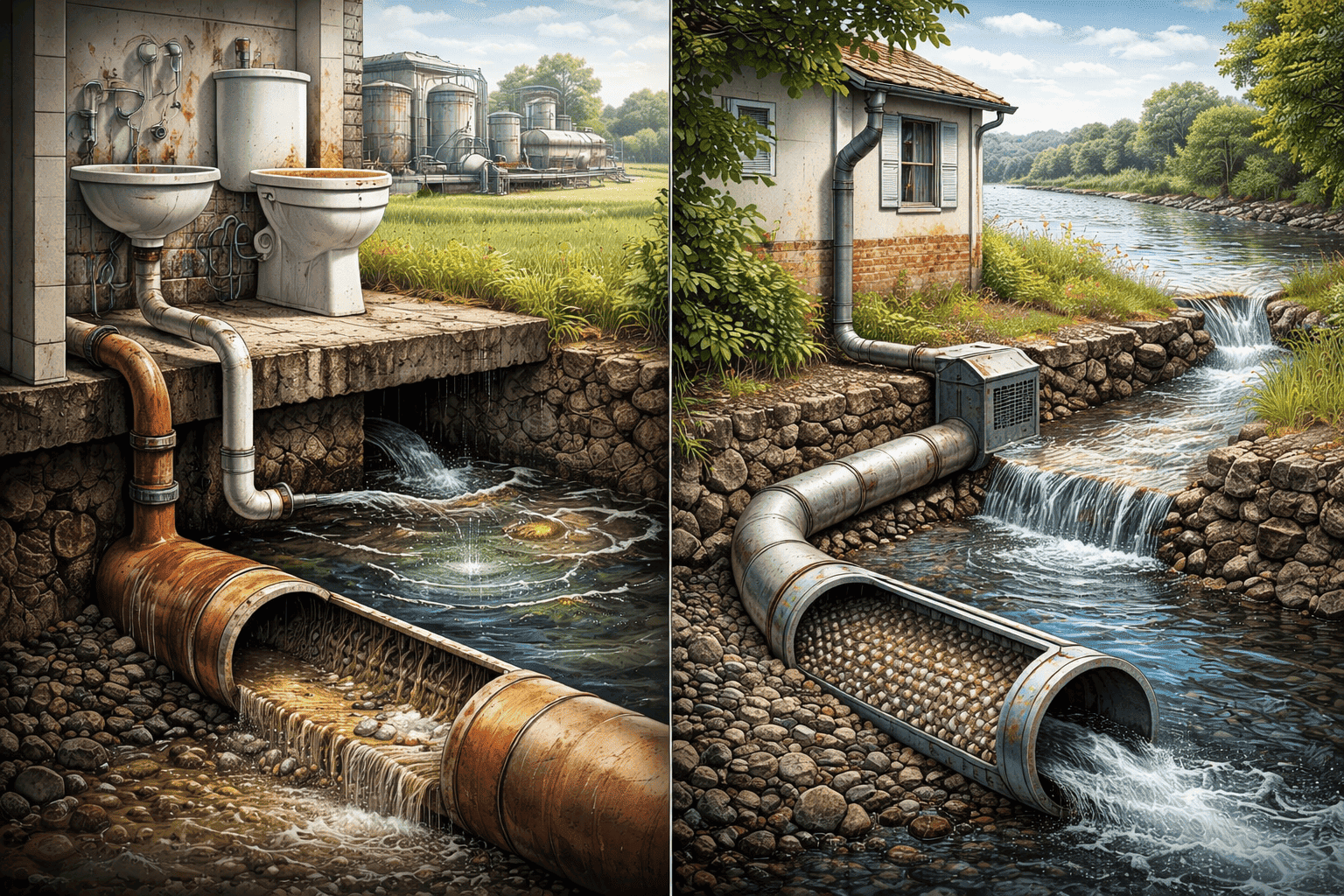
Keeping foul water and surface water drainage systems separate is a fundamental requirement under UK regulations. This separation is not optional or best practice advice. It exists to protect the environment, prevent system failure, and clearly define responsibility when problems occur.
When foul water enters surface water systems, the environmental consequences can be severe. Surface water drains often discharge directly into rivers, streams, or other natural watercourses. If contaminated wastewater is allowed to follow this route, it can pollute ecosystems, harm wildlife, and create public health risks downstream. Even small, repeated discharges can result in long term environmental damage and regulatory action.
Mixing surface water into foul water systems creates a different set of problems. During heavy rainfall, large volumes of surface water can overwhelm foul sewers and treatment works, leading to surcharge and flooding. This can result in foul water backing up into properties, overflowing manholes, and emergency discharges into the environment. These incidents are disruptive, costly, and entirely preventable when systems are correctly separated.
Property owners also carry clear responsibility for how drainage is connected within their boundary. If a misconnection exists, whether historic or recent, liability usually rests with the owner rather than the authority. Common risks associated with mixed systems include:
- Pollution of nearby watercourses
- Internal or external flooding during heavy rainfall
- Enforcement notices and required remedial works
- Insurance complications or refused claims
The argument that a system has always worked this way is not a valid defence. Many older properties were built before modern regulations existed, but this does not remove the obligation to comply when issues arise, alterations are made, or problems are identified. Regulations are applied based on current standards and environmental risk, not historical convenience.
Can Foul and Surface Water Drainage Be Combined?
In some UK properties, particularly older buildings, foul water and surface water drainage were historically combined into a single system. At the time these properties were constructed, separate drainage networks were not always required or available, and combined sewers were a common solution. As a result, many owners only become aware of a combined arrangement when problems occur or investigations are carried out.
A combined system may still be considered acceptable in limited circumstances. This usually applies where separation is not reasonably practicable, and where the combined discharge connects to a public sewer designed to receive both foul and surface water. In such cases, the arrangement must not increase the risk of pollution or flooding, and it must be recognised and approved as part of the existing drainage infrastructure.
However, combined drainage is often classed as non-compliant under current standards. This is especially true where surface water has been added to a foul system during later alterations, or where foul water is allowed to discharge into surface water drains. Situations that commonly trigger non-compliance include:
- Extensions or refurbishments that introduce new drainage connections
- Patio or driveway works that divert rainwater into foul drains
- Incorrect connections made during bathroom or kitchen upgrades
Misconnections after building work are one of the most frequent causes of drainage compliance issues. These errors are often unintentional but can have serious consequences, including flooding, pollution, and enforcement action. Identifying whether a combined system is original, approved, or the result of later misconnections is a critical step in determining whether remedial work is required.
DrainBoss Commentary: From practical experience, combined drainage systems are most often discovered after building works or recurring drainage problems. In many cases, the issue is not the original system itself but later misconnections that were never identified or corrected. Early inspection and clarification can prevent costly remedial work and avoid compliance issues escalating further.
UK Foul Water Drainage Regulations Explained
UK foul water drainage is governed by a clear regulatory framework designed to protect public health, prevent pollution, and ensure drainage systems function safely over the long term. These regulations apply to new developments, alterations, and in many cases existing properties where problems or changes arise.
Building Regulations Part H
Building Regulations Part H sets out the legal requirements for drainage and waste disposal in England and Wales. Its purpose is to ensure that foul water and rainwater are removed from buildings safely and without risk to people, property, or the environment.
In simple terms:
- Part H1 covers foul water drainage. It defines how wastewater should be collected, the standards for pipework and connections, and where foul water is permitted to discharge.
- Part H3 deals with rainwater drainage. It focuses on managing rainfall to prevent flooding and overload of foul drainage systems.
Together, these sections establish the principle that foul water and surface water must be managed separately unless there is a justified and approved reason for them to be combined.
Order of Priority for Foul Water Discharge
Part H also defines an order of priority for how foul water should be discharged. Property owners are expected to follow this hierarchy and can only move down the list where higher options are not reasonably practicable:
- Public sewer
- Private sewer connected to a public sewer
- Septic tank or sewage treatment plant
- Cesspit, used only as a last resort
This hierarchy exists to minimise environmental risk and ensure wastewater receives the highest appropriate level of treatment. Deviating from this order without proper justification can result in non-compliance.
Role of the Environment Agency and Local Authorities
Regulatory oversight of foul water drainage is shared between national and local bodies, each with defined responsibilities:
- Monitoring environmental impact and pollution risk
- Requiring registration of certain private drainage systems
- Enforcing compliance where regulations are breached
Local authorities are typically responsible for building control approvals and compliance during construction or alteration works. The Environment Agency oversees environmental protection and private systems that discharge to ground or watercourses. Formal consent or approval is usually required when installing, upgrading, or significantly altering off-mains foul water systems, or when existing arrangements present a pollution risk.
Understanding how these bodies operate, and when approval is required, is essential for ensuring foul water drainage systems remain lawful and compliant.
Private Drainage Systems and Off-Mains Properties
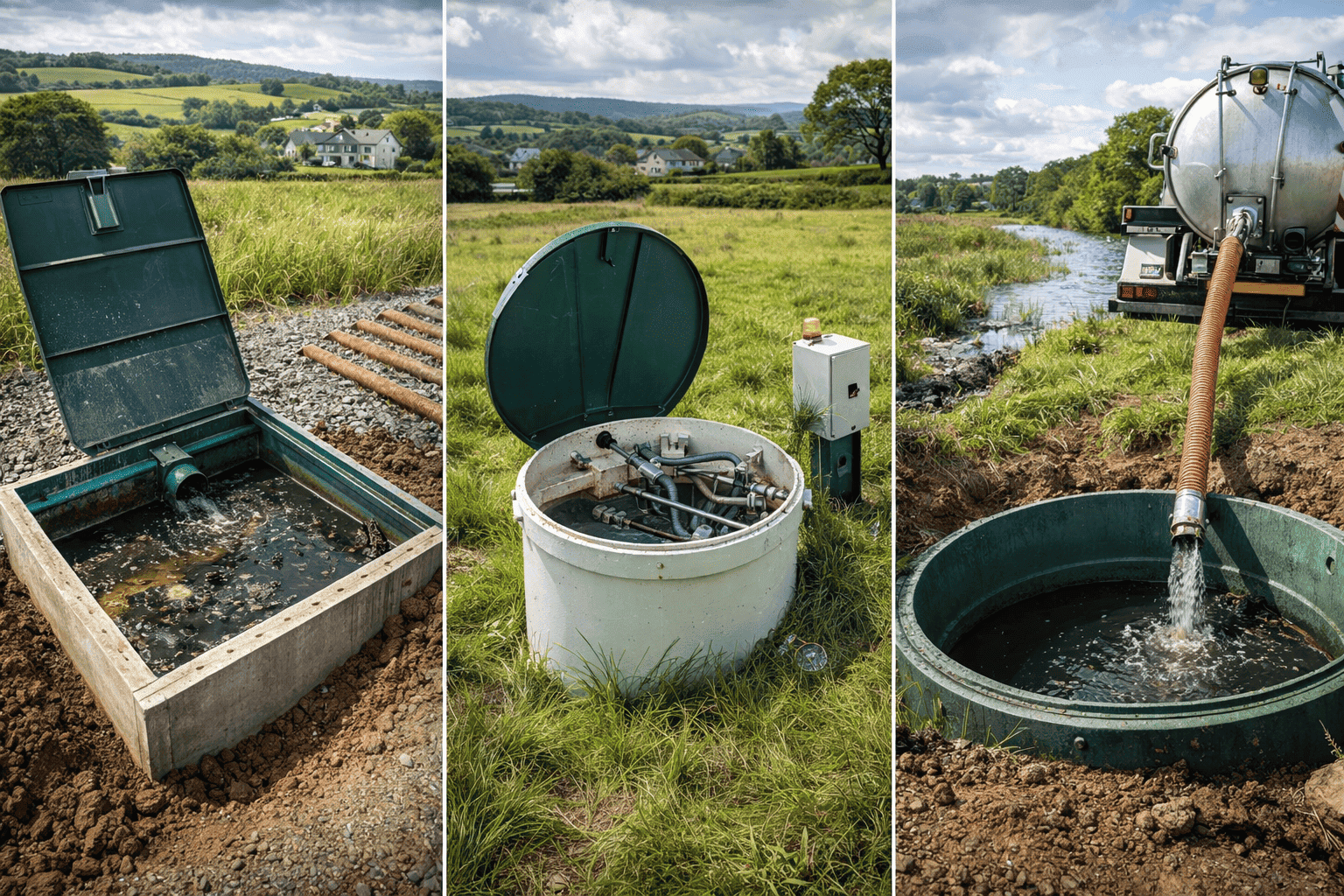
Properties that are not connected to the public sewer rely on private drainage systems to manage foul water. These arrangements are common in rural areas and at the edge of towns, and they are subject to specific regulatory requirements that differ from mains-connected drainage. Owners of off-mains properties carry direct responsibility for ensuring these systems operate correctly and remain compliant.
The most common types of private foul water systems include:
- Septic tanks, which separate solids from liquids and allow partially treated effluent to discharge to ground via a drainage field
- Sewage treatment plants, which provide a higher level of treatment and produce cleaner effluent suitable for controlled discharge
- Cesspits, sealed holding tanks that store waste and require regular emptying, used only where no other option is feasible
Each of these systems is regulated due to the risk of pollution if they fail or are incorrectly managed. Key regulatory requirements typically include proper installation, suitable discharge arrangements, ongoing maintenance, and in some cases formal registration or consent. Treatment systems must be appropriate for the size and use of the property, and discharge to ground or watercourses must not pose an environmental risk.
Many compliance issues arise not from the system itself, but from how it is used or maintained. Common owner errors include:
- Failing to maintain or empty systems at appropriate intervals
- Allowing surface water to enter foul water treatment systems
- Using systems that are undersized for the property’s actual occupancy
- Assuming older installations are automatically compliant
Private drainage systems can operate effectively for many years, but only when they are correctly specified, properly maintained, and reviewed when property use changes. Understanding these obligations is essential for avoiding pollution incidents, enforcement action, and unexpected upgrade costs.
Common Foul Water Drainage Problems and Compliance Issues
Problems with foul water drainage often develop gradually and are easy to dismiss until they become disruptive or costly. Many of the most common symptoms point to underlying compliance or design issues rather than isolated faults, which is why repeated short-term fixes rarely provide a lasting solution.
Recurring blockages are one of the clearest warning signs. While a single blockage may be caused by misuse or a local obstruction, repeated incidents usually indicate deeper problems such as poor pipe gradients, accumulated deposits, structural defects, or incorrect connections. Clearing the blockage without addressing the cause allows the issue to return.
Slow drainage is another common indicator of restricted flow within the system. This can result from long term build-up along pipe walls, partial collapses, or sections of pipe that do not meet current installation standards. Over time, reduced flow increases pressure within the system and raises the risk of surcharge during periods of high use or heavy rainfall.
Bad odours should never be ignored. Persistent smells often point to ventilation problems, damaged pipework, or trapped waste within the drainage system. These issues are not only unpleasant but can also indicate breaches that allow foul air or effluent to escape.
Backing-up and flooding represent the most serious failures. When foul water returns into properties or overflows externally, it is often due to system overload, misconnections, or long-standing defects that have not been properly resolved. At this stage, compliance and safety concerns become unavoidable.
A simple clearance approach does not work because it treats the symptom rather than the system. Without identifying why the problem developed in the first place, the same conditions remain in place. Long-term reliability and compliance depend on proper diagnosis, targeted repairs, and ensuring the drainage system functions as a whole rather than relying on repeated emergency interventions.
How to Check If Your Foul Water Drainage Is Compliant
Determining whether a foul water drainage system is compliant does not always require specialist knowledge at the outset. Many early indicators can be identified by property owners, while more detailed confirmation relies on professional inspection. Taking a structured approach helps distinguish between minor operational issues and deeper regulatory concerns.
Visual and Operational Warning Signs
There are several signs that homeowners or business owners may notice during normal use of a property. While none of these confirm non-compliance on their own, they often justify further investigation:
- Drains that regularly struggle to cope during normal use
- Gurgling sounds from toilets or sinks
- Persistent unpleasant smells inside or outside the building
- Manholes that surcharge or overflow after rainfall
- Areas of ground that remain wet or foul-smelling without clear cause
These symptoms often indicate restricted flow, incorrect connections, or structural defects within the drainage system. Ignoring them can allow minor faults to develop into compliance issues that are more difficult and expensive to resolve.
CCTV Drain Surveys
A CCTV drain survey is the most reliable way to assess foul water drainage compliance. By inspecting the internal condition and layout of the pipework, it provides objective evidence rather than assumptions based on surface symptoms.
This type of survey can identify:
- Misconnections between foul and surface water systems
- Cracked, collapsed, or displaced pipes
- Build-up of scale, debris, or grease
- Incorrect gradients or poorly installed sections
- Points of ingress from roots or external damage
CCTV surveys also produce detailed reports with footage, still images, and technical observations. These reports are commonly used for insurance claims, property purchases, and discussions with local authorities or building control. Having clear documentation allows issues to be addressed accurately and demonstrates due diligence where compliance is questioned.
DrainBoss Commentary: Many compliance issues are identified long before serious failure occurs, but early warning signs are often overlooked. In practice, recurring symptoms usually point to an underlying structural or regulatory issue rather than isolated misuse. Addressing these findings early allows corrective work to be planned calmly rather than under emergency conditions.
Professional Foul Water Drainage Services
Professional foul water drainage services focus on restoring function, ensuring compliance, and reducing long-term risk rather than providing temporary fixes. When applied correctly, these services support both the operational performance of the system and its alignment with current regulations.
Drain Cleaning and High-Pressure Jetting
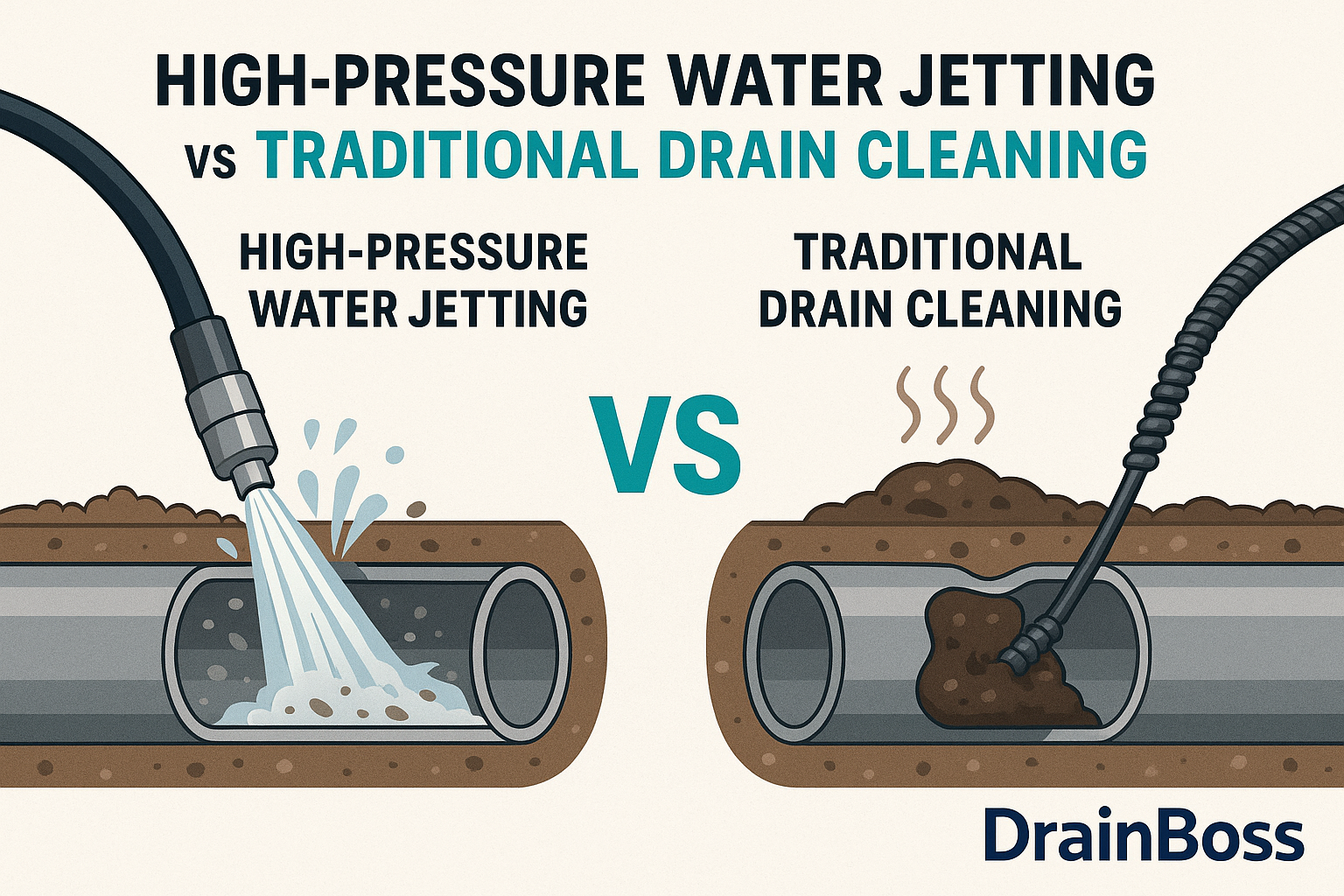
Drain cleaning and high-pressure jetting are typically used when flow is restricted or when systems show signs of recurring problems. These methods remove accumulated deposits such as grease, scale, silt, and debris that reduce pipe capacity over time.
Jetting is most effective when used as a preparatory step rather than a final solution. By fully cleaning the internal pipe surface, it allows the true condition of the drainage system to be assessed. This creates a clear baseline for inspection, repair, or further compliance work, rather than masking underlying defects.
Drain Repairs and No-Dig Solutions
Where cleaning alone is not sufficient, targeted repairs may be required to address structural or installation-related issues. Modern drainage work increasingly relies on no-dig techniques that minimise disruption while restoring integrity.
Common approaches include:
- Patch repairs to seal localised damage
- Drain relining to create a new internal pipe within the existing structure
These methods are often used to correct defects that affect compliance, such as cracked pipes, displaced joints, or sections that allow infiltration or leakage. By restoring structural integrity, they help bring drainage systems back in line with regulatory expectations without the need for excavation.
Support for Compliance and Upgrades
Beyond reactive repairs, professional drainage services also play a role in supporting ongoing compliance. This may involve correcting misconnections identified during inspections, upgrading older systems to meet current standards, or preparing documentation for inspections and approvals.
Support at this stage focuses on long-term reliability. By addressing root causes, ensuring correct connections, and aligning systems with regulations, property owners can reduce the likelihood of future failures, enforcement action, or unplanned remedial work.
Our Services:
Why Correct Foul Water Drainage Matters Long-Term
Correct foul water drainage is not only about meeting immediate regulatory requirements. It plays a critical role in protecting the long-term condition, value, and safety of a property. Systems that are properly designed and maintained reduce risk across multiple areas that often remain overlooked until problems arise.
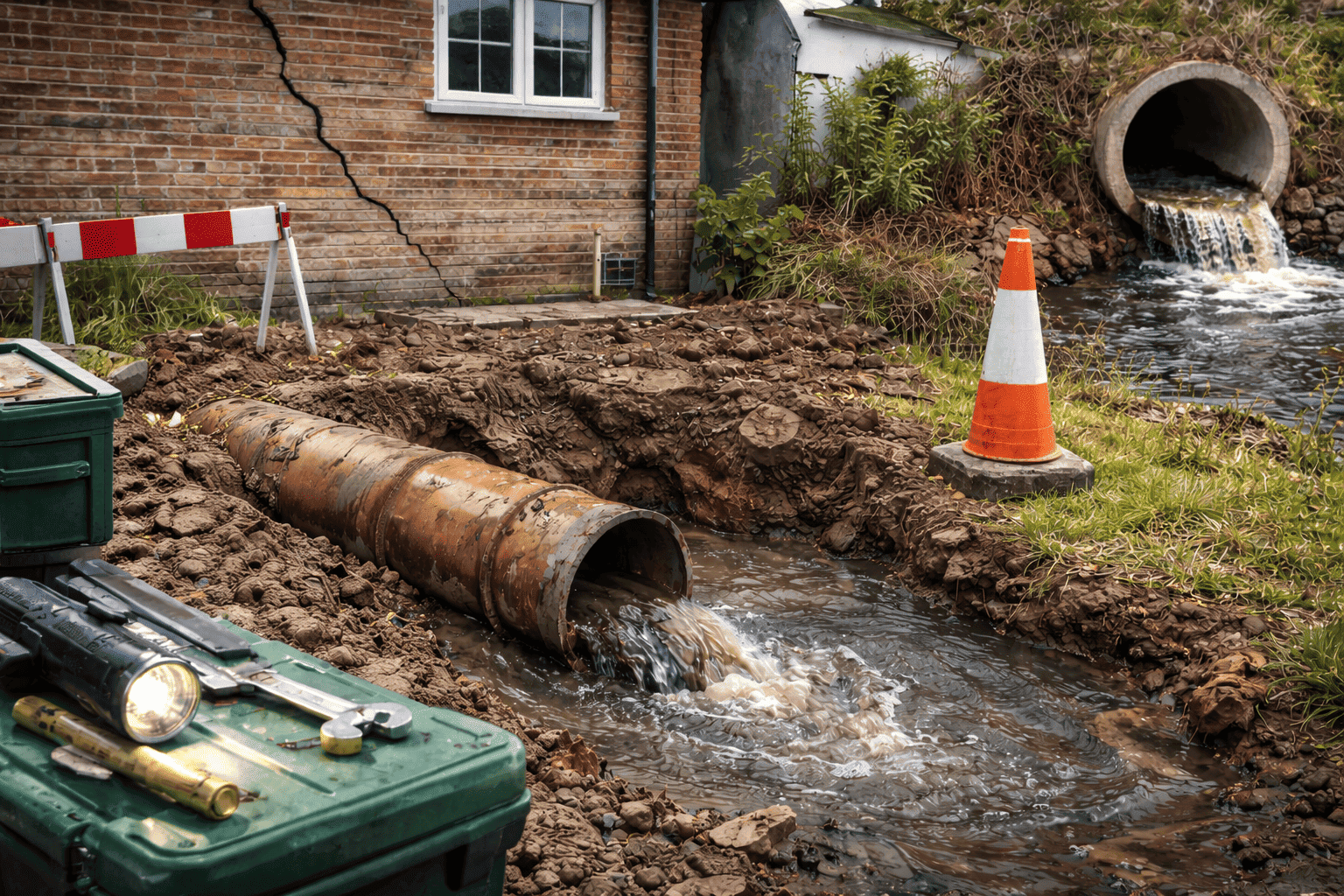
From a structural perspective, effective foul water drainage helps protect foundations and surrounding ground. Leaking or surcharging drains can wash away supporting soil, create voids, and increase the risk of subsidence. Over time, this can lead to cracking, movement, and costly structural repairs that extend well beyond the drainage system itself.
Regulatory compliance also reduces exposure to financial penalties and insurance complications. Properties with non-compliant drainage may face enforcement action, mandatory remedial works, or delays during transactions. In some cases, insurers may refuse claims where drainage defects or illegal connections are identified, leaving owners to cover repair costs independently.
Environmental responsibility is another long-term consideration. Preventing untreated foul water from entering land or watercourses protects ecosystems and reduces pollution. Maintaining compliant systems demonstrates due care and aligns property management with wider environmental standards and expectations.
Finally, there is a clear financial benefit over time. While corrective work may require investment, addressing drainage properly reduces the likelihood of repeated call-outs, emergency interventions, and escalating repair costs. A compliant, well-functioning foul water drainage system provides reliability, predictability, and long-term savings compared to ongoing reactive fixes.
Conclusion: Getting Foul Water Drainage Right
Foul water drainage is a regulated system with long-term implications for property safety, environmental protection, and legal compliance. Understanding how foul water differs from surface water, how regulations apply, and where responsibility sits allows owners to avoid avoidable problems. Regulations are not a formality or a paperwork exercise. They exist to prevent pollution, reduce flood risk, and ensure drainage systems function safely throughout a property’s lifespan.
When foul water drainage issues are recurring, unclear, or linked to alterations, professional input becomes essential. This is where DrainBoss supports homeowners and businesses across the South and South East of England. By combining practical experience with a clear understanding of UK regulations, DrainBoss helps ensure drainage systems are assessed correctly, brought into compliance where needed, and maintained in a way that reduces risk and protects the property long term.
Foul Water Drainage Regulations and Services FAQ
What is the difference between foul water drainage and surface water drainage?
Foul water drainage deals with wastewater produced inside a property, such as from toilets, sinks, and appliances. This water is contaminated and must be directed to a sewer or approved treatment system. Surface water drainage, on the other hand, manages rainwater from roofs and hard surfaces. Because surface water is normally clean, it does not require treatment and must be kept separate from foul water systems.
Are foul water drainage regulations only relevant for new buildings?
No, foul water drainage regulations apply to existing properties as well, especially when changes or problems occur. Repairs, extensions, refurbishments, or repeated drainage issues can all trigger the need to assess compliance. Regulations may also become relevant during property sales if surveys identify non-compliant connections. Owners remain responsible for ensuring their drainage meets current standards where risks are identified.
Can I keep an old combined drainage system if it has always worked?
In some older properties, combined systems still exist, but this does not automatically make them acceptable. If the system causes pollution, flooding, or other risks, it may be classed as non-compliant under current regulations. Any new drainage work or alterations can also remove historic allowances. A professional assessment is usually required to confirm whether corrective action is needed.
How can I tell if my foul water drainage is non-compliant?
Signs such as recurring blockages, slow drainage, bad smells, or flooding can indicate underlying compliance issues. However, these symptoms alone do not confirm the cause. A CCTV drain survey is the most reliable way to assess compliance, as it shows the condition, layout, and connections within the system. This evidence is often required for insurance claims or discussions with authorities.
When should I involve a professional drainage specialist?
Professional input is recommended when problems are persistent, when building work is planned, or when compliance is uncertain. Specialists can identify whether issues are caused by misuse, structural defects, or incorrect connections. They can also advise on repairs or upgrades that align with regulations rather than offering temporary fixes. Early involvement often prevents more serious and costly problems later.




2 responses
★★★★★
I didn’t realise how strict the separation between foul and surface water actually is in the UK. The bit about misconnections after building work was interesting, as that’s probably more common than people think. It shows how easy it is to end up non-compliant without even knowing.
★★★★★
The explanation of responsibilities was useful, especially for off-mains properties. A lot of people seem to assume older systems are fine just because they’ve been there for years. It makes sense that problems only really come to light when something goes wrong or during a survey.