
Keeping your drainage system clear and free-flowing is essential for the health, hygiene, and longevity of any property – whether residential, commercial, or industrial. Over time, pipes can become blocked with a wide range of debris including grease, soap scum, scale, tree roots, silt, or food waste. If left unchecked, these blockages can lead to slow drainage, unpleasant odours, or even serious water damage and costly repairs.
Traditionally, pipe cleaning has been approached with tools like drain snakes (also known as rodding or augers), which physically break through clogs, or chemical drain cleaners that dissolve blockages using harsh substances. While these methods can be effective in certain situations, they often fall short when it comes to providing a thorough, long-lasting solution. In many cases, they simply punch a hole through the obstruction rather than fully removing the build-up, leaving the pipe vulnerable to reoccurring blockages.
Enter high-pressure water jetting – a modern, powerful, and environmentally friendly alternative. This technique uses highly pressurised water to blast away blockages and clean the interior walls of pipes with exceptional precision. Unlike traditional methods, water jetting doesn’t just shift the immediate problem – it restores the pipe to near-original condition by thoroughly removing all residue and debris.
In this article, we’ll explore how high-pressure water jetting works, how it compares to older techniques, and why more and more property owners across the UK are choosing it as their go-to drain cleaning method.
What is High-Pressure Water Jetting?
High-pressure water jetting, often referred to simply as “jetting”, is a highly effective pipe cleaning technique that uses a concentrated stream of water to break down and flush out obstructions inside drainage systems. It is a mechanical process driven by hydraulics rather than chemicals or manual force, making it both efficient and environmentally responsible.
How It Works
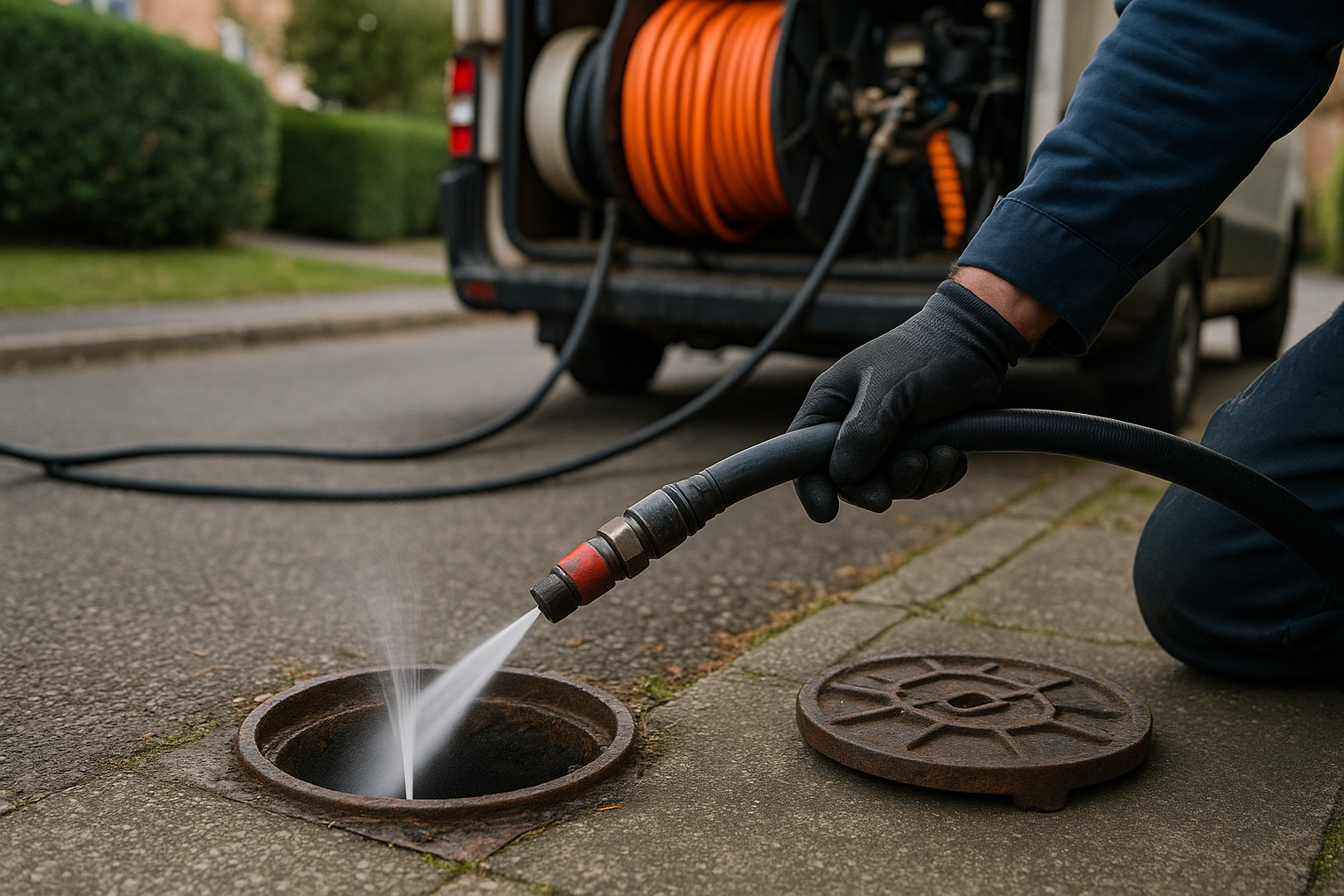
The core principle behind water jetting is simple: water is pressurised using a powerful pump and delivered through a reinforced hose to a specialised nozzle inserted into the drain or sewer pipe. This nozzle is engineered with multiple backward- and forward-facing jets, which direct high-velocity water in a 360-degree pattern. As the nozzle moves through the pipe, the jets cut through blockages, scrub the pipe walls clean, and flush all debris downstream to be safely extracted or washed away.
The pressure used can vary depending on the application – from around 1,500 PSI for domestic use, up to 10,000 PSI or more for commercial and industrial systems. The flow rate and nozzle type are selected based on the size of the pipe, the material of the blockage, and the condition of the drainage infrastructure.
Jetting Equipment
Professional jetting setups typically consist of:
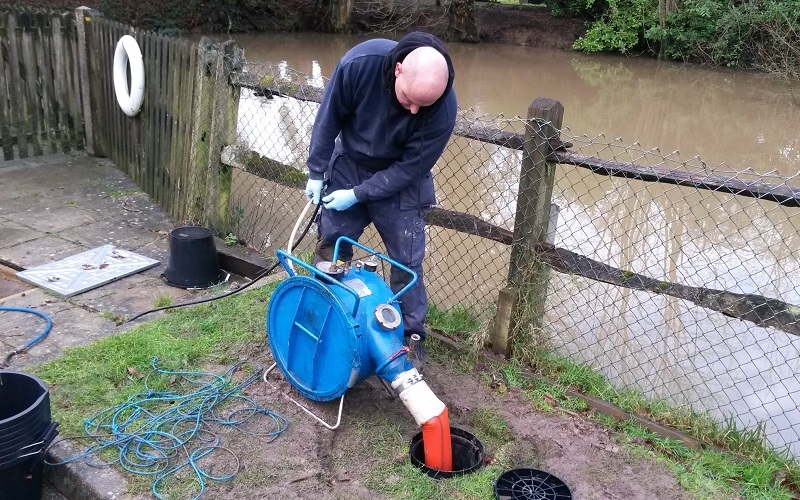
- A high-pressure pump – the engine that drives the entire system, mounted on a van or lorry for mobility.
- A heavy-duty hose – designed to handle extreme pressures without kinking or bursting, often ranging from 50 to 120 metres in length.
- Specialist jetting nozzles – interchangeable attachments designed for different tasks, including root cutting, descaling, grease removal, and general cleaning.
- Self-contained water tanks – ensuring operators have a sufficient water supply for remote or large-scale jobs.
At DrainBoss, our mobile jetting units are fully equipped to handle both emergency callouts and scheduled maintenance across a wide range of property types.
Where It’s Used
High-pressure water jetting is remarkably versatile. It’s used in:
- Domestic properties to clear kitchen, bathroom, and external drain blockages.
- Commercial settings such as restaurants, hotels, offices, and retail units where grease and high usage lead to recurring issues.
- Industrial facilities where drains may become clogged with scale, silt, chemical residues, or concrete debris.
- Public infrastructure including highways, culverts, and sewer networks, where jetting is used as part of routine maintenance and flood prevention.
Whether tackling a one-off obstruction or performing preventive cleaning in high-risk environments, water jetting offers the flexibility and force needed to keep drains running at full capacity.
Our Services:
Overview of Traditional Pipe Cleaning Methods
Before the widespread adoption of high-pressure water jetting, drain cleaning was typically carried out using more basic mechanical or chemical techniques. While these traditional methods still have their place in certain situations, they often fall short in terms of efficiency, safety, and long-term effectiveness.
Snaking (Mechanical Rodding)
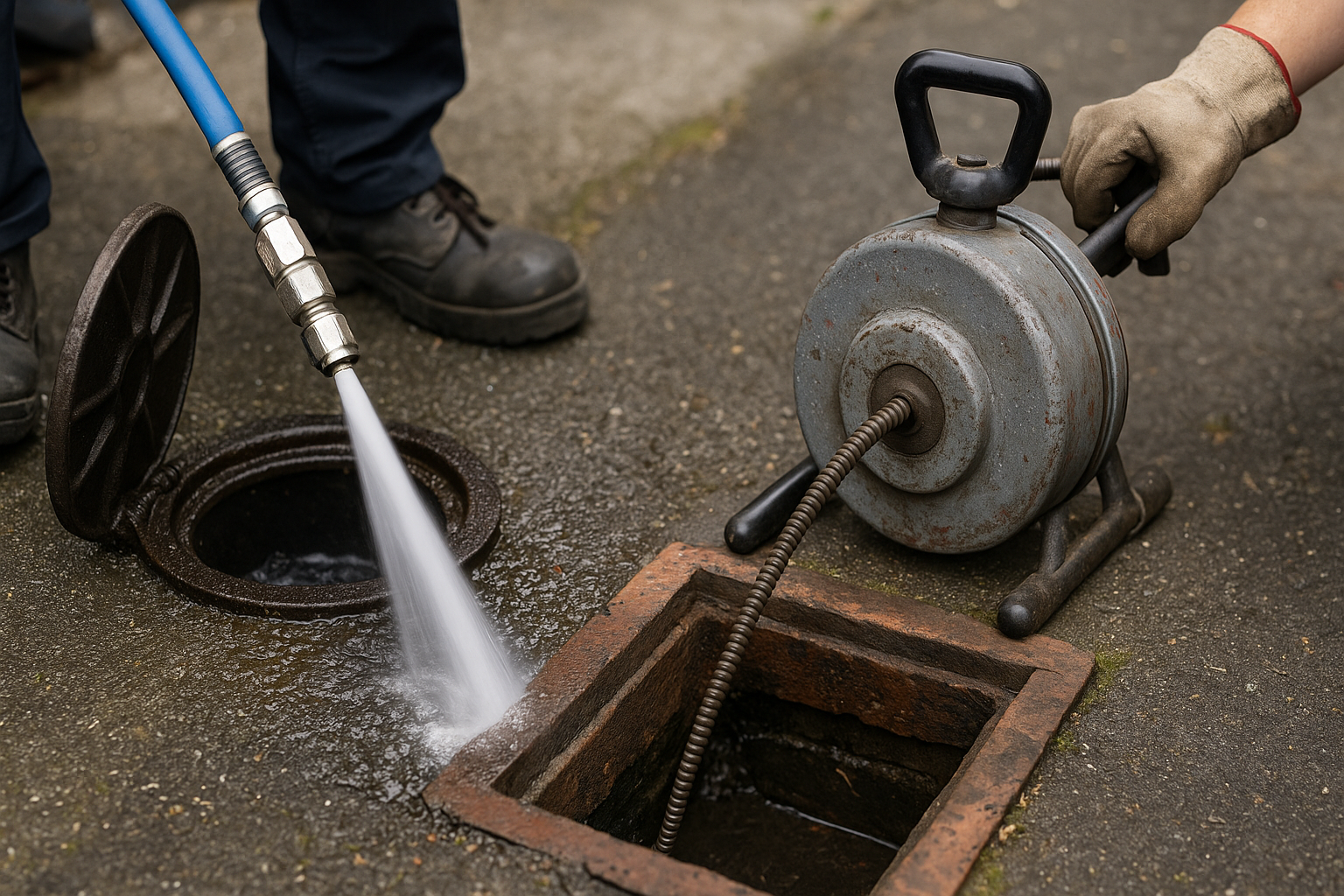
How It Works: Snaking involves inserting a flexible metal cable—commonly known as a drain rod or plumber’s snake—into the blocked pipe. The end of the rod is fitted with a blade or corkscrew-like attachment, which is manually or mechanically rotated to punch through or hook onto the obstruction. Once the blockage is pierced or loosened, it can often be pulled back out or pushed through the system.
Advantages:
- Accessible for minor blockages: Particularly effective for soft clogs located close to the surface.
- Cost-effective for small jobs: Basic equipment is inexpensive and widely available.
- Quick to deploy: Suitable for emergency, one-off situations.
Disadvantages:
- Limited reach and scope: Often ineffective for deep, stubborn, or grease-based blockages.
- Residual build-up remains: Does not clean pipe walls, so issues tend to reoccur.
- Potential pipe damage: Repeated use, particularly in older or clay pipes, can lead to cracks or abrasions.
Chemical Drain Cleaners
How They Work: Chemical drain cleaners rely on highly reactive substances, such as caustic soda (sodium hydroxide) or sulphuric acid, to dissolve organic material causing the blockage. When poured into the drain, the chemicals create a reaction that generates heat and breaks down substances like grease, hair, and soap scum.
Risks and Drawbacks:
- Pipe corrosion: Prolonged use can deteriorate both plastic and metal pipework.
- Health and safety concerns: These chemicals pose serious risks if inhaled, touched, or improperly stored.
- Environmental harm: Residual chemicals can enter the water system, harming wildlife and polluting local waterways.
- Short-term fix: Chemical cleaners often only clear a portion of the clog, meaning the problem may return quickly.
While they may seem convenient for DIY use, chemical drain cleaners are typically discouraged by professional plumbers due to the damage and risks involved.
Manual Methods
Limitations and Labour Requirements: Manual techniques—such as removing the U-bend under a sink, plunging, or digging out external inspection chambers—are sometimes necessary, particularly for visible or accessible blockages. However, they can be time-consuming, physically demanding, and often only effective for superficial problems.
- Limited effectiveness: These methods can’t address deep-seated or complex clogs within the mainline.
- Labour-intensive: Requires hands-on effort and often multiple attempts.
- Disruption to property: May involve disassembling fixtures or accessing underground pipework.
While each of these traditional methods has its uses, they are increasingly viewed as stop-gap solutions. In contrast, high-pressure water jetting offers a more comprehensive, less invasive, and longer-lasting approach to drain cleaning—something we’ll explore in the next section.
Key Advantages of High-Pressure Water Jetting
High-pressure water jetting is widely recognised across the drainage industry for its exceptional performance, safety, and long-term effectiveness. Below are the key benefits that make it the preferred choice over conventional cleaning methods.
Thorough Cleaning
Unlike traditional techniques that simply puncture a hole through the blockage, jetting removes the obstruction entirely. The high-pressure water cuts through grease, scale, sludge, and even invasive tree roots. It also scours the inner walls of the pipe, flushing away residual build-up such as sand, silt, and fat deposits. This leaves the pipe in a near-original condition, promoting optimal flow and system reliability.
Prevention of Future Blockages
Because jetting not only clears the immediate problem but also removes the layers of grime and debris along the pipe walls, it dramatically reduces the chance of repeat issues. With cleaner pipes, waste flows freely and is less likely to catch or accumulate, which means fewer emergency callouts and a lower risk of system downtime.
Speed and Efficiency
Jetting is a fast and highly efficient process. With the right equipment and trained technician, even severe or deep-rooted blockages can be cleared in a single visit. The high flow rate and pressure mean that water does most of the work, significantly reducing the time needed on-site compared to labour-intensive alternatives.
Environmentally Friendly
Water jetting uses nothing but clean water. There are no chemicals involved, no fumes released, and no harmful by-products left behind. This makes it a safe choice not only for your drainage system but also for the surrounding environment, particularly important for properties near waterways or with older pipe infrastructure.
Non-Invasive
Because the nozzle is inserted directly into the access point of the drainage system, there is no need for excavation, dismantling fixtures, or removing pipework. This greatly reduces disruption to the property and avoids the mess and cost associated with digging or structural alterations. It also allows technicians to reach blockages located far from surface-level access.
Versatility
High-pressure water jetting can be used on a wide range of pipe types and materials, including clay, cast iron, PVC, and pitch fibre. It is suitable for small-diameter household pipes as well as large commercial or municipal drainage systems. Whether it’s clearing a kitchen drain or cleaning a large culvert, the method can be tailored to suit the application.
When is Water Jetting the Best Choice?
While high-pressure water jetting is suitable for a wide range of scenarios, there are specific situations where it stands out as the most effective and appropriate solution.
For Severe or Deep Blockages
Standard methods often struggle with blockages located deep within the drainage system or those caused by hardened substances. Jetting is especially useful when dealing with compacted debris, long-distance clogs, or materials that are resistant to manual rodding. The pressurised water can reach and break up obstructions that would otherwise require excavation or multiple service visits.
As Part of a Preventive Maintenance Plan
One of the most valuable uses of water jetting is routine maintenance. Scheduled cleaning prevents build-up before it becomes a problem, helping to avoid costly emergencies. Businesses and property managers often include jetting in their regular maintenance schedules to ensure consistent flow, reduce wear on the system, and prolong the lifespan of their drainage infrastructure.
In Commercial and High-Use Environments
Shops, restaurants, hotels, industrial units, and other commercial premises experience frequent and intensive drainage use. Grease, food particles, and foreign objects can quickly accumulate in such settings. Water jetting is ideal in these environments, providing rapid, thorough cleaning without disrupting day-to-day operations.
For Grease, Scale, and Root Intrusion
Fat and grease build-up in kitchen drains, mineral scale from hard water, and tree roots invading underground pipes are all common causes of persistent drainage issues. Jetting offers a non-destructive way to eliminate these substances. Specialised nozzles can even cut through fibrous root systems and dislodge hardened deposits that other tools cannot effectively remove.
Comments from the DrainBoss Team: “Many of our clients first try jetting after repeated problems with traditional rodding. Once they see how effective it is, they rarely go back”
Cost Considerations: Jetting vs. Traditional Methods
At first glance, traditional drain cleaning methods such as snaking or chemical solutions may appear more budget-friendly. The tools are inexpensive, and the work can be completed quickly for surface-level blockages. However, the initial savings often come at the cost of long-term effectiveness and repeat callouts.
High-pressure water jetting typically involves a higher upfront cost, due to the need for specialist equipment and trained professionals. But when you look beyond the initial service fee, jetting often proves to be the more economical option over time.
Here is a quick comparison to illustrate the differences:
| Aspect | Traditional Methods | High-Pressure Water Jetting |
| Upfront Cost | Lower | Higher |
| Effectiveness | Partial – often leaves residue behind | Complete – removes all debris and cleans pipe walls |
| Risk of Pipe Damage | Higher with chemical or manual force | Low when performed by professionals |
| Environmental Impact | Negative – involves chemicals | Minimal – uses only clean water |
| Frequency of Repeat Callouts | High – especially if residue remains | Low – thorough cleaning reduces recurrence |
| Suitability for Deep Clogs | Limited reach | Excellent – ideal for hard-to-access or large systems |
Using jetting as part of a regular maintenance programme further reduces costs by preventing major problems before they occur. Many of our commercial clients report a noticeable reduction in service visits and reactive repairs after adopting scheduled jetting.
In short, while traditional methods may seem cheaper in the moment, high-pressure jetting delivers more reliable performance and better value over time – especially when delivered by experts like DrainBoss.
Our Services:
Risks and Limitations
While high-pressure water jetting is one of the most effective and widely recommended solutions for clearing and maintaining drainage systems, it is important to recognise that, like any professional method, it has its limitations and requires the correct application.
Jetting may not be suitable for certain scenarios, particularly where pipework is already severely damaged or in poor structural condition. Very old clay pipes, weakened pitch fibre, or corroded metal systems can be vulnerable to further deterioration if exposed to high pressure without proper assessment. In such cases, a CCTV survey should be carried out first to determine the pipe’s integrity before jetting begins.
This is exactly why DrainBoss only uses fully certified engineers, trained and accredited by the Water Jetting Association (WJA). Every member of our team operates within strict safety protocols and carries out a visual or camera inspection wherever necessary before deploying high-pressure equipment. Our technicians are skilled in adjusting pressure and selecting the appropriate nozzles based on pipe material, blockage type, and system layout.
Unlike some providers, we do not believe in one-size-fits-all solutions. Our focus is on safe, tailored service that delivers results without compromising your infrastructure. We use modern, well-maintained jetting units equipped with interchangeable heads, allowing us to work effectively in narrow domestic pipework as well as large-scale commercial systems.
DrainBoss also follows strict health and safety standards, including environmental protection measures, to ensure no unnecessary risk is introduced to your property, personnel, or the drainage system itself. From protective equipment to site preparation and clean-up, our engineers carry out every job with care and professionalism.
By choosing DrainBoss, you can be confident that your drainage will be treated with expert precision, with no call-out fees, fixed pricing, and a service that puts safety and customer satisfaction first.
Customer Feedback: “I was worried jetting might damage our old pipework, but the DrainBoss team carried out a CCTV check first and adjusted the pressure. The job was quick, safe, and very professional,” shares Elizabeth L., a homeowner in East Sussex.
Why Choose DrainBoss for High-Pressure Jetting?
High-pressure water jetting is only as effective as the team behind it. At DrainBoss, we combine cutting-edge jetting technology with fully trained, WJA-certified technicians who understand how to deliver safe, precise and long-lasting results. As a family-run, Trading Standards-approved drainage company, we pride ourselves on rapid response times, honest pricing with no call-out charges, and excellent customer service that has earned us 5-star reviews across Sussex, Surrey, Hampshire, Kent and South London.
Whether you require an urgent one-off jetting service or want to set up a preventative maintenance plan, DrainBoss is ready to help. Our 24/7 emergency helpline is staffed by friendly professionals like Gordon and Viki, and our engineers are equipped to handle everything from domestic blockages to complex commercial drainage issues. With a fixed fee policy, NHS and OAP discounts, and a free camera inspection included where needed, we provide not just fast solutions but lasting peace of mind.
FAQs About High-Pressure Water Jetting vs Traditional Pipe Cleaning
Is high-pressure water jetting safe for all types of pipes?
High-pressure water jetting is safe for most modern drainage systems, including PVC, clay, and cast iron pipes, when carried out by trained professionals. However, it may not be suitable for pipes that are already badly cracked, corroded or structurally weakened. At DrainBoss, we always assess pipe condition beforehand using CCTV equipment to ensure jetting is appropriate and safe. Our certified technicians also adjust the pressure and nozzle type to suit the specific pipework.
How often should I use water jetting for preventive maintenance?
For residential properties, jetting once every 12 to 24 months is generally sufficient to keep pipes clean and free-flowing. In commercial or high-use environments, more frequent maintenance may be necessary—every 3 to 6 months depending on usage and waste type. Regular jetting helps to prevent the build-up of grease, scale, and silt that can lead to blockages. It also reduces the risk of emergency callouts and long-term damage to the system.
Does water jetting remove tree roots from drains?
Yes, high-pressure jetting can be highly effective in cutting through and flushing out tree roots that have infiltrated underground drainage pipes. Special root-cutting nozzles are used to dislodge the roots without causing damage to the surrounding structure. That said, in cases of severe root intrusion, follow-up repairs or lining may be required. DrainBoss technicians can advise on the best long-term solution based on CCTV inspection results.
How does water jetting compare in cost to traditional drain cleaning?
While the initial cost of water jetting may be higher than using a rod or chemical cleaner, it usually proves more economical in the long term. Jetting provides a deeper clean and is less likely to require repeat visits, which means fewer disruptions and lower overall maintenance costs. It also avoids the pipe damage sometimes caused by harsh chemicals or aggressive manual methods. For businesses and households alike, jetting offers real value through reliability and durability.
Can I do water jetting myself with rented equipment?
Although jetting equipment is available for hire, DIY use is not recommended unless you have specialist training. The high pressure involved can cause injury or pipe damage if handled incorrectly. DrainBoss technicians are WJA-accredited and operate professional-grade equipment tailored to the specific needs of each drainage system. Calling in experts not only ensures safety but also guarantees a more thorough and lasting result.
2 responses
★★★★★
I’ve seen rodding used before and it always seemed like a temporary fix rather than a proper clean. The explanation about jetting actually removing build-up from the pipe walls makes a lot more sense. Probably why some blockages keep coming back after basic clearing.
★★★★★
The environmental side of it is quite interesting, especially compared to chemical cleaners. It seems like a better long-term option, even if the upfront cost is higher. Also makes sense that checking pipe condition first is important with older systems.