

Key Points:
- Rats can access drainage systems through structural defects, although incidents inside properties remain rare.
- Most rat-related issues originate from damaged or outdated pipework rather than internal plumbing fixtures.
- CCTV drain surveys are essential for identifying access points and determining responsibility.
- Long-term prevention relies on drainage repairs and physical barriers, not chemicals or deterrents.
Yes, it is possible. Although it sounds like an urban myth, rats can and do enter properties through drainage systems, and in rare cases they can emerge via toilets or internal pipework. These incidents are uncommon, but they are well documented by drainage engineers across the UK.
The reason this is often dismissed as a myth is because modern homes appear solid and sealed. In reality, underground drainage systems are not fully airtight or rodent-proof. Drains rely on gravity flow, ventilation, access points and joints, all of which create potential weaknesses. Rats are strong swimmers, excellent climbers, and capable of compressing their bodies to pass through surprisingly small openings. If there is a defect or unprotected connection, they can exploit it.
When a rat is discovered in a bathroom or toilet, the situation feels shocking and extreme. That reaction is understandable. However, from a technical perspective, it is usually the result of specific conditions within the drainage network rather than a random event. Damaged pipes, displaced joints or old, uncapped connections provide a route from the sewer into a property.
The key point is simple. Drainage systems are not sealed units. Where defects exist, access is possible, and that is why proper inspection and maintenance matter.
Why Rats Use Drainage Systems
Drainage systems provide conditions that make them an effective transport route for rats. They offer constant access to water, relatively stable temperatures throughout the year, and protection from predators and human activity. Underground pipework also connects large areas of the sewer network, allowing movement between locations without exposure at ground level.
It is important to understand that rats do not usually live permanently inside drainpipes. Instead, they use them as pathways. The smooth internal surfaces, changes in direction and regular junctions make drains suitable for travelling between nesting areas, food sources and shelter. The actual nesting typically occurs outside the pipe, in soil voids, cavities or damaged sections of drainage.
Several wider factors contribute to this behaviour:
- Urban infrastructure creates extensive underground networks that rats can navigate over long distances
- Household waste provides a consistent food source, especially where fats, oils and food residues enter the system
- Weather conditions push rats to seek stable, warmer environments during colder or wetter periods
- Aging drainage systems develop small defects that gradually become accessible entry points
The issue often becomes more noticeable over time because drainage defects rarely remain static. Minor cracks, joint movement or root intrusion can slowly worsen, increasing the opportunity for access. As urban drainage networks age and usage increases, the likelihood of rats exploiting these systems also rises.
Our Services:
Blocked Drains Tunbridge Wells
How Rats Physically Get Into Drainpipes
Rats do not need large openings to access a drainage system. In most cases, entry occurs through existing structural defects that have developed over time. These faults are often hidden underground and remain unnoticed until a blockage, collapse or infestation is investigated.
Common access points include:
- Cracked or displaced pipe sections caused by ground movement or settlement
- Failed or deteriorated joints that no longer seal correctly
- Older pipe materials that weaken with age and use
- Redundant or uncapped pipework left behind after property alterations
Even small defects are sufficient. Rats can compress their bodies and exploit openings far smaller than most property owners expect. Once an entry point exists, the drainage system becomes part of their movement network.
The table below outlines the most frequent access routes and how they develop.
| Drain Defect | How It Occurs | Why It Allows Access |
| Cracked pipes | Ground movement, root pressure, age-related wear | Small fractures widen over time and create entry gaps |
| Displaced joints | Poor installation or soil settlement | Misalignment breaks the sealed connection |
| Clay pipe fractures | Brittle materials in older systems | Breaks easily under pressure or impact |
| Cast iron corrosion | Internal and external rusting | Thinning walls create weak points |
| Uncapped branch lines | Old bathrooms or extensions removed | Direct open route from the sewer |
Because these defects often develop gradually, the risk increases the longer they remain unaddressed. What begins as a minor structural issue can eventually provide a clear and usable access point into the drainage network.
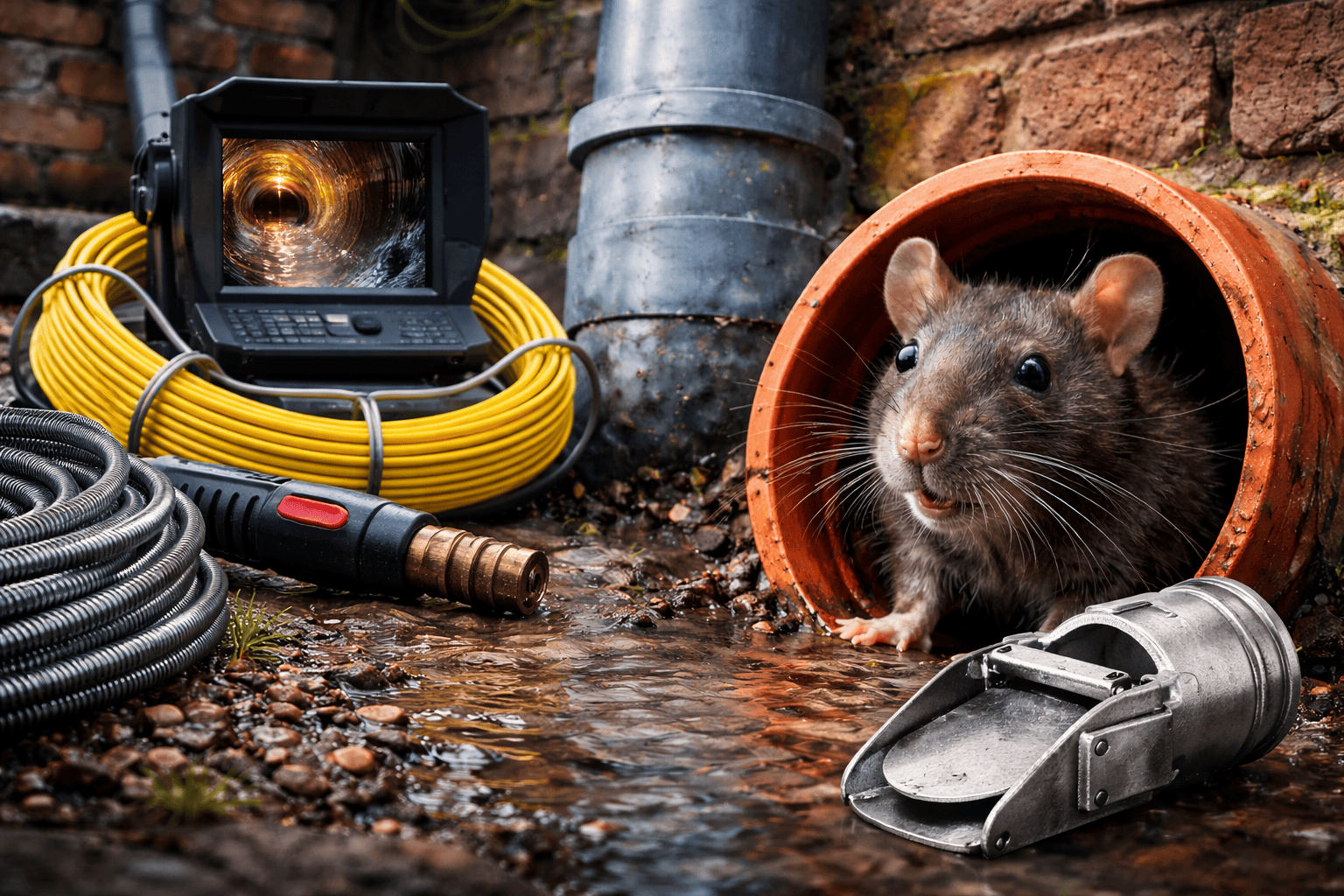
Can Rats Come Up Through Toilets?
Yes, it can happen, but it is rare. Incidents of rats emerging through toilets tend to attract attention because they are unexpected and unsettling. In practice, these situations only occur when specific drainage conditions are present.
For a rat to come up through a toilet, there must be an uninterrupted route from the sewer into the property. This usually involves a combination of damaged pipework, unprotected connections and a layout that allows upward movement through the drainage system. Where pipes are intact and properly protected, this route does not exist.
It is important to note that the issue is almost always related to the drainage infrastructure rather than the toilet itself. Sanitary fixtures are simply the visible exit point. The underlying problem lies within the pipework beneath the property, where defects or open connections allow access from the sewer network.
These cases are more commonly associated with older drainage systems. Properties with clay or cast iron pipes, historic alterations, or outdated layouts are more likely to have weaknesses that were never designed to prevent rodent entry. Over time, wear and structural movement increase the likelihood that these vulnerabilities will be exploited.
While the scenario is unusual, it highlights the importance of maintaining the drainage system as a whole, rather than focusing solely on internal plumbing fixtures.
Signs of Rats in Drains and Sewer Pipes
Rats in drainage systems rarely make themselves obvious at first. In many cases, the early warning signs are mistaken for routine drainage problems, which is why infestations are often identified later than they should be.
One of the most common indicators is recurring blockages. When drains are cleared but block again within a short period, it can suggest ongoing disruption inside the pipe rather than a single obstruction. Rats moving through damaged sections can disturb debris and contribute to repeated flow issues.
Slow drainage with no clear cause is another warning sign. When water drains poorly despite recent cleaning, it may point to structural defects or internal disturbance rather than surface-level buildup.
Unusual noises can also be a clue. Scratching, movement or scuttling sounds coming from pipework, particularly at quiet times, may indicate activity within the drainage system rather than inside the building itself.
Inspection chambers often provide clearer evidence. Signs such as droppings, disturbed debris or unusual residue around benching and channels can indicate that rats are using the drain as a route.
A temporary improvement after a basic drain clearance should not be taken as reassurance. If the problem disappears briefly and then returns, it often means the underlying cause has not been addressed. In these cases, further investigation is essential to identify and resolve the access point rather than repeatedly treating the symptoms.
Who Is Responsible for Rats in Drains?
Responsibility for rats in drains depends on where the access point and underlying defect are located. This is often misunderstood and can lead to delays in resolving the issue.
In the UK, public sewers are the responsibility of the local water authority. If rats are entering from a defect within the main sewer, remediation falls outside the control of the property owner. However, once the drainage system connects to a private drain, responsibility changes.
Homeowners are responsible for the private drainage serving their property. This includes pipes within the boundary and any sections that connect directly to the public sewer. If rats are accessing the system through damaged private pipework, it is the homeowner’s duty to address the problem.
In rented properties, responsibility usually sits with the landlord. Structural defects, damaged drains and preventative measures such as repairs or protective installations are typically classed as maintenance obligations. Tenants should report suspected issues as early as possible to avoid further damage.
Without proper diagnostic work, it is rarely clear where the problem originates. Surface symptoms alone cannot confirm whether the issue lies in the public sewer or private drainage. CCTV drain inspections are essential in establishing the exact location of defects and access points. This evidence-led approach ensures the correct party takes responsibility and prevents unnecessary or ineffective work.
Why DIY Methods and Chemicals Don’t Stop Rats
When faced with signs of rats in drains, it is common for property owners to try quick fixes. Unfortunately, most DIY approaches focus on deterring rats rather than addressing how they are entering the system.
Household chemicals such as bleach or strong-smelling cleaners do not prevent rats from using drains. At best, these substances may discourage activity briefly, but rats quickly adapt. Once flushed away, the drainage system returns to its normal state, and any access route remains unchanged.
Poisons present a more serious problem. Using toxic products in drainage systems is unsafe and ineffective. Poisons rarely reach rats travelling through pipes, and they introduce risks to the wider environment, watercourses and non-target wildlife. There is also the danger of carcasses remaining within the system, leading to secondary blockages and hygiene issues.
Temporary drain clearing can also give a false sense of resolution. While removing debris may improve flow in the short term, it does nothing to close cracks, repair joints or block entry points. If the route remains open, rats can continue to move through the system regardless of how clean the pipe appears.
From an engineering perspective, the solution is straightforward. The route must be removed. Effective control comes from identifying access points and either repairing the pipework or installing physical barriers that prevent re-entry. Deterrents treat the symptom, but only structural intervention resolves the cause.
CCTV Drain Surveys: Identifying Rat Access Points
CCTV drain surveys are the most effective way to identify how rats are accessing a drainage system. By inspecting the internal condition of the pipework, engineers can see defects that are impossible to confirm from the surface. Cracks, displaced joints and open connections become clearly visible, allowing access routes to be traced accurately.
These inspections also make an important distinction between signs of activity and actual structural faults. Evidence such as debris disturbance or residue may indicate that rats are passing through, but only CCTV can confirm whether the pipe itself is damaged. This prevents assumptions and ensures that repairs are targeted where they are genuinely needed.
A professional survey provides documented findings rather than guesswork. Recorded footage, still images and written reports create a clear record of the drainage condition. This information is valuable for property owners, landlords and insurers, and it supports informed decisions about repairs or preventative measures.
CCTV inspection should be the first step, not an optional extra. Without understanding the condition of the drainage system, any attempt to prevent rat access is speculative. Accurate diagnosis ensures that solutions address the cause of the problem, rather than treating visible symptoms that may reappear.
DrainBoss Commentary: In practice, most rat-related drainage issues we investigate come down to unidentified structural defects. CCTV surveys remove assumptions and replace them with clear evidence, allowing problems to be resolved correctly the first time. Without inspection, prevention measures are often installed blindly and fail to deliver lasting results.
Rat Blockers and Non-Return Valves Explained
Rat blockers, also known as non-return or one-way valves, are mechanical devices designed to prevent rodents from travelling back up a drainage system. They allow wastewater to flow out of a property while blocking movement in the opposite direction.
The principle is simple. When water flows normally, the valve opens and allows discharge to pass through. When there is no flow, the mechanism closes, preventing rats from pushing back into the pipe. This creates an effective physical barrier without restricting everyday drainage use.
Rat blockers are typically installed within the underground drainage system, often at the point where a private drain connects to the public sewer. Placement depends on the layout and condition of the pipework and must be determined following inspection. Installing the device in the wrong location can reduce its effectiveness or cause operational issues.
These valves are suitable for many domestic and commercial drainage systems, but not all. Factors such as pipe diameter, gradient, flow characteristics and existing defects must be considered. Systems with damaged or misaligned pipes may require repair before a blocker can be fitted safely.
Correct installation is critical. Poor fitting can lead to restricted flow, maintenance problems or continued access around the device. When properly selected and installed, rat blockers provide long-term protection by physically preventing re-entry rather than relying on deterrents or chemicals.
Our Services:
When Drain Repairs Are Required Before Installing a Rat Blocker
A rat blocker can only work effectively if the surrounding pipework is structurally sound. Installing a valve into a damaged drain does not remove existing access points and may introduce new problems. Cracks, displaced joints or weakened pipe walls allow rats to bypass the device entirely or create alternative routes around it.
In damaged systems, repairs must be carried out before any preventative device is considered. This ensures the drainage line functions correctly and that the blocker performs as intended.
Typical repair methods include:
- Patch repairs, which seal isolated cracks or fractures without replacing the full pipe length
- Localised relining, where a short section of pipe is reinforced internally to restore structural integrity
These techniques address defects directly while avoiding unnecessary excavation. Once the pipework has been stabilised, a rat blocker can then be installed with confidence.
The combination of repair and prevention delivers a long-term solution. Structural defects are removed, and future access from the sewer is physically blocked. This approach prevents repeat infestations and avoids the cycle of temporary fixes that fail to address the root cause.
DrainBoss Commentary: We regularly see rat blockers fitted into damaged drains where underlying defects were never addressed. In these cases, access simply shifts elsewhere in the system. Repairing the pipework first ensures that preventative measures actually work and protects the drainage system long term.
Preventing Future Rat Problems Through Proper Drainage Maintenance
Long-term prevention depends on the overall condition of the drainage system. Rats do not create weaknesses on their own, they take advantage of existing ones. Sound, well maintained pipework significantly reduces the opportunity for access and movement through drains.
Pipe condition is critical. Small cracks, joint movement or surface deterioration may not cause immediate drainage failure, but they create vulnerabilities over time. Keeping pipes structurally intact limits the routes available and reduces the likelihood of repeated issues.
Everyday usage also plays an important role. The build-up of fats, oils and grease, commonly referred to as FOG, combines with household waste to form deposits inside pipes. These deposits restrict flow, accelerate wear and attract activity within the sewer network.
Effective preventative maintenance includes:
- Monitoring and maintaining the structural condition of pipework
- Avoiding disposal of fats, oils, grease and food waste into drains
- Scheduling regular inspections, particularly for older properties
- Investigating recurring drainage issues rather than repeatedly clearing them
Preventative maintenance is almost always more cost-effective than emergency intervention. Addressing minor defects early reduces the risk of major repairs, unplanned disruption and repeated infestations. Over time, a proactive approach protects both the drainage system and the property it serves.
How DrainBoss Approaches Rat Issues in Drainage Systems
DrainBoss approaches rat-related issues by focusing on the drainage system itself rather than the symptoms that appear inside a property. The emphasis is on understanding how access occurs and addressing the structural factors that allow it.
The process follows a clear and logical sequence. Diagnosis comes first, using CCTV inspections to assess pipe condition and identify defects or access routes. Once the cause is established, appropriate solutions are selected, whether that involves targeted repairs, protective measures or a combination of both. Prevention follows only after the system has been made suitable.
This is an engineering-led approach, not pest control. The objective is to restore the integrity and performance of the drainage system so that it no longer provides a viable route for rats. By removing access rather than attempting to deter activity, the solution remains effective over time.
DrainBoss works with both residential and commercial drainage systems, adapting methods to suit different layouts, usage levels and pipe materials. The focus is always on durability and system health, ensuring that interventions deliver long-term protection rather than temporary relief.
Rat Up a Drainpipe?! Frequently Asked Questions
Can rats really swim through drains and sewers?
Yes, rats are capable swimmers and can move through sewer and drainage systems when conditions allow. They are able to hold their breath for short periods and navigate flowing water within pipes. This ability allows them to travel between sections of the drainage network rather than remain in one place. Swimming alone is not the issue, access becomes a problem when structural defects are present.
How common is it for rats to come up through toilets in the UK?
Rats emerging through toilets is very uncommon, but it does happen in specific circumstances. These cases usually involve older drainage systems with damaged pipework or unprotected connections. The toilet itself is not the cause, it is simply the visible exit point. Where drains are intact and properly protected, this type of incident is extremely unlikely.
Will installing a rat blocker affect normal drainage flow?
When correctly selected and installed, a rat blocker should not affect everyday drainage performance. The valve is designed to open freely during normal discharge and close only when there is no flow. Problems usually arise when a blocker is fitted without proper inspection or into damaged pipework. Correct installation is essential to maintain both protection and performance.
Do rats cause damage to drainpipes, or do they only exploit existing defects?
Rats primarily exploit existing weaknesses rather than creating them. Cracks, displaced joints and deteriorated materials provide opportunities for access. While rat activity can worsen damage over time, the initial entry point is almost always a structural defect. Identifying and repairing these defects is key to preventing further issues.
Is a CCTV drain survey really necessary before dealing with rats in drains?
Yes, a CCTV survey is essential to understand where and how access is occurring. Surface symptoms alone cannot confirm the location or cause of the problem. CCTV inspection provides clear evidence of pipe condition and entry points, allowing solutions to be properly targeted. Without this step, any preventative work risks being ineffective or unnecessary.


2 responses
★★★★★
I always assumed rats in drains were more of a myth, but the explanation about structural defects makes a lot of sense. Interesting point about them not actually living in the pipes but just using them to move around. Makes me think older pipework is probably a bigger issue than most people realise.
★★★★★
The part about CCTV surveys stood out to me, as most people would probably try chemicals first. It’s surprising how ineffective those methods actually are if the access point is still there. Seems like fixing the pipework properly is the only way to deal with it long term.