
Key Points:
- Heavy autumn rain can overwhelm surface water drainage, especially when soil is saturated and runoff increases from roofs, driveways and patios.
- Keeping gutters, downpipes, gullies and external drains clear helps reduce avoidable water build-up around the property.
- Recurring pooling, overflowing drains or wastewater backing up can indicate a blockage, restricted capacity or a structural drainage problem.
- Flood warnings, a simple household flood plan and suitable property protection measures can reduce the risk of water entering the home.
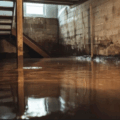
Autumn flooding can develop quickly when prolonged or heavy rainfall falls onto ground that is already saturated. Once the soil absorbs water more slowly, a greater volume remains on the surface and must be carried away by gutters, downpipes, gullies and surface water drains. Fallen leaves and other seasonal debris can restrict these routes at the same time, increasing the risk of localised heavy rain flooding.
Homes do not need to be close to a river to be affected. Surface water can collect on driveways, patios, gardens and roads when rainfall reaches the drainage system faster than it can be removed. Understanding how to protect your home from flooding therefore starts with keeping rainwater routes clear and identifying drainage problems before severe weather arrives. Not every case of autumn flooding can be prevented, but regular checks and sensible home flood prevention measures can reduce avoidable water build-up around the property.
Why Heavy Rain Causes Surface Water Flooding Around Homes
During intense rainfall, water can reach the ground faster than it can soak away or enter the drainage system. Roofs concentrate rainwater into gutters and downpipes, while driveways, patios, paths and other impermeable surfaces create runoff. Once the ground becomes saturated, infiltration slows further and a larger proportion of each downpour remains on the surface.
This puts additional pressure on gullies and surface water drainage. A partially restricted drain may cope with light rainfall but overflow when the flow increases, which is why some drainage problems during heavy rain only become visible during storms. Extensive hard landscaping can have a similar effect by reducing the area where water can naturally soak into the ground.
It is also important to distinguish between water collecting above ground and water coming back from the drainage system. Surface water flooding occurs when rainfall cannot drain away quickly enough. Water rising through a gully, drain, toilet or other drainage point can indicate surcharge, a restriction or another problem further through the system.
How to Prepare Your Home for Heavy Rain Before Autumn Storms
Drainage checks are most useful before prolonged rainfall begins. Pay particular attention to parts of the property where water has collected previously.
Before wet weather:
- Check external drains, gullies, channel drains and drainage grates for leaves, silt and visible debris.
- Inspect accessible drainage points without removing manhole covers or entering chambers.
- Look for standing water around drains after normal rainfall.
- Watch for slow discharge, gurgling and persistent drain smells.
- Note any outside drain overflowing during rainfall that would not normally cause problems.
- Check whether the same areas of a driveway, patio or garden flood repeatedly.
Visible debris over a grate and an internal blockage are different problems. Leaves can cover an inlet and prevent surface water from entering a clear drain. An obstruction inside the pipe restricts the amount of water the system can carry even when the grate above it is clean.
When considering how to prevent flooding around your home, also check the direction in which rainwater travels. Inspect driveways, patios, paths, garage entrances, basement entrances, light wells and ground immediately beside external walls. Water pooling around a house after rain is more concerning when runoff repeatedly moves towards the building or collects beside a low doorway.
Comments from DrainBoss: A drain does not need to be completely blocked to create problems during heavy rain. In our experience, slow drainage or recurring standing water can be an early indication that the available capacity has already been reduced. Checking these warning signs before prolonged rainfall can help identify a problem before an external drain begins to overflow.
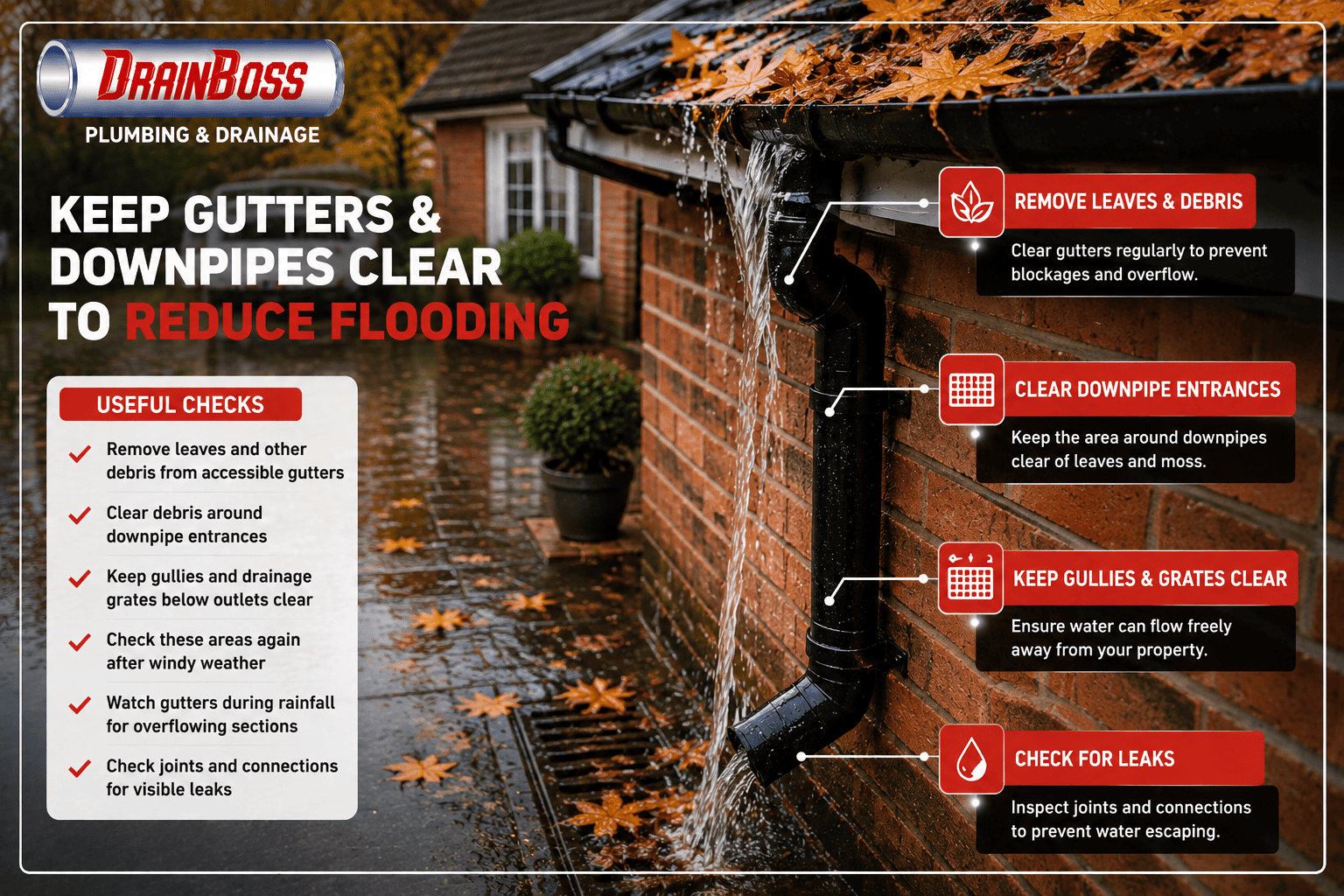
Keep Gutters and Downpipes Clear to Reduce Flooding
A roof can direct a large volume of rainfall into a relatively small number of downpipes. Gutters and downpipes therefore need an unobstructed route to carry water away during heavy autumn rain.
Useful checks include:
- removing leaves and other debris from accessible gutters;
- clearing debris around downpipe entrances;
- keeping gullies and drainage grates below outlets unobstructed;
- checking these areas again after windy weather;
- watching gutters during rainfall for overflowing sections;
- checking joints and connections for visible leaks.
Wet autumn leaves can cause problems without travelling into the drainage pipe. A compacted layer over a gully or grate can reduce the opening available for water and allow runoff to collect around it.
Gutters overflowing in heavy rain may also indicate that water cannot reach or pass through a downpipe quickly enough. At ground level, check where each downpipe discharges. A downpipe overflowing in heavy rain, leaking joints or water escaping where it meets the drainage system can concentrate runoff beside walls and foundations. Blocked gutters flooding the ground below should therefore be addressed before the next period of severe weather.
How Surface Water Drainage and Soakaways Cope with Heavy Rain
Surface water drainage carries rainfall away from roofs and hard surfaces through gullies, channels and connected pipework. During prolonged or intense rain, recurring pooling can indicate that water is entering or leaving this system too slowly.
Signs of surface water drainage problems include:
- water remaining around gullies after rainfall has stopped;
- channel drains staying full or draining unusually slowly;
- repeated flooding of the same driveway or patio area;
- several connected drainage points becoming slow at the same time;
- gullies overflowing whenever rainfall becomes heavier.
Where rainwater is directed to a soakaway, the surrounding ground must be able to accept the water. Prolonged rainfall can saturate the soil and reduce infiltration, so temporary slower drainage does not necessarily mean the soakaway has failed.
However, persistent pooling, repeated overflow or a soakaway not draining after rainfall deserves further investigation. A soakaway overflowing in heavy rain can be affected by saturated ground, excessive incoming flow, restricted connecting pipework, deterioration of the soakaway itself or a combination of these factors.
Our Services:
How to Prevent Flood Water Entering Your House
Drainage maintenance cannot prevent every flood, so properties with known vulnerable points may also need measures that limit water entering the building. Low-level openings deserve particular attention because relatively shallow external flooding can sometimes reach them first.
Home flood protection should consider:
- external doors and thresholds close to ground level;
- garage and basement entrances;
- light wells;
- low-level airbricks;
- service penetrations and other openings through external walls;
- low points where water has collected during previous storms.
Purpose-made flood barriers, flood-resistant doors and suitable Property Flood Resilience measures can help reduce water ingress where the risk justifies them. Airbrick protection may also be appropriate for vulnerable properties. The measures selected should suit the building, the likely route of water entry and the expected flood conditions rather than relying on a single solution for every property.
Floodwater can also enter through drainage pipework. When a sewer or drain becomes surcharged, water may move back through the system and appear at toilets, showers, floor drains or gullies. A drain backing up during heavy rain should therefore be treated differently from rainwater simply pooling outside.
Foul-water backflow creates an additional contamination risk because the water may contain sewage. Suitable non-return or backflow protection can help prevent sewage backflow in some drainage arrangements, but the device must be appropriate for the system and correctly installed. If wastewater is already returning through fixtures, avoid direct contact and do not attempt to open chambers or modify drainage pipework while flooding is occurring.
What to Do When Heavy Rain and Flooding Are Forecast
Knowing how to prepare your home for heavy rain is most useful before water begins to collect around the property. Check Met Office weather warnings and official flood warnings when prolonged or intense rainfall is expected. Surface water flooding can develop quickly because a short period of very heavy rain may place more water into streets, gardens, gullies and drains than the local system can remove at the same rate.
Do not rely only on whether your property is close to a river. Surface water flooding can affect homes in built-up areas where runoff is concentrated by roofs, roads, driveways and patios. Low points in the landscape, basement entrances, garages below road level and properties at the bottom of sloping streets may be particularly exposed.
A simple flood plan should identify what needs to be done first if conditions worsen:
- Check which external doors, garage entrances, basement entrances, light wells or other low points are most exposed.
- Move important documents, electrical equipment and valuable possessions away from floor level.
- Raise furniture or other vulnerable items where this can be done safely.
- Move vehicles away from areas known to flood or collect surface water.
- Put suitable flood protection for homes in position before access becomes difficult or unsafe.
- Check that temporary barriers or other protective equipment can be reached quickly.
- Keep emergency, utility, insurance and relevant property contact details available.
- Make sure everyone in the household understands which areas should be avoided if water begins to rise.
- Know how you would leave the property safely if access through the usual entrance became restricted.
If the property has flooded before, use the previous event as practical evidence. Note where water first appeared, how quickly it rose and which entrances or drainage points were affected. That information is usually more useful than treating every part of the property as equally vulnerable.
Learning how to prepare your home for flooding is mainly about making these decisions in advance. Once water is already entering a garage, covering a driveway or rising around doors, moving possessions and installing protection becomes more difficult and potentially unsafe.
What to Do If Drains Start Overflowing During Heavy Rain
An outside drain overflowing in heavy rain does not automatically point to one specific fault. The visible behaviour of the water can provide useful clues, but safety should come first. Do not open chambers or enter flooded areas simply to investigate the cause while water levels are rising.
If drains start overflowing:
- Do not remove manhole covers during flooding.
- Do not attempt to reach a blockage inside a chamber or pipe.
- Stay out of floodwater that may contain sewage, oils, chemicals or other contaminants.
- Keep children and pets away from overflowing foul drains, chambers and gullies.
- Reduce use of toilets, sinks, showers, baths and appliances if wastewater is backing up through the system.
- Remove leaves or other surface debris only when it is clearly visible, easily accessible and can be reached without entering floodwater.
- Avoid directing additional water into a drainage system that is already struggling to discharge.
- Watch whether the water level falls once rainfall becomes lighter or stops.
The direction of the water provides an important distinction. If rainwater is collecting above a drain but cannot enter it, the grate may be covered with leaves or debris, the inlet may be restricted, or incoming flow may temporarily exceed the amount the drain can accept.
If water is rising out of a gully, toilet, shower or other drainage point, the problem is different. The system may be surcharged or restricted further downstream, preventing wastewater or surface water from moving away normally.
Drains overflowing in heavy rain can therefore result from excessive incoming runoff, restricted pipe capacity or a combination of both. Drains backing up during heavy rain require particular caution when foul wastewater is involved because contact with sewage creates a hygiene risk.
The timing also matters. A drain that overflows only at the peak of an exceptional storm and then clears quickly may simply have been temporarily overloaded. A drain that remains full long after the rain stops, or starts overflowing during relatively moderate rainfall, is more likely to need investigation.
Our Services:
When Recurring Flooding May Indicate a Drainage Problem
A single severe storm can exceed the capacity of otherwise functioning drainage. Repeated flooding in the same place is more significant because it suggests that the system may have limited capacity even before rainfall becomes extreme.
Signs worth investigating include:
- the same gully, driveway, patio or garden area flooding during several separate rainfall events;
- a drain remaining full or unusually high after rainfall has stopped;
- several connected drainage points becoming slow at the same time;
- a gully overflowing despite the grate being clear;
- water repeatedly rising through the same inspection point or fixture;
- recurring gurgling or drain smells before or during rainfall;
- wastewater returning through toilets, showers or floor drains;
- the problem occurring during increasingly lighter rainfall;
- the depth or duration of standing water increasing over time.
Blocked drains flooding during storms may be caused by compacted silt, sludge, grease, scale or other deposits that have reduced the internal diameter of the pipe. The drain may still pass a normal daily flow, which can hide the restriction until a much larger volume of stormwater reaches the system.
Where internal build-up is responsible, drain clearance or high-pressure water jetting may be suitable. The method should depend on the type of obstruction and the condition of the pipework rather than assuming that every recurring overflow requires the same treatment.
Recurring drainage problems can also have structural causes. A CCTV drain survey can help identify defects that cannot be confirmed from the surface, including root ingress, displaced joints, cracked sections, deformation or damaged pipework. These faults may trap debris, restrict the available opening or allow problems to return soon after a blockage has been cleared.
It is also important to distinguish a drainage defect from a broader capacity problem. If several neighbouring properties or public gullies flood at the same time, the issue may extend beyond the private drainage serving one house. By contrast, repeated outside drain backing up at one property while surrounding drainage remains unaffected may point more directly to a local restriction or defect.
If flooding has already left a significant volume of standing water, pumping may be required before the drainage system or affected area can be assessed properly. Water removal deals with the immediate consequence, but recurring drainage problems still need a separate investigation to establish why the flooding happened.
Comments from DrainBoss: If the same drain or area floods repeatedly, simply clearing the visible water does not establish why the problem keeps returning. We recommend looking at the pattern of flooding and, where necessary, investigating the pipework for restrictions or defects. Finding the underlying cause is particularly important when each period of heavy rain produces the same symptoms.
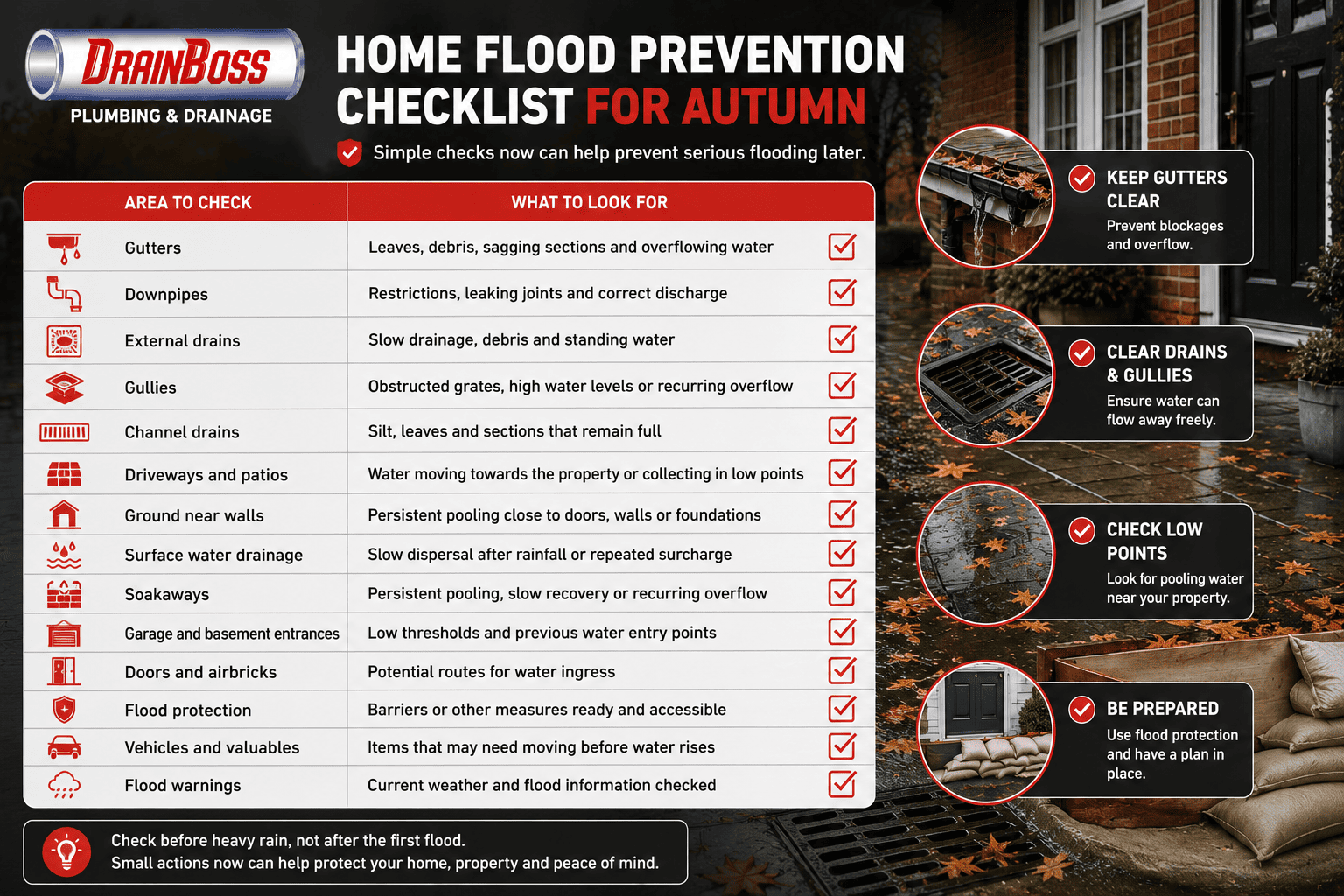
Home Flood Prevention Checklist for Autumn
Autumn flood prevention is most effective when checks are completed before periods of persistent rain rather than after the first overflow has already occurred. A short inspection after dry weather and another after the first substantial rainfall can reveal problems that are otherwise easy to miss.
| Area to Check | What to Look For |
| Gutters | Leaves, debris, sagging sections and overflowing water |
| Downpipes | Restrictions, leaking joints and correct discharge |
| External drains | Slow drainage, debris and standing water |
| Gullies | Obstructed grates, high water levels or recurring overflow |
| Channel drains | Silt, leaves and sections that remain full |
| Driveways and patios | Water moving towards the property or collecting in low points |
| Ground near walls | Persistent pooling close to doors, walls or foundations |
| Surface water drainage | Slow dispersal after rainfall or repeated surcharge |
| Soakaways | Persistent pooling, slow recovery or recurring overflow |
| Garage and basement entrances | Low thresholds and previous water entry points |
| Doors and airbricks | Potential routes for water ingress |
| Flood protection | Barriers or other measures ready and accessible |
| Vehicles and valuables | Items that may need moving before water rises |
| Flood warnings | Current weather and flood information checked |
Good home flood prevention depends on recognising patterns rather than reacting to each storm as an isolated event. If the same drain overflows, the same section of patio floods or water repeatedly moves towards the same doorway, record where it happens and how long the water takes to disappear.
Recurring pooling, overflowing drains or backflow should not be treated as normal simply because they appear only during heavy rain. Understanding how to prevent flooding around your home means identifying whether rainfall is exposing a drainage restriction, poor surface-water management, limited drainage capacity or a vulnerable point where water can reach the building. Acting on those signs before the next prolonged period of autumn rain gives the drainage system and the property a better chance of coping when conditions deteriorate.
Protect Your Home Before the Next Period of Heavy Rain
Reducing flood risk is easier when drainage problems are identified before severe weather exposes them. If external drains repeatedly overflow, water remains around gullies after rainfall or wastewater begins to back up, the cause should be established rather than waiting for the next storm. Depending on the problem, this may involve drain clearance, high-pressure water jetting, CCTV investigation, drain repairs or pumping where flooding has already occurred.
DrainBoss is a family-run drainage company serving homes and businesses across Sussex, Surrey, Kent, Hampshire and South London. The team provides 24/7 emergency assistance and a range of drainage services including drain unblocking, CCTV drain surveys, high-pressure water jetting, drain repairs, gutter cleaning and emergency flood pumping. DrainBoss is fully insured, CHAS accredited and Trading Standards approved, with no call-out charge and pricing agreed before work begins.
Frequently Asked Questions About Protecting Your Home from Heavy Rain and Flooding
Can blocked drains cause flooding during heavy rain?
Yes. A partially blocked drain may still cope with normal household use or light rainfall but struggle when a much larger volume of water enters the system. This can lead to water collecting around gullies, overflowing from external drains or backing up through connected drainage points. Repeated flooding during heavy rain is a sign that the drainage system may need to be checked.
Why does my outside drain overflow when it rains heavily?
An outside drain may overflow because the grate is covered with leaves or debris, the pipe below is restricted, or the incoming flow is temporarily greater than the drain can handle. If the drain clears soon after the rain stops, temporary overloading may be the cause. If it remains full, overflows during moderate rain or does so repeatedly, an internal blockage or another drainage problem may be involved.
Can heavy rain cause drains to back up?
Yes. During intense rainfall, drainage and sewer systems can become surcharged when more water enters them than can be carried away at that moment. Water may then rise through gullies, floor drains, toilets or other connected fixtures. If foul wastewater is backing up, avoid contact with it and reduce use of connected fixtures until the problem has been assessed.
Why does water pool around my house after rain?
Water can collect where ground levels, paving or landscaping direct runoff towards a low point instead of away from the property. Saturated soil can also absorb rainfall more slowly, while blocked gullies or restricted surface water drainage may prevent water from dispersing. Repeated pooling near doors, walls, garages or basement entrances deserves attention because these areas can become routes for water to enter the building.
Can a soakaway overflow during prolonged rainfall?
A soakaway can struggle during prolonged rainfall if the surrounding ground becomes saturated and can no longer absorb water at the usual rate. Overflow can also be linked to excessive incoming flow, restricted connecting pipes or deterioration within the drainage arrangement. Persistent pooling or repeated overflow after different rainfall events should be investigated rather than assumed to be normal.
Should I clear drains before heavy rain?
Accessible external drains, gullies and drainage grates should be checked before periods of heavy rain, especially during autumn when leaves and debris can build up quickly. Removing visible surface debris can help water reach the drainage inlet more freely. Do not remove manhole covers or attempt to enter chambers to investigate a deeper blockage yourself.
How can I stop rainwater from entering my house?
Start by identifying the lowest and most vulnerable entry points, such as external doors, garage entrances, basement openings, light wells and low-level airbricks. Suitable flood barriers and other Property Flood Resilience measures can reduce the risk of water entering through these areas. It is equally important to keep external drainage functioning properly so that rainwater is directed away from the building wherever possible.
What should I do if water starts coming up through a drain?
Water rising out of a drain is different from rainwater simply failing to enter it. It can indicate surcharge, a downstream restriction or another problem preventing the system from discharging normally. Avoid opening chambers, keep away from potentially contaminated water and reduce use of connected fixtures if wastewater is backing up. Once conditions are safe, the drainage system should be checked to identify the cause.
How can I tell if recurring flooding is caused by a blocked drain?
A blockage is more likely if the same drain repeatedly stays full, drains slowly after rainfall, produces gurgling or smells, or overflows even when the surface grate is clear. Problems affecting several connected drains can also indicate a restriction further along the system. However, recurring flooding can also be caused by damaged pipework, root ingress, inadequate drainage capacity or wider surface water issues, so the cause should not be assumed without investigation.
When should a drain be inspected after flooding?
A drain should be inspected if it remains full after rainfall, continues to drain slowly, repeatedly backs up or overflows during later storms. Inspection is also advisable if wastewater has entered the property or if the same area floods during several separate rainfall events. Where the cause is not visible from the surface, a CCTV drain survey can help identify blockages, displaced joints, root ingress or damaged pipework.