

Key Points:
- A Saniflo toilet is a macerator system that grinds waste and pumps it through small pipes instead of relying on gravity drainage.
- These systems allow toilets to be installed in challenging locations such as basements, loft conversions, garages or small cloakrooms.
- Saniflo toilets can be reliable when used correctly, but they require proper maintenance and only suitable materials should be flushed.
- Professional drainage inspections and servicing can help prevent blockages and keep plumbing systems operating efficiently.
A Saniflo toilet is a type of macerator toilet system designed to remove waste using a built-in pump rather than relying solely on gravity. Unlike a traditional toilet that requires a direct connection to a large soil pipe, a Saniflo unit grinds waste into a fine slurry and pumps it through a narrow discharge pipe to the nearest drainage connection. Because of this design, these systems make it possible to install a toilet in locations where conventional plumbing would be difficult, expensive or sometimes impossible.
Saniflo toilets are particularly popular during bathroom renovations and property conversions, where adding a new toilet without major structural work is a priority. They are commonly installed in basement bathrooms, loft conversions, garage conversions, garden offices and even compact cloakrooms under the stairs. In this guide, we explain how Saniflo toilets work, where they can be installed and the main advantages and limitations of this type of system. We also cover common problems that homeowners may encounter and share practical maintenance tips to keep a macerator toilet working efficiently.
What Is a Saniflo Toilet?
A Saniflo toilet is a toilet connected to a macerator unit that processes and pumps waste through a small discharge pipe to the main drainage system. The term “Saniflo” originally refers to a specific brand that manufactures macerator pumps and plumbing systems. Over time, however, the name has become widely used to describe many types of macerator toilets, even when they are produced by other manufacturers.
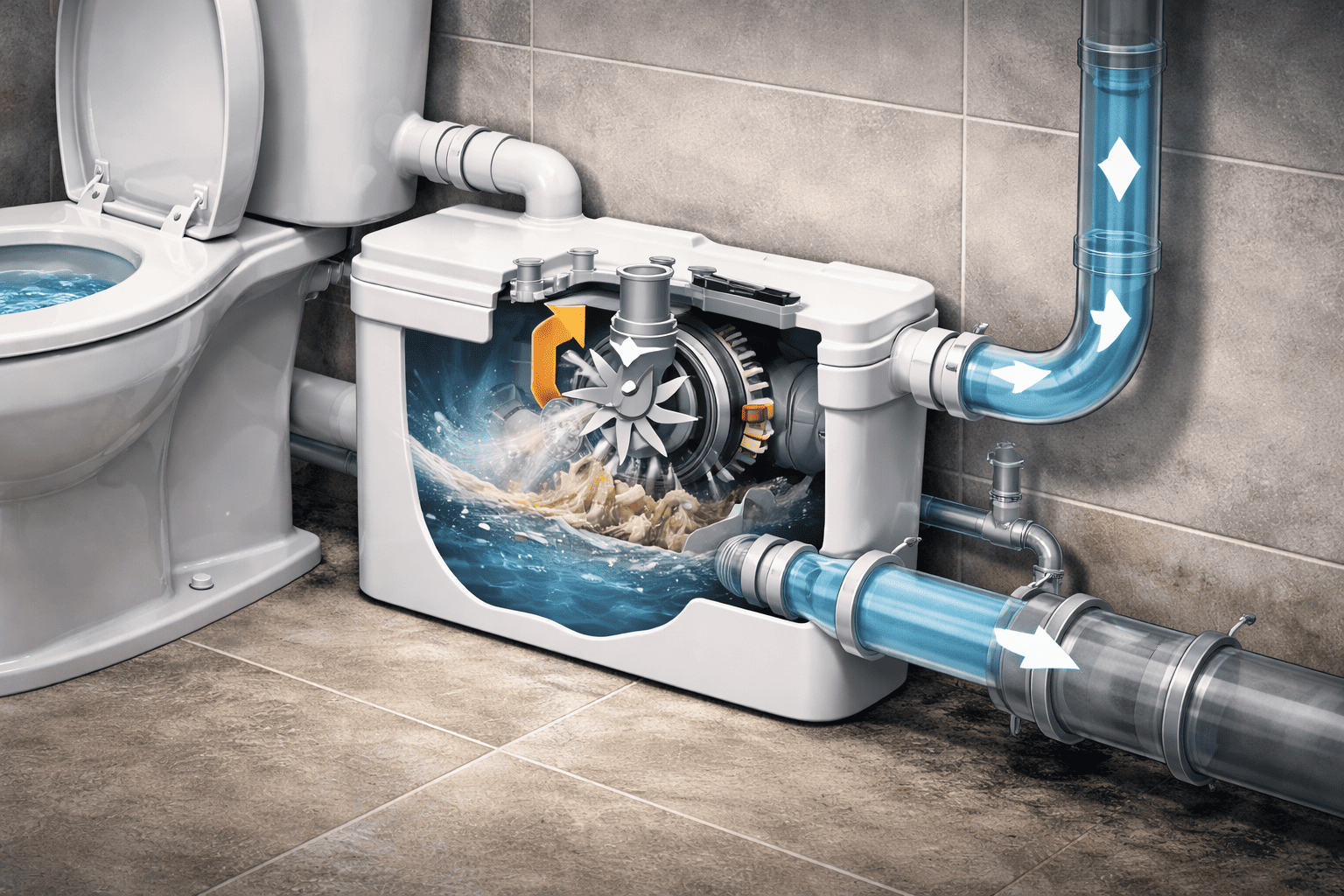
A typical Saniflo system combines two key elements that work together to move waste away from the toilet efficiently. Instead of relying on gravity and large soil pipes, the system uses mechanical and electrical components to process and discharge waste through narrow pipework.
A Saniflo toilet system generally consists of:
- a standard toilet bowl
- a macerator unit installed behind or near the toilet
- an electric motor that powers the macerating blades
- a pump that pushes the processed waste through a small diameter discharge pipe
When the toilet is flushed, waste enters the macerator unit where rotating blades break down solid material into a liquid mixture. An electric pump then forces this waste through a narrow pipe and into the main soil stack or drainage system. This method allows the system to move waste both horizontally and vertically, making installation possible in locations where conventional gravity drainage would not work.
Saniflo and Macerator Toilets: What’s the Difference?
Many people use the term “Saniflo toilet” when referring to any macerator toilet system. In reality, Saniflo is a specific brand that originally developed and patented the macerator concept. The company introduced the first macerator pump system in 1958, allowing toilets to be installed in locations where traditional gravity drainage was not practical.
Because Saniflo was the pioneer of this technology, its name gradually became a common way to describe macerator toilets in general. However, not every macerator toilet is manufactured by Saniflo. Today, a variety of plumbing manufacturers produce similar systems that operate on the same basic principle of grinding waste and pumping it through narrow pipework.
The distinction can be understood more clearly by comparing the two terms:
| Term | Meaning |
| Saniflo | A specific brand that invented the macerator toilet system in 1958 and continues to manufacture macerator pumps and related products. |
| Macerator toilet | A general term for any toilet connected to a macerator pump that grinds and pumps waste through small pipework. |
| Saniflo toilet | Often used informally to describe any macerator toilet, even if the system is produced by another brand. |
Understanding this difference helps avoid confusion when researching plumbing solutions or purchasing equipment. While Saniflo remains one of the most recognised names in the industry, the term macerator toilet is technically the broader category that includes many similar systems.
Our Services:
How Does a Saniflo Toilet Work?
A Saniflo toilet operates using a macerator and pump system that processes and transports waste through small diameter pipework. The entire process takes only a few seconds and begins automatically when the toilet is flushed. Instead of allowing waste to flow directly through large gravity pipes, the system breaks down the material and pumps it towards the main drainage connection.
The process typically works in the following stages:
- The toilet is flushed. Flushing the toilet releases water and waste from the bowl into the macerator unit located behind or close to the toilet.
- Waste enters the macerator chamber. The incoming water raises the level inside the chamber and activates the system.
- Blades grind the waste. Rotating macerator blades break down solid waste and toilet paper into a fine liquid mixture.
- The pump moves the waste through pipework. Once the material has been processed, an internal pump pushes it through a discharge pipe.
- Waste reaches the drainage system. The pumped waste travels through the pipe until it reaches the main soil stack or another suitable drainage connection.
One of the key advantages of this system is that it uses much smaller pipework than traditional toilets. In most installations, the discharge pipe diameter is typically around 22 to 32 mm.
Because the waste is pumped rather than relying on gravity, it can travel significant distances:
- vertically, up to around 5 metres
- horizontally, up to around 100 metres
This ability to move waste in different directions is what allows Saniflo systems to be installed in parts of a property where conventional plumbing would normally be difficult to achieve.
Key Components Inside a Saniflo Macerator
A Saniflo macerator system contains several mechanical and electrical components that work together to process and remove waste efficiently. Each part performs a specific function within the unit, ensuring that waste is broken down and transported through the discharge pipe without relying on gravity. Understanding these components can help homeowners better appreciate how the system operates and why proper maintenance is important.
The main components inside a Saniflo macerator include:
- Macerator blades. These rotating cutting blades break down solid waste and toilet paper into a fine liquid mixture. This process allows the waste to pass easily through narrow pipework without causing blockages.
- Electric motor. The motor powers the macerator blades and the pump. When the unit is activated after flushing, the motor starts automatically and drives the internal mechanisms that process and move the waste.
- Pump or impeller. Once the waste has been macerated, the pump or impeller forces the liquid mixture through the discharge pipe and towards the main drainage system.
- Pressure switch or membrane. This component detects the rise in water level inside the macerator unit when the toilet is flushed. It triggers the motor and starts the maceration and pumping cycle.
- Non return valve. The non return valve prevents waste water from flowing back into the macerator after it has been pumped out. This helps maintain hygiene and protects the system from backflow.
- Discharge pipe. The discharge pipe carries the processed waste from the macerator unit to the main soil stack or drainage connection. Because the waste has already been liquefied, the pipe can be much smaller than conventional drainage pipes.
Together, these components create a compact but highly effective system that allows waste to be transported from areas of a property where traditional gravity drainage would not normally be possible.
Where Can You Install a Saniflo Toilet?
One of the biggest advantages of a Saniflo system is the flexibility it offers when planning new bathroom installations. Because the system pumps waste through small diameter pipes, it allows toilets to be installed in areas of a property where conventional plumbing would normally be difficult or expensive to install.
Saniflo toilets are commonly used in the following locations:
- Basement bathrooms where the main drainage pipe is positioned above floor level
- Loft conversions where connecting to the existing soil stack may be challenging
- Garage conversions that require a new toilet or small bathroom
- Garden rooms or garden offices where running large drainage pipes may not be practical
- Under-stairs cloakrooms where space and pipe access are limited
- Property extensions located far from the soil stack
- Commercial properties such as small cafés, offices or shops that need additional toilet facilities
These systems are particularly useful in situations where drainage pipes cannot rely on gravity to move waste effectively. In many renovation projects, installing a traditional toilet would require significant structural work to accommodate large soil pipes and create the necessary downward gradient.
By using a macerator and pump, a Saniflo system can transport waste through narrow pipework and across longer distances. This makes it a practical solution for adding toilets in parts of a building where traditional drainage layouts would otherwise require extensive building work or major alterations to the existing plumbing system.
Advantages of Installing a Saniflo Toilet
Saniflo systems have become a popular solution for homeowners and property developers who need to install additional toilet facilities without major alterations to existing plumbing. Because these systems use a macerator and pump to move waste, they offer several practical advantages over traditional gravity fed toilets in certain situations.
Some of the main benefits of installing a Saniflo toilet include:
- Flexible installation location. A Saniflo system can be installed in areas of a property where a conventional toilet would be difficult to connect to the main drainage system.
- Small diameter pipework. The system uses narrow discharge pipes rather than large soil pipes, which simplifies installation and reduces the need for extensive plumbing work.
- Minimal structural work. In many cases there is no need to dig floors, move major pipework or alter the building structure to install the toilet.
- Ideal for property renovations. Saniflo toilets are particularly useful when converting spaces such as basements, lofts or garages into functional living areas.
- Compact and discreet design. The macerator unit is typically positioned behind the toilet or concealed within a wall or cabinet, helping to maintain a neat and unobtrusive appearance.
- Faster installation compared with traditional plumbing. Because large drainage pipes and complex structural changes are not required, installation can usually be completed more quickly.
Another potential benefit is that adding an additional toilet or bathroom can increase the overall functionality and value of a property. For many homeowners, installing a Saniflo system provides a practical way to achieve this without undertaking major building work.
Are Saniflo Toilets Any Good?
Modern Saniflo systems are generally considered a reliable plumbing solution when installed and used correctly. Over the years, macerator technology has improved significantly, with manufacturers designing units that are more durable, efficient and suitable for both residential and light commercial use. Many homeowners choose these systems when traditional plumbing is not practical, and they often perform well when maintained properly.
A typical Saniflo macerator system is designed to handle a large number of operating cycles. Many models are tested for around 50,000 flushes, which reflects several years of normal household use. In terms of lifespan, a well maintained unit can often last 10 to 15 years, although individual components such as the macerator mechanism may require servicing or replacement during that time.
Like any mechanical system, reliability depends largely on how the toilet is used. When only appropriate waste and toilet paper are flushed and the system is cleaned periodically, Saniflo toilets can provide consistent performance for many years. Problems are more likely to occur when unsuitable items are flushed or when the system is neglected, which is why correct usage and regular maintenance are important for long term reliability.
Potential Drawbacks of Saniflo Toilets
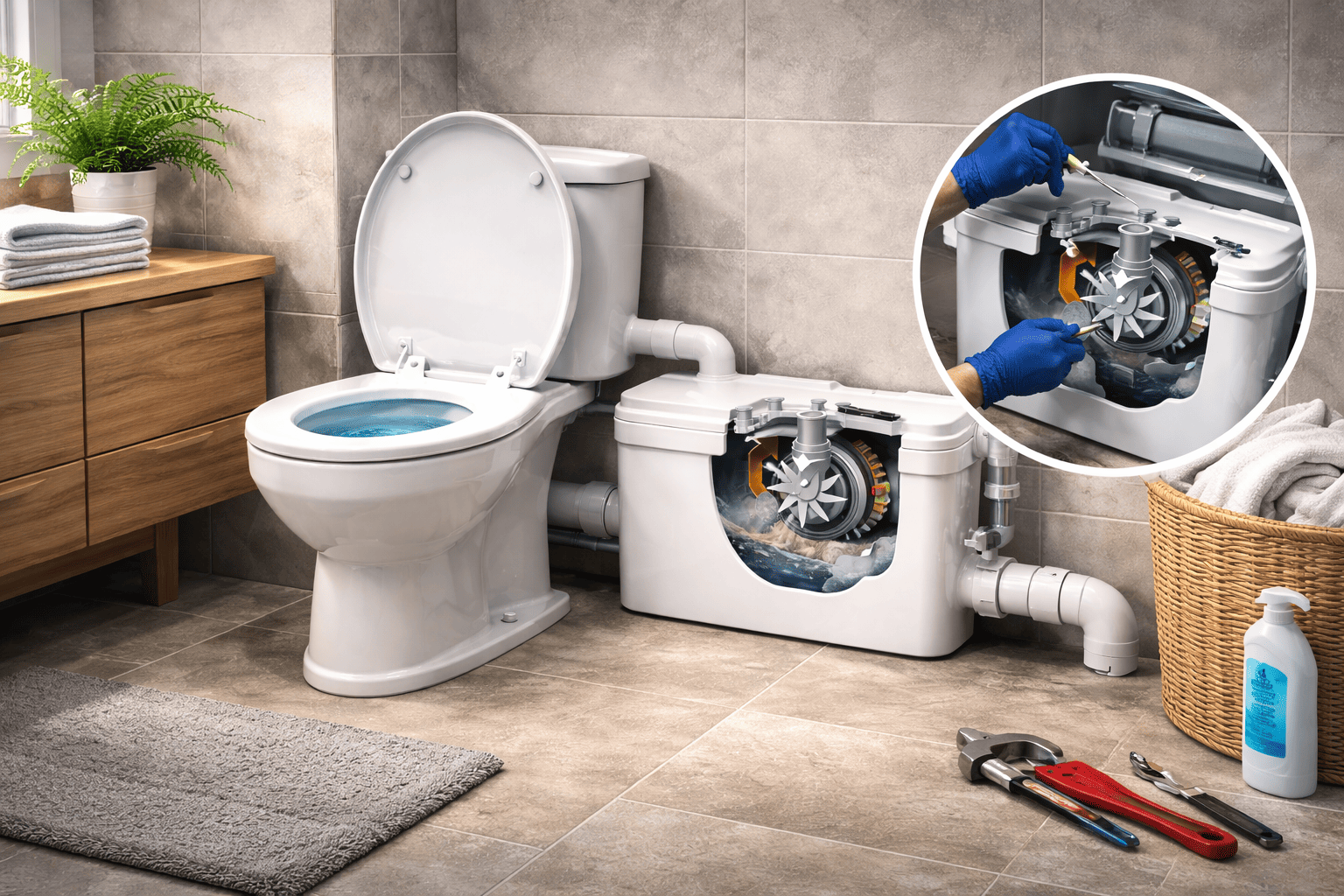
Although Saniflo systems offer many advantages, they are not always the ideal solution for every property. Like any plumbing system that relies on mechanical components, macerator toilets have certain limitations that homeowners should be aware of before installation.
Some of the potential drawbacks include:
- Noise during operation. When the system activates after flushing, the macerator and pump produce a short mechanical sound while processing and discharging the waste. Although this typically lasts only a few seconds, it can be noticeable in quiet environments.
- Requires electricity. Unlike traditional gravity fed toilets, Saniflo systems rely on an electric motor. This means the unit will not operate during a power outage.
- More mechanical parts than traditional toilets. Because the system includes moving components such as blades, motors and pumps, there are more parts that may eventually wear out compared with a standard toilet.
- Improper use may cause blockages. Flushing unsuitable materials can obstruct the macerator or discharge pipe, which may lead to performance issues.
- Servicing or component replacement may be required. Over time, some internal parts of the macerator unit may need maintenance or replacement to ensure the system continues to operate efficiently.
Despite these limitations, Saniflo systems remain a practical solution in many situations where traditional plumbing is difficult to install. Understanding their operational requirements helps ensure the system performs reliably over the long term.
What Should Not Be Flushed in a Saniflo Toilet?
A Saniflo system is designed to process human waste and normal toilet paper. Although the macerator blades can break down organic material effectively, they are not intended to handle many common household items. Flushing unsuitable materials can obstruct the macerator mechanism or block the discharge pipe, which may prevent the system from operating correctly.
To avoid damage and reduce the risk of a macerator blockage, the following items should never be flushed into a Saniflo toilet:
- Wet wipes. Even wipes labelled as flushable can remain intact and clog the macerator or pipework.
- Sanitary products. Items such as sanitary towels and tampons do not break down easily and can quickly jam the macerator blades.
- Cotton pads or cotton buds. These materials tend to wrap around internal components and restrict the movement of the macerator mechanism.
- Nappies. Disposable nappies expand when wet and can easily block the system.
- Paper towels. Unlike toilet paper, paper towels are much thicker and do not dissolve quickly in water.
- Excessive amounts of toilet paper.
While toilet paper is safe to flush, using very large quantities at once can still overload the macerator unit.
Following these guidelines helps protect the internal components of the system and reduces the likelihood of blockages or mechanical problems. Proper usage is one of the most important factors in keeping a Saniflo toilet working efficiently over the long term.
Common Problems with Saniflo Toilets
Although Saniflo systems are designed to operate reliably, occasional problems can occur over time. Many of these issues are related to blockages, mechanical wear or improper use. Recognising the early signs of a fault can help prevent more serious damage and allow the system to be repaired before the problem worsens.
Saniflo Toilet Not Pumping
One of the most common issues is when the toilet flushes but the system does not pump waste away as expected. This can cause water to remain in the macerator unit or lead to slow drainage.
Possible causes include:
- Blockage in the discharge pipe that restricts the flow of waste
- Pump failure caused by mechanical wear or internal damage
- Electrical issue such as a faulty switch, damaged wiring or power supply problem
Saniflo Making Loud Noises
Saniflo units normally produce a short operating sound when activated. However, unusually loud or irregular noises may indicate that something inside the system is not functioning properly.
Common reasons include:
- Debris inside the macerator interfering with the cutting mechanism
- Worn internal components that affect the smooth operation of the motor or blades
- Partial blockage within the unit or discharge pipe that forces the pump to work harder than normal
Saniflo Toilet Smells
Unpleasant odours coming from the toilet or macerator unit can sometimes develop if the system is not cleaned or maintained regularly.
This may be caused by:
- Poor maintenance allowing residue to accumulate inside the unit
- Trapped waste within the macerator chamber or pipework
- Ventilation problems that allow odours to build up in the system
If these problems occur frequently, it may indicate that the system requires inspection or servicing to restore proper operation.
Comments from DrainBoss: In our experience, many problems with macerator toilets occur when unsuitable materials are flushed into the system. Items such as wipes, sanitary products or paper towels can quickly cause blockages inside the macerator or discharge pipe. If you notice repeated drainage issues, it is often a good idea to have the drainage system inspected to rule out underlying pipe problems.
Maintenance Tips for Saniflo Systems
Regular maintenance plays an important role in keeping a Saniflo system operating smoothly and reducing the risk of mechanical problems. Although macerator toilets are designed to be durable, proper care helps extend the lifespan of the internal components and ensures the system continues to function efficiently.
The following maintenance practices can help keep a Saniflo toilet in good working condition:
- Only flush toilet paper and human waste. Limiting what enters the system helps prevent damage to the macerator mechanism and reduces the likelihood of internal blockages.
- Clean the system regularly. Periodic cleaning helps remove residue that may accumulate inside the unit and keeps the system hygienic.
- Descale the macerator periodically. In areas with hard water, limescale can build up inside the macerator. Using a suitable descaling product helps maintain the efficiency of internal components.
- Listen for unusual noises. Changes in the sound of the system during operation may indicate developing mechanical issues or debris inside the unit.
- Arrange professional servicing if needed. If the system begins to perform poorly or develops recurring problems, professional inspection and servicing can help identify faults and prevent more serious damage.
By following these basic maintenance guidelines, homeowners can help ensure their Saniflo system continues to operate reliably for many years.
Comments from DrainBoss: Regular maintenance plays an important role in preventing drainage issues in properties with macerator systems. Small problems such as slow drainage, unusual noises or occasional odours can sometimes indicate developing blockages in the pipework. Addressing these issues early can help prevent more serious drainage problems later.
Saniflo Toilet vs Traditional Toilet
Saniflo toilets and traditional gravity fed toilets serve the same basic purpose, but they operate in very different ways and are suited to different installation conditions. Understanding these differences can help property owners decide which system is most appropriate for their situation.
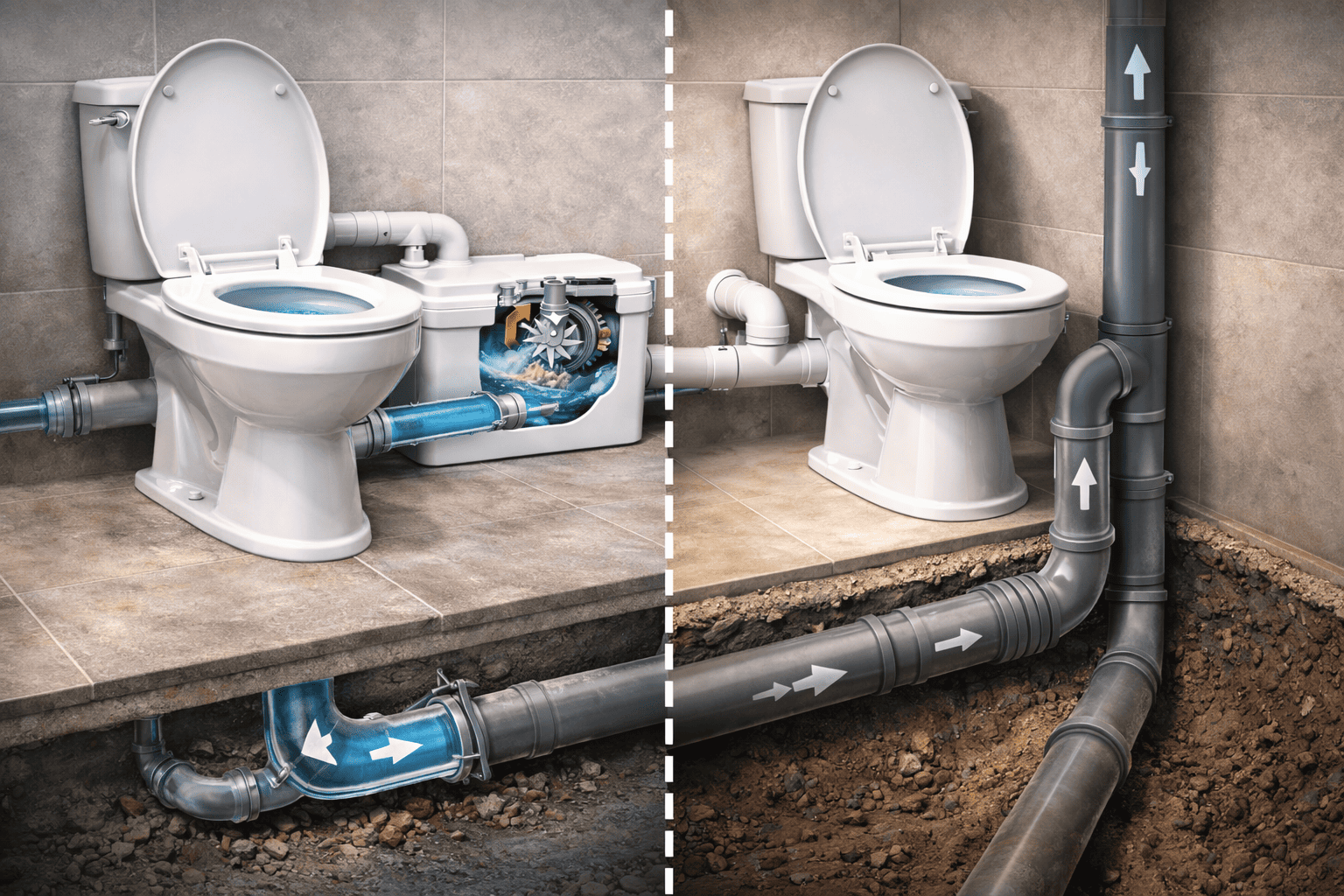
A traditional toilet relies on gravity and must be connected directly to a large soil pipe with the correct downward slope. In contrast, a Saniflo system uses a macerator and pump to move waste through smaller pipework, allowing the toilet to be installed in locations where conventional drainage would be difficult to achieve.
The main differences between the two systems can be seen in the following comparison:
| Feature | Saniflo Toilet | Traditional Toilet |
| Installation requirements | Can be installed without major structural changes in many cases | Requires direct connection to the soil stack with proper gravity drainage |
| Pipe size | Uses small diameter discharge pipes | Requires large soil pipes for waste removal |
| Flexibility of location | Can be installed in areas far from existing drainage connections | Must be located close to the main drainage system |
| Maintenance needs | Contains mechanical components that may require occasional servicing | Generally requires minimal maintenance |
| Installation cost | Often lower when major plumbing work would otherwise be required | Can be higher if new drainage pipes need to be installed |
In many properties, a traditional toilet remains the simplest solution when the drainage system is easily accessible. However, a Saniflo system can be a practical alternative when adding a toilet in areas where conventional plumbing would involve extensive building work.
Our Services:
Is a Saniflo Toilet Right for Your Home?
Choosing the right toilet system often depends on the layout of the property and the accessibility of the existing drainage system. In many homes, installing a conventional toilet is straightforward because the soil stack and main drainage pipes are located nearby. However, in certain renovation or extension projects, connecting a new toilet to the existing plumbing can be more complicated.
A Saniflo system can be a suitable solution when adding a toilet in areas where installing traditional drainage pipes would require extensive structural work. Because the system pumps waste through narrow pipework, it allows greater flexibility when planning new bathroom facilities.
A Saniflo toilet may be a practical option if you are:
- Adding a bathroom in a basement where the drainage pipes are located above floor level
- Converting a loft and need a toilet without running large soil pipes through multiple floors
- Installing a WC in an outbuilding such as a garage, garden room or detached workspace
- Adding an en suite bathroom in a part of the property where connecting to the existing drainage system is difficult
In these types of projects, a macerator system can make it possible to add essential facilities without major alterations to the structure of the building. Consulting a qualified plumber or drainage specialist can help determine whether this type of system is suitable for your specific property layout.
Professional Installation and Drainage Advice
Although Saniflo systems are designed to simplify toilet installations in difficult locations, correct installation is still essential for reliable performance. Poorly installed pipework, incorrect connections or inadequate drainage planning can lead to operational problems such as slow discharge, recurring blockages or unnecessary strain on the macerator unit.
For this reason, many property owners choose professional assistance when installing or maintaining a macerator system. Experienced plumbing and drainage specialists can ensure the system is connected properly and operating in line with the manufacturer’s recommendations.
Professional services may include:
- Professional plumbing installation to ensure the macerator system and pipework are fitted correctly
- Drainage inspections to assess the condition and capacity of the existing drainage network
- Fixing blockages connected to macerator systems when discharge pipes or drains become obstructed
- CCTV drain surveys to identify hidden drainage issues if persistent problems occur
By identifying potential drainage issues early and ensuring the system is installed correctly, professional support can help maintain efficient operation and reduce the likelihood of future problems.
Final Thoughts
A Saniflo toilet is a practical plumbing solution that uses a macerator system to grind and pump waste through narrow pipework to the main drainage system. This allows toilets to be installed in areas where traditional gravity drainage would normally be difficult or expensive to install. Systems like these are commonly used in property renovations, loft conversions, basement bathrooms and other projects where extending conventional drainage pipework would require significant structural work.
If you experience drainage problems in your property, it is important to identify the underlying cause as early as possible. DrainBoss Plumbing & Drainage is a family run drainage company serving Sussex, Surrey, Kent, Hampshire, Brighton and South London. Our experienced engineers provide professional drain unblocking, drainage inspections and CCTV drain surveys to identify and resolve drainage issues quickly and efficiently. If you need reliable advice or fast assistance with a drainage problem, our team is available 24 hours a day to help restore your system to proper working order.
Saniflo Toilets FAQ: Common Questions Answered
What is a Saniflo toilet and how is it different from a normal toilet?
A Saniflo toilet is a type of macerator toilet system that uses a pump to move waste through narrow pipework rather than relying only on gravity. When the toilet is flushed, the waste enters a macerator unit where it is broken down and then pumped into the drainage system. This allows the toilet to be installed in locations where a traditional soil pipe connection would be difficult. As a result, Saniflo systems are often used in property renovations, extensions and conversions.
How does a Saniflo macerator system work?
A Saniflo system operates using a combination of macerating blades and a pump located in a compact unit behind or near the toilet. When the toilet is flushed, the waste enters the chamber and the internal mechanism grinds it into a liquid mixture. The pump then pushes the waste through a small diameter discharge pipe towards the main drainage system. This process usually takes only a few seconds and allows waste to travel both horizontally and vertically.
Where can a Saniflo toilet be installed in a property?
Saniflo toilets are commonly installed in areas where connecting to the main drainage pipe would otherwise require major building work. They are frequently used in basement bathrooms, loft conversions and garage conversions. Homeowners may also install them in garden rooms or small cloakrooms where space and drainage access are limited. Because the system pumps waste rather than relying entirely on gravity, it provides greater flexibility when planning new bathroom installations.
How long does a Saniflo toilet typically last?
The lifespan of a Saniflo system can vary depending on usage, maintenance and the quality of installation. In many cases, a well maintained unit can last between 10 and 15 years. Some systems are tested for around 50,000 flush cycles, which represents many years of normal household use. Regular maintenance and proper usage play an important role in ensuring the system continues to operate reliably over time.
What causes problems or blockages in Saniflo toilets?
Most issues with Saniflo systems occur when unsuitable items are flushed into the toilet. Materials such as wet wipes, sanitary products, nappies or paper towels can obstruct the macerator mechanism or discharge pipe. Poor maintenance or scale build up inside the system may also affect its performance. Following the manufacturer’s usage guidelines and carrying out periodic cleaning can help prevent many common problems.




2 responses
★★★★★
I didn’t realise how much these systems rely on correct usage until reading this. The part about what not to flush is probably where most people go wrong. Seems like they work well, but only if you’re quite careful with them.
★★★★★
The flexibility of installing a toilet in places like basements or lofts is definitely appealing. At the same time, the reliance on electricity and extra components would make me think twice before choosing one. Feels like a good option in specific situations rather than a standard replacement.