

Key Points:
- Sewage treatment plant regulations in England place clear legal responsibility on property owners using private drainage systems.
- General Binding Rules set the standard for most domestic systems, covering discharge limits, installation, and ongoing maintenance.
- Non-compliant systems can affect property sales, lead to enforcement action, and require costly upgrades or replacement.
- Early professional assessment and regular maintenance help protect the environment and reduce long-term risks and expenses.
If your property is not connected to the mains sewer, you are legally responsible for how wastewater is treated and discharged. This applies to homeowners, landlords, and anyone managing a property with a sewage treatment plant or other private drainage system. Unlike mains drainage, where responsibility largely ends at the property boundary, private systems place the ongoing duty of care firmly on the owner.
Over recent years, the regulatory approach in England has shifted towards stricter environmental protection and clearer accountability. Rules have been tightened to reduce pollution of rivers, streams, and groundwater, and to ensure that private wastewater systems operate to an acceptable standard at all times. As a result, systems that were once considered acceptable may no longer meet current requirements without upgrades, improved maintenance, or changes to how they discharge treated effluent.
Failing to understand or follow these regulations can have real consequences. Non-compliant systems may lead to enforcement action, financial penalties, or compulsory remedial work. In practical terms, this can also cause delays or complications when selling a property, unexpected costs, and avoidable damage to the surrounding environment. Knowing your legal responsibilities is therefore not just about paperwork, but about protecting your property, its value, and the wider area around it.
Sewage Treatment Plants vs Septic Tanks: Why the Difference Matters Legally
Although sewage treatment plants and septic tanks are often mentioned together, they are treated very differently under current regulations. The key reason is the level of treatment each system provides before wastewater is discharged back into the environment.
A traditional septic tank mainly separates solids from liquids and relies on a drainage field to disperse partially treated effluent into the ground. A sewage treatment plant, by contrast, uses additional biological processes, usually with aeration, to clean wastewater to a much higher standard before discharge. From a legal and environmental perspective, this difference is critical.
Septic tank regulations and sewage treatment plant regulations are closely linked because many of the recent changes were introduced to address pollution caused by older or poorly performing septic systems. Where septic tanks fail to protect watercourses or groundwater, the law now requires a higher standard of treatment.
In practice, a septic tank is no longer acceptable in certain situations, including:
- when it discharges directly into a watercourse such as a stream or ditch
- when ground conditions do not allow for a compliant drainage field
- when an existing system causes pollution or repeated issues
- when a property is being upgraded to meet modern environmental standards
In these cases, installing a sewage treatment plant is often the only realistic way to remain compliant. A treatment plant represents the next level of compliance because it significantly reduces pollutants, offers more flexibility in discharge options, and aligns with the long-term direction of environmental regulation in England. For many property owners, it is not just an upgrade, but a future-proof solution that meets both current rules and likely expectations going forward.
Who Regulates Sewage Treatment Plants in England
The regulation of sewage treatment plants in England is designed to protect the environment while giving property owners clear and practical rules to follow. Responsibility is shared between national regulation and local oversight, with one central authority playing a leading role.
The Environment Agency is the primary body responsible for controlling small sewage discharges in England. Its role is to prevent pollution of rivers, streams, groundwater, and surrounding land. The Agency sets the standards, monitors compliance, and has the authority to take action where systems cause or risk environmental harm.
To simplify what was once a complex permitting system, the General Binding Rules were introduced. These rules define a minimum legal standard that most small sewage treatment plants can operate under without needing an individual permit. They exist to make compliance clearer for property owners while still ensuring that wastewater is treated and discharged safely.
The General Binding Rules sit within the wider Environmental Permitting Regulations. These regulations provide the legal framework that allows sewage treatment plants to operate either under standard rules or, where necessary, under a bespoke environmental permit. If a system cannot meet the General Binding Rules due to location, discharge volume, or environmental sensitivity, the Environmental Permitting Regulations determine how a permit must be obtained.
It is important to note that these rules apply to England only. Different regulatory systems exist in Scotland, Wales, and Northern Ireland, and compliance in one part of the UK does not automatically mean compliance in another.
| Regulatory element | Purpose | Who it applies to |
| Environment Agency | Oversees sewage discharges and environmental protection | All owners of private drainage systems in England |
| General Binding Rules | Sets standard conditions for small sewage discharges | Most domestic sewage treatment plants |
| Environmental Permitting Regulations | Provides legal basis for permits where rules cannot be met | Systems exceeding limits or in sensitive locations |
| England-only application | Defines geographical scope of the rules | Properties located in England |
Understanding who regulates sewage treatment plants, and under which framework, helps property owners avoid assumptions that can lead to non-compliance. It also makes it clearer when professional advice or direct contact with the regulator may be required.
The General Binding Rules Explained
The General Binding Rules set out the minimum legal standards that most private sewage treatment systems in England must meet. They are not optional guidance, but legally enforceable requirements designed to ensure that small sewage discharges do not harm the environment.
These rules apply to anyone who owns or operates a sewage treatment plant or septic tank that serves a domestic property or a small number of users. In regulatory terms, the owner is referred to as the “operator”. This means responsibility remains with the property owner, even if maintenance or servicing is carried out by a third party.
A system is classed as a small sewage discharge when it releases treated wastewater below defined daily volume limits. Typical domestic sewage treatment plants fall within this category and can operate without an environmental permit, provided all General Binding Rules are met. If those limits are exceeded, or if the site conditions are unsuitable, a permit may be required instead.
Under the General Binding Rules, the operator has clear responsibilities, including:
- ensuring the system is correctly installed and suitable for the location
- maintaining the system so it works effectively at all times
- arranging regular emptying and servicing by authorised contractors
- preventing pollution of watercourses, land, and groundwater
- taking prompt action if a fault, blockage, or discharge issue occurs
The core principle behind the General Binding Rules is prevention rather than formality. Compliance is not about paperwork or box ticking, but about making sure wastewater is treated to an acceptable standard before it leaves the system. When a sewage treatment plant is properly maintained and used as intended, it protects the environment and reduces the risk of enforcement action for the property owner.
Our Services:
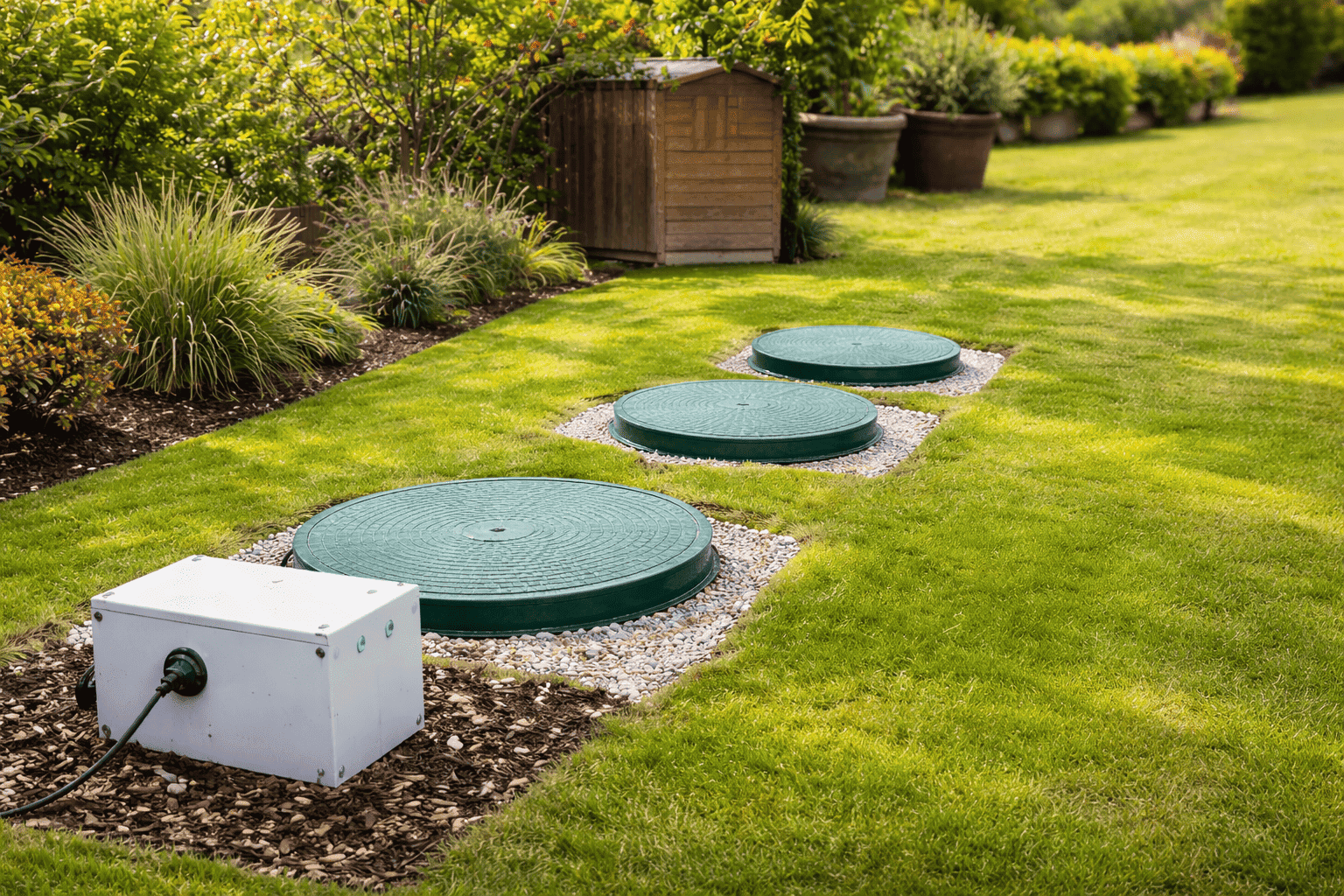
Discharge Regulations: Where Treated Effluent Is Allowed to Go
How and where treated wastewater is discharged is one of the most tightly regulated aspects of sewage treatment plant operation. The rules differ depending on whether effluent is released into the ground or into surface water.
Discharge to Ground
When treated effluent is discharged to ground, it must pass through a properly designed infiltration system, such as a drainage field constructed in accordance with BS 6297. The term ‘soakaway’ is often used informally, but in regulatory terms this refers to a compliant infiltration system rather than a simple pit or rubble-filled hole. The key requirement is that the system provides controlled dispersion and further treatment of effluent within the soil.
The drainage field must be correctly designed and constructed to recognised standards and matched to the ground conditions. Discharge volumes must remain within the limits for small sewage discharges, and the location must meet strict separation distances from buildings, watercourses, and drinking water sources. Poor design or unsuitable soil can make discharge to ground non-compliant.
Discharge to Surface Water
Surface water discharge is only allowed where treated effluent meets a high standard of cleanliness. A watercourse includes rivers, streams, ditches, canals, and other bodies of flowing water. Enclosed or stagnant water, such as ponds, is not acceptable.
For this reason, any discharge to surface water must come from a sewage treatment plant, not a septic tank. Septic tank discharge to a watercourse is prohibited because it does not provide adequate treatment and poses a pollution risk. In locations where surface water discharge is the only viable option, a compliant sewage treatment plant is therefore essential.
Installation and Building Regulations for Sewage Treatment Plants
Any sewage treatment plant installed in England must meet recognised technical standards. Domestic systems are required to comply with BS EN 12566-3, confirming that the unit is structurally sound and capable of treating wastewater effectively. CE marking is also mandatory, showing that the system is approved for use and meets required performance standards.
Building Regulations control where a sewage treatment plant and its drainage field can be located. Minimum distances must be maintained from buildings, watercourses, and sensitive water sources such as boreholes and springs. These separations are essential to reduce health risks and prevent contamination.
Before installation, percolation testing is used to assess soil suitability and determine whether a drainage field can function correctly. The drainage field must then be designed and installed to the correct specification, ensuring treated effluent disperses safely within the soil.
Most installations require approval from the local authority under Building Regulations. This step confirms that the system complies with current standards and helps avoid future compliance or enforcement issues.
Power Supply and Operational Requirements
Unlike traditional septic tanks, sewage treatment plants rely on electrical components to function correctly. A continuous power supply is essential for the system to treat wastewater to the required standard and remain compliant with regulations.
Most sewage treatment plants are designed to tolerate only a limited period without electricity. Short interruptions may be acceptable, but extended power loss can quickly reduce treatment performance. Manufacturers usually specify the maximum time a system can operate safely without power, and exceeding this can lead to untreated or poorly treated effluent leaving the system.
Electrical components play a central role in treatment, including:
- air pumps that introduce oxygen into the system
- biological processes that break down waste more effectively
- consistent circulation of wastewater between treatment chambers
When power supply is unreliable, these processes are disrupted. Without aeration, the biological treatment quickly becomes less effective, increasing the risk of pollution. From a regulatory perspective, this means that repeated or prolonged power interruptions can put a system into non-compliance, even if the installation itself meets all technical standards.
Maintenance, Desludging and Ongoing Compliance
Ongoing compliance does not end once a sewage treatment plant is installed. Regular maintenance is a legal and practical requirement to ensure the system continues to treat wastewater effectively and does not cause pollution.
All sewage treatment plants require regular desludging to remove accumulated solids. This must be carried out by a licensed waste carrier, ensuring that waste is transported and disposed of in line with environmental regulations. How often this is needed depends on the size of the system, usage levels, and the manufacturer’s guidance, but most domestic systems require emptying at least once a year.
Routine servicing is equally important. Scheduled inspections help identify wear, component failure, or reduced treatment performance before these issues lead to non-compliance. Property owners should also keep maintenance records, including service reports and waste transfer notes, as these may be requested during inspections or when selling a property.
Common signs that a system may not be meeting regulatory requirements include:
- unpleasant odours around the treatment plant or discharge point
- slow drainage or repeated blockages
- visible solids or cloudy effluent at the outlet
- alarms or faults indicated by the control unit
Addressing these warning signs early helps maintain compliance and avoids more serious problems, including environmental damage and enforcement action.
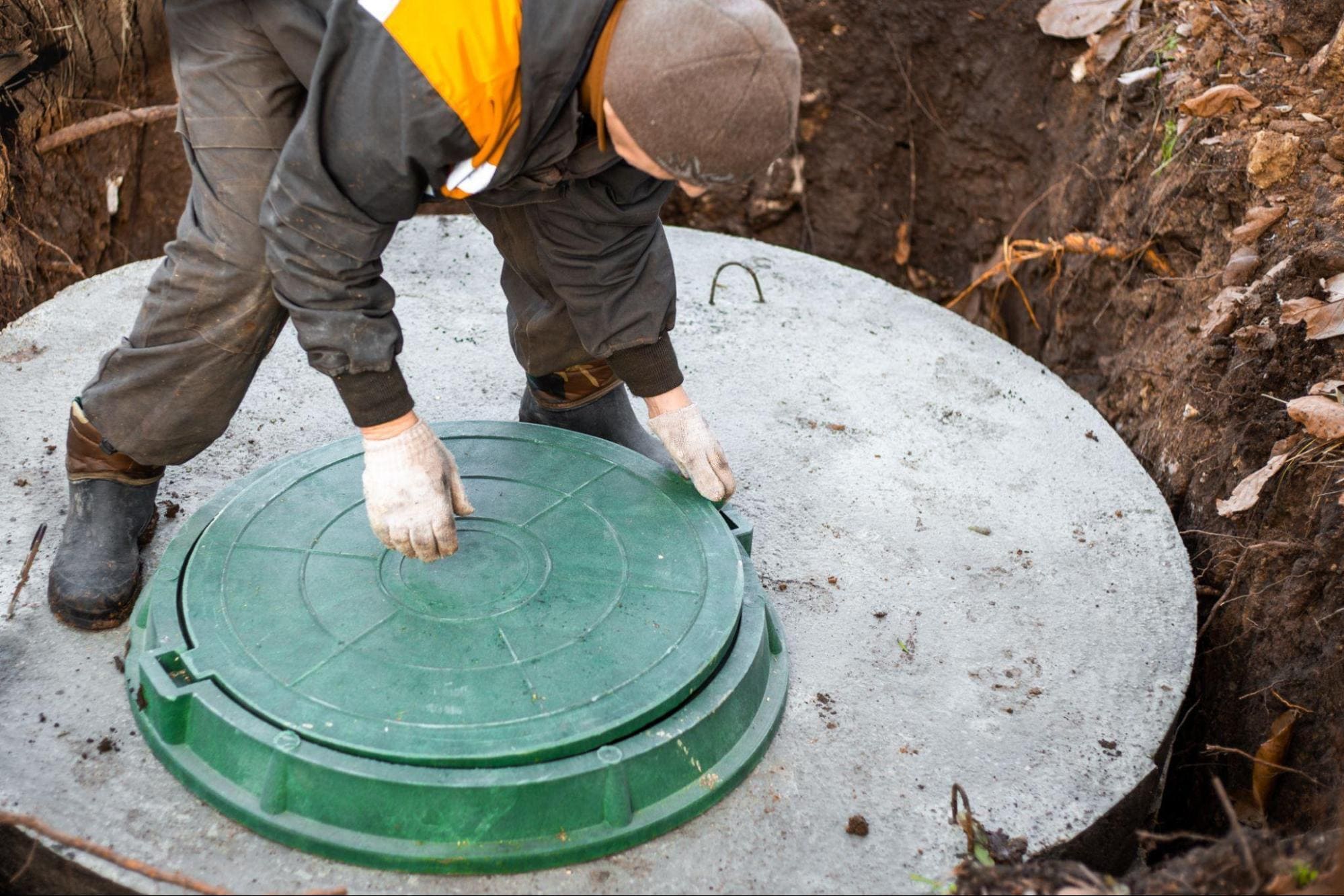
What Happens If Your System Does Not Meet the Regulations
When a sewage treatment plant or septic system is found to be non-compliant, the response is focused on preventing pollution rather than immediate punishment. However, owners are still expected to take corrective action within a reasonable timeframe.
The Environment Agency may become involved if a system causes pollution, poses an environmental risk, or is reported during an inspection or property transaction. In most cases, the first step is advice and guidance on how to bring the system back into compliance.
Depending on the issue, the solution may involve:
- upgrading specific components to improve treatment performance
- modifying the discharge arrangement to meet current rules
- replacing the system entirely where upgrades are not viable
Before approving a replacement, it is often necessary to check whether the property can be connected to the mains sewer. If a public sewer is reasonably accessible, connection may be required instead of installing or replacing a private system. Only where connection is not feasible will continued use of a private sewage treatment plant usually be supported.
Ignoring non-compliance can lead to more serious consequences, including:
- formal enforcement notices
- mandatory remedial works within set deadlines
- financial penalties
- legal action in severe or ongoing cases
Taking early action when problems are identified is the most effective way to limit disruption, control costs, and avoid enforcement measures.
DrainBoss Comments: In practice, many compliance issues arise not from faulty equipment, but from systems that were never properly assessed for their location. We often see installations that worked for years but no longer meet current expectations due to environmental or regulatory changes. A professional review usually identifies practical solutions before problems escalate.
When You Need an Environmental Permit Instead of General Binding Rules
The General Binding Rules cover most domestic sewage treatment plants, but they do not apply in every situation. Where a system falls outside these standard conditions, an environmental permit is required to operate legally.
A permit is usually needed if the volume of treated effluent discharged exceeds the limits for small sewage discharges. It may also be required where a site cannot meet the minimum separation distances from buildings, watercourses, or water supply sources. In these cases, the risk to the environment is considered higher and must be assessed individually.
Sensitive locations can also trigger the need for a permit. These include areas where groundwater is particularly vulnerable or where the local environment is already under pressure. Even a well maintained system may require additional controls in such settings.
Consulting early is important because installing or altering a system without the correct permit can lead to enforcement action and costly changes later. Speaking to the regulator or a qualified professional before work begins helps confirm whether the General Binding Rules apply or whether a permit is required from the outset.
Groundwater Source Protection Zones (SPZs)
Groundwater Source Protection Zones are designated to safeguard public drinking water supplies from pollution. They play an important role in determining whether a sewage treatment plant can be legally installed or operated.
SPZ1 is the most sensitive inner zone, located closest to a drinking water source. Because contaminants can reach the water supply very quickly in these areas, sewage discharges are tightly controlled.
In some cases, the location of a property alone can make a private sewage system unacceptable. Even a fully compliant treatment plant may not be permitted if it presents a risk to protected groundwater. Checking the site location is therefore essential before any installation or upgrade.
Installation may not be possible without alternatives where:
- the discharge or drainage field falls within SPZ1
- groundwater vulnerability is high
- required separation distances cannot be met
- no permit can be granted for discharge
Where these restrictions apply, connection to the mains sewer or another wastewater solution may be required instead.
Our Services:
Buying or Selling a Property with a Sewage Treatment Plant
When a property uses a sewage treatment plant, its compliance status becomes an important part of any sale or purchase. Private drainage systems are not covered by standard mains sewer arrangements, so responsibility must be clearly understood by both parties.
The seller is responsible for ensuring that the system complies with current regulations at the point of sale. This includes making sure the treatment plant is correctly installed, properly maintained, and operating within the rules. Any known issues should be addressed in advance, as unresolved non-compliance can delay or derail a transaction.
The buyer takes on full responsibility for the system once the sale is complete. This makes it essential to understand the condition and legal status of the sewage treatment plant before committing to the purchase. A non-compliant system can lead to unexpected upgrade costs or enforcement action after completion.
As part of the sale, the following information should be provided:
- details of the sewage treatment plant and drainage system
- the location of key components and the discharge point
- maintenance instructions and service records
- evidence of compliance or any permits in place
Non-compliance can affect a transaction in several ways, including reduced property value, renegotiation of the sale price, or requirements for remedial work as a condition of sale. Surveys and inspections play a key role here, providing an independent assessment of the system and helping both buyers and sellers make informed decisions before contracts are exchanged.
DrainBoss Comments: Checking compliance early, especially before buying or selling a property, can save significant time and expense. Independent inspections help clarify whether a system meets current rules or requires attention. This approach gives property owners confidence and avoids unexpected obligations later on.
Common Compliance Mistakes Homeowners Make
Many compliance issues arise not from deliberate neglect, but from simple misunderstandings about how private drainage systems are regulated. These mistakes can be costly if left unaddressed.
One common error is confusing a septic tank with a sewage treatment plant. Homeowners often assume that both systems are regulated in the same way, when in reality the level of treatment and permitted discharge options differ significantly. This misunderstanding can lead to illegal discharge arrangements.
Incorrect discharge is another frequent issue. Examples include using a soakaway instead of a drainage field, or allowing effluent to reach a watercourse without adequate treatment. These setups may work in practice, but they do not meet regulatory standards.
Lack of routine maintenance is also a major cause of non-compliance. Skipping servicing or desludging allows performance to deteriorate over time, increasing the risk of pollution and system failure. Similarly, making unapproved changes to pipework, discharge points, or system components can invalidate compliance without the owner realising.
Finally, many problems begin at the point of purchase. Buyers sometimes accept a private drainage system without checking whether it meets current rules. Ignoring compliance requirements during a property transaction often results in unexpected costs and remedial work later on.
Final Thoughts: Compliance Is About Long-Term Protection
Sewage treatment plant regulations are designed to protect both the environment and property owners. A system that is correctly installed, properly maintained, and suitable for its location carries far fewer risks of pollution, enforcement action, or unexpected costs. Compliance is not about meeting minimum standards on paper, but about ensuring wastewater is managed safely and responsibly over the long term.
At DrainBoss, we regularly see how early professional assessment helps homeowners avoid expensive mistakes. Whether it is checking compliance before a property purchase, assessing an existing system, or advising on upgrades, expert input can prevent problems before they arise. Taking the right approach from the outset protects your property, your investment, and the environment around it.
Sewage Treatment Plant Regulations in England – Frequently Asked Questions
Do all sewage treatment plants in England have to follow the General Binding Rules?
Yes, most domestic sewage treatment plants in England must comply with the General Binding Rules. These rules set the minimum legal standards for how wastewater is treated and discharged. If your system meets all the conditions, you usually do not need an environmental permit. However, if your system exceeds discharge limits or is located in a sensitive area, additional permissions may be required.
What is the difference between a sewage treatment plant and a septic tank under the law?
Legally, sewage treatment plants and septic tanks are treated differently because they clean wastewater to different standards. Septic tanks provide only basic treatment and rely heavily on the ground to complete the process. Sewage treatment plants use biological treatment to produce much cleaner effluent. This higher level of treatment is why sewage treatment plants are allowed to discharge to surface water in some cases, while septic tanks are not.
Can I continue using an older system that was installed years ago?
An older system can only be used if it meets current regulations. Even if it was compliant at the time of installation, changes in environmental rules mean it may now require upgrading or replacement. Systems that cause pollution or discharge incorrectly are not acceptable. Regular inspections are the best way to confirm whether an older installation still complies.
What happens if my sewage treatment plant is found to be non-compliant?
If a system is non-compliant, you are usually given guidance on how to resolve the issue. This may involve upgrading parts of the system, changing the discharge method, or replacing the unit entirely. Ignoring the problem can lead to enforcement action, deadlines for remedial work, and possible financial penalties. Acting early often reduces disruption and overall costs.
Do sewage treatment plant regulations affect buying or selling a property?
Yes, private drainage compliance is an important part of any property transaction. Sellers are expected to provide accurate information about the system and its condition. Buyers take on responsibility after completion, so understanding compliance before purchase is essential. Surveys and inspections help identify issues early and prevent unexpected costs after the sale.




2 responses
★★★★★
I wasn’t fully aware that the owner remains legally responsible even if maintenance is handled by someone else. The part about older systems no longer meeting current rules explains a lot of the issues neighbours have had locally. It definitely makes buying a property with private drainage feel more complicated.
★★★★★
The explanation of General Binding Rules versus needing an environmental permit cleared up some confusion for me. I always assumed compliance was mostly a paperwork issue, but the emphasis on discharge location and maintenance makes it clearer why problems arise. Useful context for anyone living off mains drainage.