

Key Points:
- Septic tanks are underground wastewater systems commonly used in UK rural and off-mains properties.
- A septic system works by separating waste, partially treating wastewater, and filtering effluent through a drainage field.
- Regular maintenance, inspections, and proper usage are essential for preventing blockages, pollution, and costly repairs.
- UK septic tank regulations require compliant wastewater discharge systems to help protect groundwater and the environment.
A septic tank is an underground wastewater treatment system used in properties that are not connected to the main sewer network. It collects wastewater from toilets, sinks, showers, and household appliances, allowing solids to separate from liquids before partially treated water flows into a drainage field. Septic systems are commonly used in rural and off-mains properties across the UK, where access to public sewers may be limited or unavailable.
Understanding how a septic tank works is important for every homeowner. A properly maintained system can operate efficiently for decades, helping to manage wastewater safely while protecting the surrounding environment. However, poor maintenance or system failure can lead to unpleasant odours, blocked drains, property damage, and even groundwater contamination.
In this guide, we’ll explain everything you need to know about septic tanks, including how they work, the different types of systems available, UK regulations, common problems, maintenance requirements, and the warning signs that may indicate your septic system needs attention.
What Is a Septic Tank?
A septic tank is a self-contained underground system designed to manage and partially treat wastewater from domestic properties. It is typically installed in locations where a connection to the public sewer network is not available. Septic tanks are commonly found in countryside homes, cottages, farms, and other off-mains properties throughout the UK.
The main purpose of a septic tank is to collect wastewater and separate waste materials before the liquid effluent is discharged into a drainage field or soakaway system. Inside the tank, heavier solids settle at the bottom as sludge, while lighter substances such as oils and grease float to the surface and form a scum layer. The liquid between these layers undergoes partial treatment before leaving the tank.
A septic system handles wastewater from multiple areas of a property, including:
- Toilets and blackwater waste
- Bathroom sinks and basins
- Showers and baths
- Kitchen sinks
- Washing machines
- Dishwashers
By separating and treating wastewater on-site, septic tanks help properties safely manage sewage without relying on the mains drainage infrastructure.
Septic Tank vs Cesspit vs Sewage Treatment Plant
Although septic tanks, cesspits, and sewage treatment plants are all used to manage wastewater in off-mains properties, they operate in very different ways. Understanding the differences between these systems is important when buying a property, upgrading drainage infrastructure, or ensuring compliance with UK regulations.
A cesspit is the simplest type of waste storage system. Unlike a septic tank, it does not treat wastewater in any way. It is essentially a sealed underground holding tank that collects sewage and stores it until it is emptied by a licensed waste contractor. Because cesspits only store waste, they usually require frequent emptying and can be expensive to maintain over time.
A sewage treatment plant is a more advanced wastewater treatment system. It uses mechanical components and aerobic bacteria to treat sewage to a much higher standard before discharging the treated effluent into the ground or, in some cases, directly into a watercourse where regulations allow. Sewage treatment plants are generally considered more environmentally friendly and are often used where stricter discharge standards apply.
The table below outlines the key differences between the three systems:
| Feature | Septic Tank | Cesspit | Sewage Treatment Plant |
| Treatment level | Partial treatment | No treatment | Full biological treatment |
| Emptying frequency | Usually every 1-3 years | Often every 4-8 weeks | Usually every 1-2 years |
| Environmental impact | Moderate if maintained properly | Higher environmental risk | Lower environmental impact |
| Running costs | Relatively low | High due to frequent emptying | Moderate due to electricity and servicing |
| Legal compliance | Must meet General Binding Rules | Allowed but tightly regulated | Typically compliant with modern standards |
| Discharge method | Drainage field or soakaway | No discharge, waste stored only | Ground discharge or watercourse discharge |
Choosing the right system depends on several factors, including property size, location, soil conditions, environmental regulations, and long-term maintenance costs. In many cases, older cesspits and non-compliant septic tanks are now being replaced with modern sewage treatment plants to meet current UK environmental standards.
Our Services:
Blocked Drains Tunbridge Wells
How Does a Septic Tank Work?
A septic tank works by separating and partially treating wastewater before it is safely dispersed into the ground. The entire process relies on gravity, natural bacterial activity, and soil filtration. Wastewater travels from the property into the septic tank, where different waste materials separate into layers. The partially treated liquid then flows into a drainage field, where the surrounding soil completes the treatment process before the water returns to the groundwater system.
The process typically works as follows:
- Wastewater from the property enters the septic tank through the inlet pipe.
- Heavy solid waste settles at the bottom of the tank, forming a layer known as sludge.
- Lighter materials such as fats, oils, and grease float to the surface and create a scum layer.
- Naturally occurring anaerobic bacteria inside the tank begin breaking down organic matter. These bacteria survive without oxygen and help reduce the volume of solid waste inside the system.
- The partially clarified liquid wastewater, known as effluent, remains between the sludge and scum layers.
- Effluent exits the tank through the outlet pipe and flows into the drainage field or soakaway system.
- As the wastewater passes through gravel and soil, natural filtration removes harmful bacteria, contaminants, and nutrients.
- The filtered water gradually returns to the surrounding groundwater.
The separation process inside the tank is extremely important because it prevents large solids and floating waste from entering the drainage field. Without this separation, the soakaway pipes and surrounding soil could quickly become blocked, leading to drainage problems and possible system failure.
It is also important to understand that a septic tank only provides partial wastewater treatment. Unlike a sewage treatment plant, a standard septic tank does not fully clean the wastewater before discharge. The drainage field and soil play a major role in removing the remaining contaminants naturally.
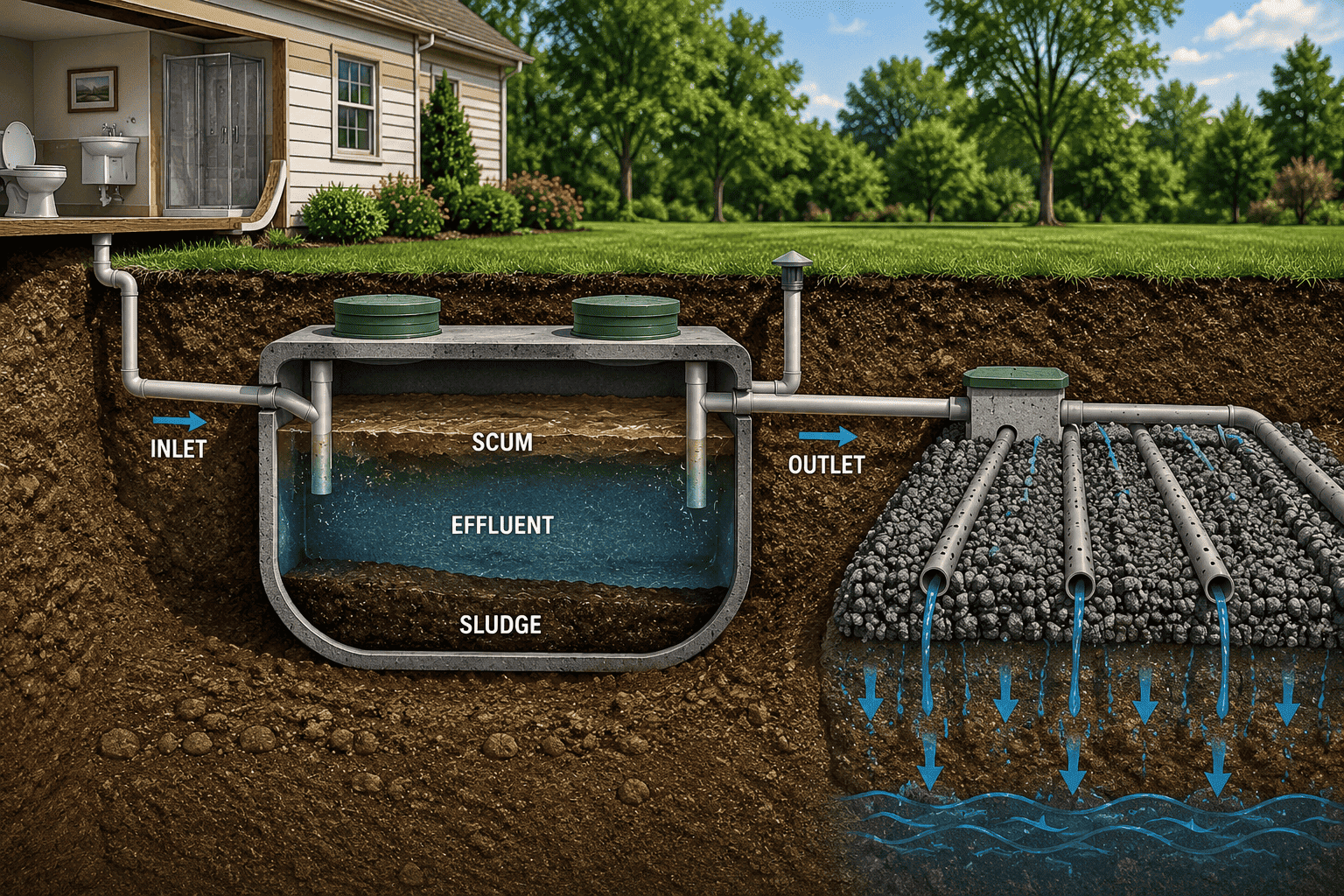
Main Parts of a Septic System
A septic system is made up of several important components that work together to manage wastewater safely and efficiently. Each part plays a specific role in the treatment and disposal process, and problems with one component can affect the performance of the entire system.
- Septic tank. The septic tank is the main underground container where wastewater is collected and separated. Solids settle at the bottom, while lighter waste rises to the surface. The tank also allows bacteria to begin breaking down organic matter. Common problems include cracks, leaks, corrosion in older tanks, and excessive sludge build-up caused by poor maintenance.
- Inlet pipe. The inlet pipe carries wastewater from the property into the septic tank. It relies on gravity to maintain a steady flow from the building to the system. Common issues include blockages from grease, wipes, or debris, as well as pipe damage and tree root intrusion.
- Outlet pipe. The outlet pipe allows partially treated liquid effluent to leave the tank and flow towards the drainage field or secondary treatment system. It is designed to prevent solids from escaping the tank. Problems can occur if sludge blocks the outlet or if the pipe becomes damaged or frozen.
- Effluent filter. An effluent filter traps small suspended solids before they enter the drainage field. This helps reduce the risk of soakaway blockages and extends the lifespan of the system. If the filter is not cleaned regularly, it can become clogged and restrict wastewater flow.
- Vent pipe. The vent pipe releases gases produced during the wastewater treatment process. Proper ventilation prevents pressure build-up inside the drainage system and helps reduce unpleasant odours. Blocked vents can lead to strong smells and poor system airflow.
- Access covers and risers. Access covers allow engineers to inspect, maintain, and empty the septic tank. Risers bring these access points closer to ground level for easier servicing. Damaged or poorly sealed covers can allow rainwater into the system and create safety risks.
- Drainage field or soakaway. The drainage field disperses treated effluent into the ground through perforated pipes and gravel trenches. The surrounding soil naturally filters remaining contaminants before the water reaches groundwater. Common problems include saturated soil, blocked pipes, pooling water, and drainage field failure.
- Pump chamber (if installed). Some systems use a pump chamber to move wastewater when gravity drainage is not possible. This is common on sloped sites or properties with challenging ground levels. Pump chambers can experience electrical faults, pump failures, or overflow problems during power cuts.
Understanding how these components work together can help homeowners identify potential issues early and maintain their septic system more effectively. Regular inspections and servicing are essential for keeping every part of the system operating correctly and preventing costly repairs.
What Is a Drainage Field?
A drainage field, also known as a soakaway or leach field, is a vital part of a septic system. Its purpose is to safely disperse partially treated wastewater into the ground for final natural filtration. Without a properly functioning drainage field, a septic tank cannot dispose of effluent safely or effectively.
A typical drainage field consists of perforated pipes laid within gravel trenches below ground level. After leaving the septic tank, liquid effluent flows through these pipes and gradually spreads into the surrounding soil. The gravel helps distribute the wastewater evenly, while the soil acts as a natural filter that removes harmful bacteria, nutrients, and remaining contaminants before the water reaches the groundwater.
Septic tanks require a soakaway because the tank itself only provides primary treatment. The drainage field completes the purification process through soil filtration and microbial activity underground. This is why the condition of the surrounding soil is extremely important when designing and installing a septic system. Poor drainage conditions, compacted ground, or high groundwater levels can all affect the performance of the soakaway.
Like any part of a wastewater system, drainage fields can develop problems over time. Common issues include blocked perforated pipes, saturated gravel trenches, excessive sludge entering the soakaway, soil compaction caused by vehicles, and root intrusion from nearby trees or shrubs. Heavy rainfall and poor maintenance can also reduce the drainage field’s ability to absorb wastewater properly.
There are several warning signs that may indicate drainage field failure, including:
- Slow draining sinks and toilets
- Sewage odours outside the property
- Pooling water near the soakaway area
- Bright green or unusually fast-growing grass
- Gurgling sounds in the plumbing system
- Wastewater backing up into the property
If these symptoms appear, the system should be inspected as soon as possible to prevent further damage and potential environmental contamination.
Types of Septic Tanks
Septic tanks are available in several different materials and designs, each with its own advantages, limitations, and expected lifespan. The best option for a property will depend on factors such as ground conditions, installation access, budget, and long-term maintenance requirements.
- Concrete septic tanks. Concrete tanks are one of the most traditional and widely used options in the UK. They are known for their strength, durability, and long service life, often lasting 30 to 40 years or more when properly maintained. Their heavy construction makes them resistant to movement and groundwater pressure, which is particularly useful in areas with unstable soil conditions. However, concrete tanks can crack over time, especially in older systems, and installation usually requires heavy machinery due to their weight. They are well suited for large domestic properties and locations where durability is a priority.
- Plastic or polyethylene septic tanks. Plastic septic tanks are lightweight, affordable, and easier to transport and install than concrete alternatives. They are resistant to corrosion and generally require less installation time. Most plastic tanks have a lifespan of around 20 to 30 years depending on usage and ground conditions. Their lighter structure can also be a disadvantage, as poorly installed tanks may shift or become damaged in areas with high groundwater levels. Plastic systems are commonly used for smaller residential properties and sites with easier ground access.
- Fibreglass (GRP) septic tanks. Fibreglass septic tanks, also known as GRP tanks, combine strength with lightweight construction. They are highly resistant to corrosion, watertight, and less likely to crack compared to some older concrete systems. A well-maintained fibreglass tank can often last 30 years or longer. Although they are generally more expensive than plastic tanks, they offer excellent durability and are suitable for properties where long-term reliability is important. GRP tanks are often chosen for difficult installation sites because they are easier to handle during installation.
- Brick septic tanks. Brick septic tanks are typically found in older rural properties and were commonly installed decades ago before modern prefabricated tanks became widely available. While some brick systems have lasted for many years, they are more vulnerable to leaks, structural deterioration, and groundwater infiltration. In many cases, older brick tanks may no longer meet current environmental regulations or compliance standards. They can still function effectively if maintained correctly, but ageing brick systems often require repairs, upgrades, or replacement to remain compliant and efficient.
Choosing the right type of septic tank is important for both system performance and long-term maintenance costs. Factors such as property size, soil conditions, drainage requirements, and local regulations should always be considered before installation or replacement.
Different Types of Septic Systems
Different septic system designs are used depending on soil conditions, property size, groundwater levels, and environmental requirements. Some systems rely entirely on gravity and natural filtration, while others use additional treatment methods to improve wastewater quality before discharge.
- Conventional gravity systems. These are the most common septic systems and rely on gravity to move wastewater from the tank into the drainage field. They work best in areas with well-draining soil and sufficient space for a soakaway. Their main advantages are simplicity and low running costs, although they are less suitable for sites with poor drainage or high groundwater levels.
- Chamber systems. Chamber systems use plastic chambers instead of traditional gravel trenches to disperse wastewater into the soil. They are often installed where gravel is difficult to source or where installation access is limited. These systems are lightweight and easy to install, but they may not perform well in heavily saturated ground conditions.
- Aerobic systems. Aerobic systems introduce oxygen into the treatment process to encourage aerobic bacteria growth. This allows wastewater to be treated more effectively than in a standard septic tank. They are ideal for smaller plots or environmentally sensitive areas. However, they require electricity and regular maintenance, which increases operating costs.
- Sand filter systems. Sand filter systems use layers of specially prepared sand to filter wastewater after it leaves the septic tank. They are often used in locations with poor natural soil drainage. These systems provide improved filtration but require more installation space and ongoing maintenance.
- Drip distribution systems. Drip systems distribute treated effluent slowly through shallow underground pipes over a large area. They are suitable for difficult sites with limited soil depth or uneven terrain. Their main advantage is controlled wastewater distribution, although they rely on pumps and filtration equipment that require regular servicing.
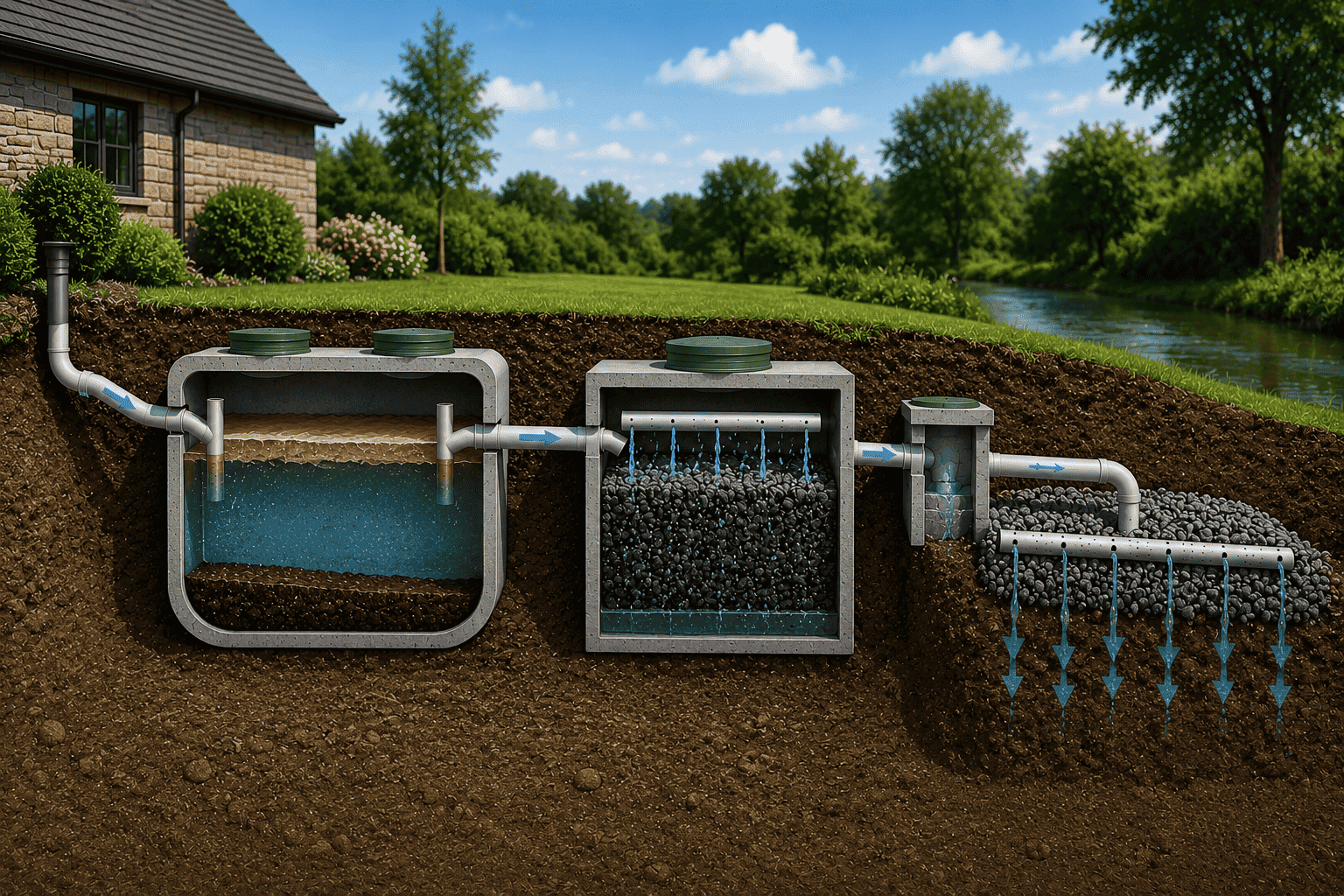
- Septic systems with secondary filters. These systems include additional treatment units or filters after the septic tank to further clean the effluent before discharge. They are commonly used where environmental regulations are stricter or where standard drainage fields are unsuitable. Secondary filters improve treatment performance but can increase installation and maintenance costs.
The most suitable septic system depends on site-specific factors such as soil permeability, available space, property usage, and local environmental requirements. Proper system design is essential for long-term reliability and compliance.
What Is a Secondary Treatment System?
A secondary treatment system is an additional stage of wastewater treatment installed after a septic tank. Its purpose is to improve the quality of effluent before it is discharged into the ground or nearby watercourses. These systems are often required on properties where a standard septic tank alone cannot provide sufficient treatment.
Some properties need secondary treatment because of challenging site conditions or stricter environmental requirements. This is particularly common in environmentally sensitive areas, locations with poor drainage conditions, sites with high groundwater levels, or properties subject to tighter discharge standards.
Common types of secondary treatment systems include:
- Biofilters. Biofilters use natural filter media and beneficial microorganisms to remove additional contaminants from wastewater. They are commonly used where higher treatment performance is required and are often suitable for smaller sites.
- Aerobic Treatment Units (ATUs). ATUs introduce oxygen into the treatment process to encourage aerobic bacteria growth. This produces cleaner effluent than a traditional septic tank and is often used where drainage conditions are poor or environmental regulations are stricter.
- Media filters. Media filter systems pass wastewater through materials such as sand, peat, foam, or synthetic media to improve filtration. These systems help remove suspended solids and organic matter before discharge.
A standard septic tank may not be enough if the property has unsuitable soil conditions, limited space for a drainage field, or a discharge point close to rivers, streams, or protected groundwater areas. In these situations, a secondary treatment system can help improve compliance, reduce environmental risks, and provide more reliable wastewater treatment.
Where Are Septic Tanks Used?
Septic tanks are most commonly used in properties that are not connected to the public sewer network. These systems are especially popular in rural and remote parts of the UK, where installing mains drainage infrastructure may not be practical or cost-effective.
Properties that frequently rely on septic systems include:
- Rural homes
- Farms and agricultural buildings
- Country cottages
- Holiday parks and caravan sites
- Remote commercial properties
- Small developments in off-grid locations
In many countryside areas, properties use what is known as off-mains drainage. This means wastewater must be collected and treated on-site rather than transported through the public sewer system. Septic tanks provide an independent solution for managing sewage safely in these locations.
A lack of access to mains sewers can occur for several reasons, including distance from urban infrastructure, challenging terrain, or the high cost of connecting isolated properties to the public network. In these situations, septic systems offer a practical long-term wastewater management solution when properly installed and maintained.
UK Septic Tank Regulations
Septic tank systems in the UK must comply with environmental regulations designed to protect groundwater, rivers, lakes, and surrounding land from pollution. In England, septic tanks are regulated by the Environment Agency under the General Binding Rules, which set out the legal requirements for small sewage discharge systems.
One of the most significant regulation changes came into force in 2020. Under the updated rules in England, septic tanks are no longer allowed to discharge directly into surface water such as rivers, streams, ditches, or canals. Properties with direct discharges must either install a compliant drainage field, upgrade to a sewage treatment plant, or connect to the mains sewer where possible.
Compliant discharge is extremely important because poorly treated wastewater can contaminate local watercourses and groundwater supplies. Septic systems must be designed and maintained to ensure wastewater is safely filtered through the ground before entering the environment.
Key areas covered by UK septic tank regulations include:
- General Binding Rules. These rules apply to most domestic septic systems in England and outline how wastewater can legally be discharged. The Environment Agency may take enforcement action if a system causes pollution or fails to comply.
- Discharging into watercourses. Direct discharge from a septic tank into surface water is generally prohibited in England unless the system has been upgraded to an approved treatment solution.
- Drainage field requirements. Septic tanks usually require a properly designed drainage field that allows effluent to filter naturally through the soil. The soakaway must be located a safe distance from buildings, wells, and water sources.
- Septic tank compliance. Systems must be correctly maintained, regularly emptied, and free from pollution risks. Non-compliant or damaged systems may require repairs or replacement.
- Selling a property with a septic tank. When selling a property in England, owners must provide buyers with details about the septic system, including maintenance records and discharge information. Buyers should also confirm that the system complies with current regulations.
- Planning permission and building regulations. Installing or replacing a septic system may require planning approval and must comply with Building Regulations. Soil tests, drainage assessments, and environmental considerations are often required before installation.
Because regulations can vary depending on location and site conditions, professional advice is strongly recommended before installing, upgrading, or modifying a septic system.
Environmental Impact of Septic Tanks
When properly installed and maintained, septic tanks can be an environmentally responsible way to manage wastewater in off-mains properties. The system uses natural processes to treat sewage and return filtered water safely back into the ground.
Some environmental benefits of septic systems include:
- Natural soil filtration of wastewater
- Groundwater recharge through the drainage field
- Reduced pressure on public sewer networks
- Low energy usage in standard gravity-fed systems
However, failing or poorly maintained septic tanks can create serious environmental problems. Untreated sewage may leak into nearby land and water sources, increasing the risk of pollution and harmful bacteria spreading into the environment.
Common environmental risks include:
- Groundwater contamination
- Pollution of rivers, streams, and ditches
- Soil contamination
- Unpleasant odours and surface wastewater
Regular maintenance is essential for reducing these risks. Routine inspections, tank emptying, and drainage field care help ensure the system continues operating safely and remains compliant with environmental regulations.
Common Septic Tank Problems
Like any drainage system, septic tanks can develop problems over time. Identifying the warning signs early can help prevent costly repairs and reduce the risk of system failure.
- Blocked drains. Warning signs include slow drainage, gurgling pipes, and water backing up inside the property. Blockages are often caused by grease, wipes, food waste, or excessive sludge build-up. Drain cleaning and septic tank emptying are common solutions.
- Bad smells. Persistent sewage odours around the tank, drains, or soakaway area may indicate ventilation issues, blocked pipes, or an overloaded system. Regular maintenance and inspections can help locate and resolve the source of the smell.
- Slow flushing toilets. Toilets that flush slowly or struggle to clear waste can be caused by partial blockages, a full septic tank, or drainage field problems. Emptying the tank and checking the drainage system may restore normal flow.
- Sewage backups. Wastewater backing up into sinks, toilets, or showers is one of the most serious septic problems. This is often caused by blocked pipes, a failed soakaway, or an overflowing tank. Immediate professional attention is usually required.
- Overflowing tank. An overflowing septic tank may cause standing wastewater around the system or strong odours outside. Common causes include missed emptying schedules, excessive water usage, or blocked outlet pipes.
- Drainage field saturation. Waterlogged ground near the soakaway can indicate that the drainage field is no longer absorbing wastewater properly. Poor soil drainage, heavy rainfall, or sludge entering the soakaway are common causes.
- Tree root intrusion. Tree roots can enter underground pipes and septic tanks through small cracks or joints. This may lead to blockages, pipe damage, and restricted wastewater flow. Root removal and pipe repairs are often necessary.
- Tank cracks or structural damage. Older tanks may develop cracks due to ground movement, age, or heavy loads above the system. Signs include leaks, sinking ground, and contamination around the tank area. Depending on the severity, repairs or full replacement may be required.
Regular inspections and routine maintenance can help detect these problems before they become more serious and expensive to fix.
DrainBoss Comment: One of the most common issues we see is septic systems being left unmaintained for too long, especially in rural properties where early warning signs are often ignored. In many cases, minor drainage problems can quickly develop into costly soakaway failures or sewage backups. Regular inspections and early intervention can prevent far more expensive repairs later on.
Signs Your Septic Tank Is Failing
A failing septic tank system can cause serious drainage problems and environmental risks if left unresolved. In many cases, the warning signs appear gradually, making early detection extremely important.
Common signs of septic tank failure include:
- Pooling water around the tank or drainage field
- Bright green or unusually healthy grass above the soakaway
- Foul sewage odours outside the property
- Gurgling sounds coming from pipes or toilets
- Slow draining sinks, baths, and toilets
- Sewage backing up into the property
These symptoms may indicate problems such as a full septic tank, blocked pipework, drainage field failure, or structural damage within the system. Heavy rainfall and poor maintenance can also place additional strain on older septic systems.
Homeowners should contact a drainage professional if any of these warning signs appear, especially if wastewater is backing up indoors or standing water is visible near the soakaway. A professional inspection can identify the cause of the issue and help prevent further damage.
Ignoring septic tank problems can lead to expensive repairs, property damage, unpleasant living conditions, and possible environmental contamination. In severe cases, a failing system may no longer comply with current UK regulations and could require full replacement or system upgrades.
Septic Tank Maintenance
Regular maintenance is essential for keeping a septic system working efficiently and preventing expensive repairs. A well-maintained septic tank can last for decades, while neglected systems are far more likely to experience blockages, odours, drainage issues, and environmental problems.
Most septic tanks should be emptied every 1 to 3 years, depending on the size of the tank, household occupancy, and water usage. Regular inspections are also important for identifying early signs of wear, leaks, or drainage problems. If the system includes an effluent filter, it should be cleaned periodically to prevent blockages and maintain proper wastewater flow.
Homeowners should also protect the drainage field by avoiding heavy vehicles, excessive water discharge, and deep-rooted trees near the soakaway area. Keeping records of inspections, emptying schedules, and repairs can also be useful for long-term maintenance and property sales.
Items that should never be flushed or poured into a septic system include:
- Wet wipes and paper towels
- Grease and cooking fats
- Oils
- Harsh chemicals and bleach
- Paint and solvents
- Sanitary products
- Nappies and cotton buds
These materials can block pipes, damage bacterial activity inside the tank, and reduce the effectiveness of the entire system.
A simple septic tank maintenance checklist includes:
- Arrange regular tank emptying
- Inspect the system annually
- Clean filters where fitted
- Watch for slow drainage or odours
- Keep surface water away from the soakaway
- Avoid overloading the system with excessive water use
Good maintenance habits can significantly reduce the risk of system failure and help ensure the septic tank remains compliant, efficient, and environmentally safe.
DrainBoss Comment: Many septic tank problems are caused by incorrect household usage rather than system age alone. Items such as wipes, grease, and sanitary products are still among the leading causes of blocked drains and overloaded tanks. Keeping to a regular emptying schedule and arranging periodic inspections can significantly extend the lifespan of the entire system.
How Long Does a Septic Tank Last?
The lifespan of a septic tank depends largely on the material it is made from, the quality of installation, and how well the system is maintained over time. With proper care, many septic systems can continue operating effectively for several decades.
Average septic tank lifespans by material include:
- Concrete septic tanks. Typically last 30 to 40 years or longer. Concrete tanks are extremely durable but may eventually develop cracks or corrosion if poorly maintained.
- Plastic septic tanks. Usually last around 20 to 30 years. Plastic tanks are resistant to corrosion but can be vulnerable to movement or structural damage in unstable ground conditions.
- Fibreglass septic tanks. Often last 30 years or more. Fibreglass systems are strong, lightweight, and resistant to cracking and rust.
Several factors can affect how long a septic tank lasts, including:
- Regular maintenance and emptying schedules
- Quality of installation and system design
- Soil movement and ground stability
- High groundwater levels
- Excessive household water usage
- Heavy vehicles or structures above the system
Poor maintenance is one of the most common reasons septic systems fail prematurely. Routine inspections and responsible usage can significantly extend the life of both the tank and the drainage field.
Our Services:
Septic Tank Installation Process
Installing a septic tank system involves several important stages to ensure the system operates safely, efficiently, and in compliance with UK regulations. Proper planning and installation are essential for preventing future drainage problems and environmental issues.
A typical septic tank installation process includes:
- Site survey. The property and surrounding land are assessed to determine the most suitable location for the system.
- Soil and percolation testing. Ground conditions are tested to check how well the soil can absorb and filter wastewater.
- System design. The septic system is designed based on property size, water usage, and site conditions.
- Permissions and approvals. Planning requirements, Building Regulations, and environmental compliance checks are completed where necessary.
- Excavation. The ground is excavated for the septic tank, pipework, and drainage field.
- Tank installation. The septic tank is carefully positioned and secured in place.
- Pipework installation. Inlet and outlet pipes are connected to allow wastewater to flow through the system correctly.
- Drainage field construction. Perforated pipes and gravel trenches are installed to create the soakaway area.
- Testing and commissioning. The completed system is tested to ensure everything operates correctly before use.
Professional installation is extremely important because incorrect tank positioning, poor drainage field design, or unsuitable soil conditions can lead to system failure and costly repairs. Septic systems must also comply with environmental standards and local regulations to ensure wastewater is discharged safely and legally.
Septic Tank Costs in the UK
The cost of a septic tank system in the UK can vary significantly depending on the type of system, property size, installation complexity, and ground conditions. Ongoing maintenance and repair costs should also be considered when budgeting for a septic system.
Typical septic tank costs may include:
- Installation costs. Installing a new septic tank system can range from several thousand pounds for a simple domestic setup to much higher costs for larger or more complex systems. Excavation work, drainage field construction, and site access all affect the final price.
- Emptying costs. Septic tank emptying is usually required every 1 to 3 years. Costs vary depending on tank size, location, and how accessible the system is for tanker vehicles.
- Repair costs. Minor repairs such as pipe blockages or filter cleaning are generally affordable, while major drainage field repairs or structural tank damage can be significantly more expensive.
- Maintenance costs. Routine inspections, servicing, and filter cleaning help keep the system operating correctly and reduce the risk of larger repair bills in the future.
- Replacement costs. Replacing an old or failed septic system is usually the most expensive option, especially if the drainage field also requires replacement or the property must be upgraded to meet current regulations.
Several factors can influence septic tank costs, including:
- Property size and number of occupants
- Accessibility for excavation equipment and tankers
- Soil conditions and drainage performance
- Groundwater levels
- Type and size of septic tank system installed
- Whether a secondary treatment system is required
Because every property is different, professional site assessments are usually needed to provide accurate installation and replacement cost estimates.
Conclusion
Septic tanks remain one of the most reliable wastewater solutions for off-mains properties across the UK. By separating and partially treating household wastewater before it enters the drainage field, these systems help properties manage sewage safely and efficiently. However, long-term performance depends heavily on regular maintenance, proper usage, and compliance with current environmental regulations.
Looking after a septic system is not only important for protecting your property, but also for safeguarding groundwater, nearby watercourses, and the surrounding environment. Routine inspections, timely emptying, and early repairs can help prevent costly breakdowns, pollution risks, and drainage field failure.
At DrainBoss, we provide professional septic tank services for both domestic and commercial properties, including septic tank emptying, installations, CCTV drain surveys, drain repairs, and emergency drainage support. As a family-run drainage company serving the South and South East of England, we focus on delivering fast response times, transparent pricing, and reliable workmanship backed by years of industry experience.
Whether you need advice about maintaining an existing septic system or support with drainage problems, regular professional inspections and responsible system care are the best ways to keep your septic tank operating safely and efficiently for years to come.
Septic Tank FAQs: Everything Homeowners Need to Know
How often should a septic tank be emptied?
Most septic tanks in the UK should be emptied every 1 to 3 years, depending on the size of the tank and the number of people living in the property. Larger households or systems with heavy water usage may require more frequent emptying. Regular desludging helps prevent blockages, overflowing tanks, and drainage field problems. Keeping to a proper emptying schedule can also extend the lifespan of the entire septic system.
What are the signs that a septic tank is full or failing?
Common warning signs include slow draining sinks and toilets, foul smells outside the property, pooling water near the soakaway, and gurgling sounds in the plumbing system. In more serious cases, sewage may back up into the home. These problems can indicate a full tank, blocked pipework, or drainage field failure. If any of these symptoms appear, the system should be inspected by a drainage professional as soon as possible.
Can a septic tank discharge directly into a ditch or stream?
In England, septic tanks are generally no longer allowed to discharge directly into surface water such as rivers, streams, or ditches. The 2020 General Binding Rules introduced by the Environment Agency require most systems to discharge into a compliant drainage field or be upgraded to a sewage treatment plant. Failure to comply with these rules may result in environmental issues and legal complications. Property owners should always check whether their system meets current regulations.
What should never be flushed into a septic tank?
Items such as wet wipes, sanitary products, grease, oils, chemicals, paint, and excessive amounts of bleach should never enter a septic system. These materials can block pipes, damage bacterial activity inside the tank, and reduce the effectiveness of wastewater treatment. Even products labelled as “flushable” can create serious drainage issues over time. Responsible waste disposal is one of the most important parts of septic tank maintenance.
How long does a septic tank system last?
A well-maintained septic tank system can often last several decades. Concrete and fibreglass tanks may remain in good condition for 30 years or more, while plastic systems usually have a slightly shorter lifespan. Factors such as maintenance, installation quality, soil conditions, and household usage all affect system longevity. Regular inspections and timely repairs can help prevent premature failure and expensive replacement costs.