
Key Points:
- Most blocked downpipes are caused by leaves, roof moss, silt or debris, but recurring problems may indicate a blocked gully or underground surface water drain.
- Early warning signs such as overflowing gutters, standing water and damp external walls should be investigated before they lead to more extensive property damage.
- Safe clearance begins with identifying where the blockage is located, as different causes require different solutions and some DIY methods can damage the drainage system.
- Regular gutter maintenance, seasonal inspections and prompt attention to recurring blockages help keep rainwater drainage systems operating efficiently and reduce the risk of costly repairs.
A blocked downpipe can prevent rainwater from draining away efficiently, causing it to overflow from the guttering system instead of being carried safely into a surface water drain or soakaway. Although the problem often begins with a build-up of leaves, moss or other debris, the consequences can extend well beyond the pipe itself. Overflowing water may saturate external walls, damage fascias and soffits, create standing water around the property and increase the risk of damp and structural deterioration if left unresolved.
Identifying the cause of a blocked downpipe early makes it much easier to prevent more costly repairs. While some obstructions can be removed using simple maintenance methods, recurring blockages may indicate a problem within the gully or underground drainage system rather than the downpipe itself. This guide explains the most common causes of blocked downpipes, the warning signs to look for, safe methods of clearing accessible blockages and when professional drainage investigation may be the most appropriate solution.
How a Downpipe Works
A downpipe is one part of a complete rainwater drainage system designed to move water away from the building as quickly and efficiently as possible. Gutters collect rainwater running off the roof and channel it towards one or more downpipes. The downpipes then carry the water vertically to ground level, preventing it from overflowing onto walls, windows, doors and foundations.
After leaving the downpipe, rainwater normally enters one of the following:
- A surface water gully connected to the drainage system
- An underground surface water drain
- A soakaway, where water gradually disperses into the surrounding ground
- Another approved surface water drainage system, depending on the property’s design
For the system to work properly, every section must remain clear. A restriction at any point can slow the flow of water and cause it to back up further upstream.
It is also important to understand that not every apparent downpipe blockage is actually inside the pipe. Water may fail to drain because the connected gully is blocked with silt and debris, the underground surface water drain has become obstructed, or the soakaway is no longer accepting water efficiently. In these situations, clearing the visible section of the downpipe may provide little or no improvement because the restriction remains further along the drainage system. Identifying where the water stops flowing is therefore the first step towards selecting the correct solution.
Common Causes of a Blocked Downpipe
A blocked downpipe rarely develops overnight. In most cases, debris accumulates gradually until it begins to restrict the flow of rainwater. While organic material is responsible for the majority of blockages, structural defects and problems within the connected drainage system can produce similar symptoms.
- Leaves and twigs. Fallen leaves are the most common cause of blocked downpipes, particularly during autumn. As they collect inside the gutter, rainwater gradually carries them towards the outlet, where they combine with twigs, seeds and other debris to form a dense obstruction.
- Roof moss. Moss washed from roof tiles absorbs large amounts of water and easily compacts inside narrow sections of the system. It frequently becomes trapped at the top of the downpipe or around bends, reducing the available space for water to pass through.
- Mud, silt and roof sediment. Dust, grit, broken tile particles and other fine sediment slowly settle inside gutters, gullies and drainage connections. Over time, this material mixes with organic debris, creating a compact blockage that becomes increasingly difficult to remove.
- Bird nests and animal debris. Birds sometimes build nests in poorly protected guttering, while feathers, nesting material and other debris can be washed into the downpipe. These obstructions often collect additional debris during heavy rainfall.
- Foreign objects lodged inside the pipe. Balls, toys, stones or other objects may accidentally enter the guttering system and become trapped inside the downpipe. Even relatively small objects can create an obstruction by catching leaves and moss.
- Ice during winter. During prolonged freezing weather, standing water inside the system may freeze, temporarily blocking the flow of rainwater. Ice can also bind together existing debris, making the obstruction more difficult to clear.
- Damaged or poorly aligned pipework. Cracked sections, displaced joints, crushed pipes or poor installation can interrupt the normal flow of water and create locations where debris repeatedly becomes trapped.
- Blocked gully or underground drain connection. Sometimes the downpipe itself is completely clear, but water cannot discharge because the connected surface water gully or underground drain has become blocked. This often creates the impression of a blocked downpipe even though the restriction lies further along the drainage system.
Although many of these problems can initially appear similar, identifying the true cause is important because the most effective solution depends on where the restriction is actually located.
Our Services:
Signs Your Downpipe Is Blocked
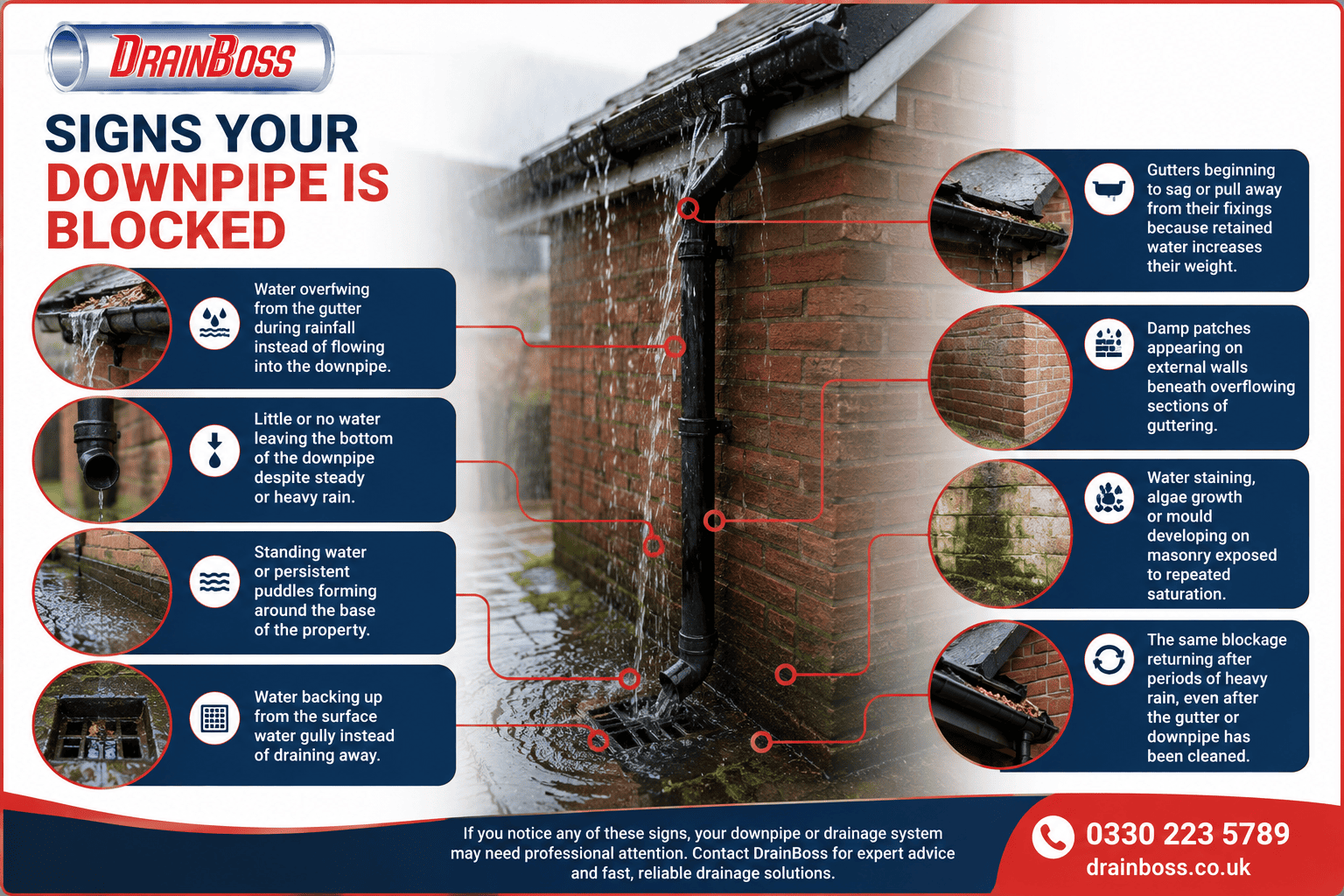
Most blocked downpipes produce warning signs before a complete blockage develops. Recognising these symptoms early can help prevent unnecessary water damage and reduce the likelihood of more extensive drainage problems.
- Water overflowing from the gutter during rainfall instead of flowing into the downpipe.
- Little or no water leaving the bottom of the downpipe despite steady or heavy rain.
- Standing water or persistent puddles forming around the base of the property.
- Water backing up from the surface water gully instead of draining away.
- Gutters beginning to sag or pull away from their fixings because retained water increases their weight.
- Damp patches appearing on external walls beneath overflowing sections of guttering.
- Water staining, algae growth or mould developing on masonry exposed to repeated saturation.
- The same blockage returning after periods of heavy rain, even after the gutter or downpipe has been cleaned.
None of these signs confirms the exact location of the blockage on its own. However, if several occur together, it is a strong indication that the rainwater drainage system requires further inspection to determine whether the obstruction is inside the downpipe, within the gully or further underground.
Why a Blocked Downpipe Should Never Be Ignored
A blocked downpipe does more than prevent rainwater from draining properly. As water backs up through the system, it places additional strain on guttering, saturates building materials and increases the risk of damage around the property. The longer the blockage remains, the greater the likelihood that a relatively simple maintenance issue will develop into a more expensive repair.
Damage to guttering
When water cannot leave the gutter through the downpipe, it begins to accumulate along the length of the guttering. The additional weight places extra stress on brackets, joints and fixings, increasing the risk of sagging sections, leaking joints or gutters pulling away from the fascia.
Damp and water ingress
Overflowing rainwater frequently runs down external walls instead of being carried safely away. Repeated wetting can allow moisture to penetrate brickwork, damage pointing and contribute to damp inside the property, particularly around windows, roof edges and external wall junctions.
Damage around foundations
If rainwater repeatedly discharges beside the building rather than into the drainage system, the surrounding ground can become saturated. Over time, this may lead to soil erosion, damaged paving and unnecessary moisture around the foundations.
Flooding around the property
Poor drainage can cause puddles to form on patios, driveways and footpaths after even moderate rainfall. Standing water creates slip hazards and may affect landscaped areas, flower beds and lawns if the problem continues.
Damage to the underground drainage system
When the blockage is actually located below ground, rainwater may continue backing up into the gully and connected pipework. Persistent standing water allows additional silt and debris to accumulate, making future clearance more difficult and increasing the likelihood of recurring drainage problems.
Addressing the cause early usually involves far less work than repairing damage caused by repeated overflow and prolonged exposure to water.
Tools That Can Help Clear a Blocked Downpipe
Different blockages require different approaches. Light accumulations of leaves or moss can often be removed using simple household equipment, while compacted debris or underground obstructions may require specialist drainage tools. Choosing the appropriate equipment also reduces the risk of damaging plastic guttering or pipework.
| Tool | Suitable for | When to avoid |
| Protective gloves | Removing loose leaves, moss and visible debris | Not suitable for reaching deep obstructions |
| Garden hose | Flushing light debris from accessible pipework | Avoid if water is already backing up from the gully |
| Flexible drain snake | Breaking up accessible blockages inside the downpipe | Avoid excessive force on old or damaged pipes |
| Drain rods | Clearing deeper obstructions in suitable pipework | Not recommended for tight bends or fragile plastic fittings |
| Wet and dry vacuum | Removing loose debris near the pipe entrance or outlet | Less effective against compacted blockages |
| Ladder | Accessing gutters where safe to do so | Never use on unstable ground or during poor weather |
No single tool is suitable for every blockage. For example, flushing a downpipe with a hose may work well for loose leaves but can make matters worse if the underground drain is already blocked. Before attempting any clearance, it is worth identifying where the restriction is most likely to be located.
How to Identify Where the Blockage Is
Locating the obstruction before attempting to clear it can save time and help avoid unnecessary damage. In many cases, a few simple observations are enough to determine whether the problem is inside the downpipe or further along the drainage system.
Begin by checking the gutter outlet where water enters the downpipe. A visible build-up of leaves, moss or debris around the outlet often indicates that the blockage has formed near the top of the pipe.
Next, inspect the visible length of the downpipe. Look for damaged joints, distorted sections, cracks or signs of water escaping from connections. Wet patches on the outside of the pipe may indicate that water is trapped above a restriction.
The lower section of the system should also be examined carefully. Check the downpipe shoe, if fitted, and inspect the surface water gully for standing water, accumulated debris or signs that water has been backing up during rainfall.
Whenever possible, observe the system while it is raining. Watching where water begins to overflow often provides valuable clues about the location of the restriction. For example, overflowing at the top of the downpipe usually suggests an obstruction near the outlet, while water emerging from the gully may indicate a problem below ground.
The following table can help distinguish between common drainage faults.
| What you observe | Most likely cause | Recommended next step |
| Debris visible around the gutter outlet | Blockage near the top of the downpipe | Remove accessible debris and retest |
| Water overflows from the gutter but the gully remains empty | Restriction inside the downpipe | Inspect and clear the downpipe carefully |
| Water discharges from the downpipe but backs up from the gully | Blocked gully or underground drain | Inspect the gully and connected drainage |
| Water leaks from joints halfway down the pipe | Internal blockage causing pressure build-up or damaged joints | Inspect the pipe for defects before clearing |
| The blockage returns after every heavy rainfall | Underlying drainage defect or recurring underground obstruction | Consider further drainage investigation |
Although these checks often help narrow down the source of the problem, some recurring blockages cannot be diagnosed by visual inspection alone. If the symptoms point towards an underground restriction or continue returning after cleaning, further investigation of the drainage system may be required.
DrainBoss Expert Tip: Many homeowners assume that every overflowing downpipe is blocked inside the visible pipe. In practice, our engineers often find that the downpipe is clear and the restriction is actually within the surface water gully or underground drainage system. Identifying the exact location of the blockage before attempting repairs can save both time and unnecessary expense.
Safe Ways to Unblock a Downpipe
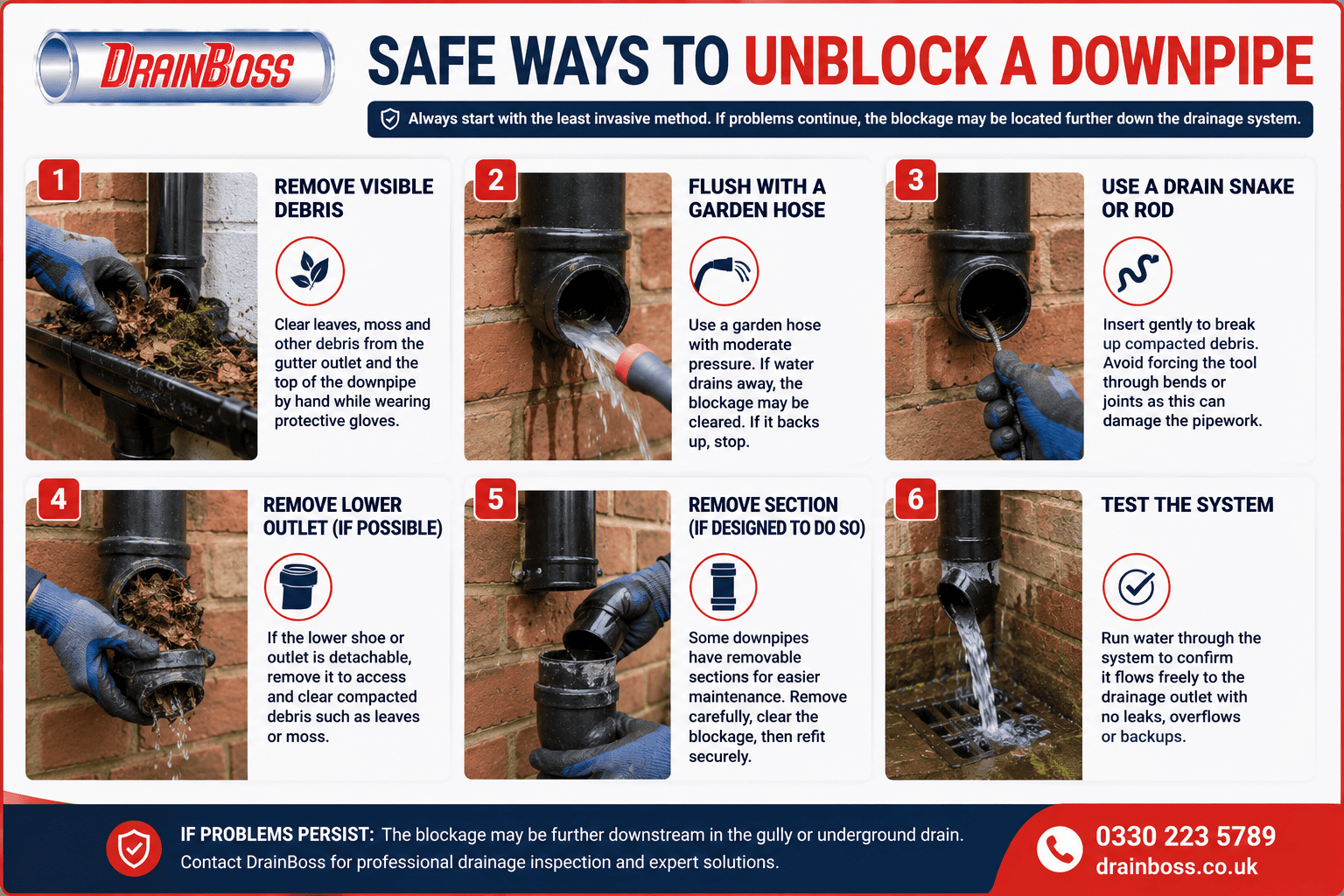
If the blockage appears to be within the accessible section of the downpipe and there are no signs of a more serious drainage problem, it may be possible to remove it using simple, low risk methods. Always begin with the least invasive option and only progress to more involved techniques if necessary.
First, remove any visible leaves, moss or other debris from the gutter outlet and the top of the downpipe. Loose material can often be lifted out by hand while wearing suitable protective gloves, allowing water to flow normally again.
If the obstruction is not visible, try flushing the pipe with a garden hose. Introduce water gradually rather than at full pressure and watch how the system responds. If water drains away freely, the blockage may have been cleared. If it immediately backs up, stop adding water rather than increasing the pressure.
For obstructions located further inside the pipe, a flexible drain snake or a suitable drain rod may help break up compacted debris. Insert the tool carefully without forcing it through bends or joints. Excessive pressure can separate fittings or damage older plastic pipework.
Where the lower shoe or outlet fitting is detachable and easily accessible, removing it may provide direct access to accumulated debris. This is often one of the easiest places to clear compacted leaves or moss without disturbing the rest of the system.
Some downpipes include removable sections that allow easier maintenance. If the design permits safe disassembly at ground level, removing one section may provide better access to the blockage. Any components should be refitted securely afterwards to prevent leaks.
Once the blockage has been removed, test the system by running water through the gutter or downpipe. Check that water flows freely to the drainage outlet without overflowing, leaking from joints or backing up at ground level. If problems remain, the restriction may be located further downstream.
Methods That Can Cause More Damage Than Good
Not every clearance method is suitable for every drainage system. Some commonly suggested techniques may damage pipework, create additional blockages or make the problem more difficult to resolve.
Applying excessive force with drain rods or other tools can crack plastic pipework, separate joints or push compacted debris further into the drainage system instead of removing it.
Pressure washers may appear to be an effective solution, but high pressure water can damage ageing pipework or force debris deeper into underground drains. Unless the equipment is designed specifically for drainage cleaning and used correctly, the results are often unpredictable.
Chemical drain cleaners are intended primarily for waste pipes carrying organic deposits such as grease or soap. They are generally ineffective against leaves, moss, mud or silt and may damage certain materials if used incorrectly.
Pouring boiling water into plastic rainwater pipework is also not recommended. High temperatures can distort some plastic fittings without providing any meaningful benefit when dealing with outdoor debris.
Striking the downpipe with a hammer or other hard object in an attempt to loosen the blockage can crack brittle sections, damage brackets or separate joints. Even if the obstruction moves, the resulting damage may require repair or replacement.
Finally, avoid taking unnecessary risks when working at height. Many downpipe blockages occur at roof level, where unstable ladders, poor weather or overreaching significantly increase the risk of injury. If safe access cannot be achieved from ground level, professional assistance is the safer option.
Choosing the correct method is often just as important as removing the blockage itself. A cautious approach reduces the risk of creating additional drainage or structural problems.
When the Problem Is Actually Underground
A blocked downpipe is not always the source of the problem. In many cases, the visible pipe is functioning correctly but rainwater cannot drain away because the connected underground system has become obstructed. Recognising this distinction is important because repeated attempts to clear the downpipe alone will not resolve the underlying fault.
A blocked surface water drain can prevent rainwater from leaving the property even when the downpipe is completely clear. Water may back up into the gully, overflow during heavy rainfall or drain away only very slowly after the rain has stopped.
Surface water gullies themselves can also become obstructed by leaves, silt and organic debris. Because these materials accumulate at ground level, they often create symptoms that closely resemble a blocked downpipe.
Tree roots present another common cause of underground drainage problems. Fine roots naturally seek moisture and may enter drainage pipes through small cracks or defective joints. Once inside, they continue growing, trapping silt and debris until water flow becomes restricted.
Older drainage systems may also suffer from collapsed, displaced or fractured pipework. Ground movement, ageing materials and external loading can reduce the internal diameter of the pipe or create sections where debris repeatedly accumulates.
When the visible pipe appears clear but problems continue, a CCTV drain survey may be the most effective way to identify the cause. A drainage camera allows engineers to inspect the condition of underground pipework, locate blockages accurately and identify structural defects such as root intrusion, displaced joints or collapsed sections without unnecessary excavation.
Understanding whether the restriction is above or below ground helps ensure that the correct solution is chosen, reducing the likelihood of recurring drainage problems and unnecessary repair work.
DrainBoss Expert Tip: Recurring downpipe problems are frequently symptoms rather than the root cause of the issue. If the same blockage returns after cleaning or water repeatedly backs up from the gully, further investigation of the underground drainage system is usually more effective than continuing to clear the downpipe itself. A targeted diagnosis helps ensure that the correct solution is applied the first time.
When a Downpipe Needs Repair or Replacement
Not every drainage problem can be solved by removing a blockage. If the downpipe or its fittings have deteriorated, repairing or replacing damaged sections may provide a more reliable long-term solution than repeated cleaning.
Replacement should be considered in the following situations:
- Cracked pipework. Cracks allow water to escape before it reaches the drainage system, leading to staining, damp patches and unnecessary water discharge around the property.
- Loose joints. Joints that regularly separate or leak during rainfall may indicate worn fittings, movement within the system or previous incorrect installation.
- Repeated blockages. If the same section blocks several times despite regular cleaning, there may be an underlying defect that continually traps debris.
- Poor installation. Incorrect alignment, unsuitable fittings or inadequate support can disrupt water flow and increase the likelihood of future blockages.
- Incorrect pipe size. A downpipe that is too small for the roof area may struggle to cope with periods of intense rainfall, particularly on larger properties or roof extensions.
Where damage is limited to individual sections or fittings, localised repairs may be sufficient. However, if several defects are present or the pipework has reached the end of its service life, replacing the affected section is often the more practical and cost-effective option.
How to Prevent Future Downpipe Blockages
Preventative maintenance is usually far easier and less expensive than dealing with overflowing guttering or repeated drainage problems. A few routine checks throughout the year can significantly reduce the risk of blockages developing.
- Clean gutters regularly. Remove accumulated leaves, twigs and other debris before they reach the downpipe, particularly during autumn and after prolonged periods of leaf fall.
- Remove roof moss. Keeping roof coverings free from excessive moss reduces the amount of material that is washed into the guttering during heavy rainfall.
- Trim nearby trees. Cutting back overhanging branches helps reduce the amount of leaves, seeds and small twigs entering the rainwater system.
- Install gutter guards. Mesh guards or leaf protection systems can reduce the amount of larger debris entering the gutter. They still require periodic inspection and cleaning but can reduce maintenance in suitable locations.
- Inspect joints and brackets. Check that downpipes remain securely fixed and that joints are properly aligned with no visible signs of movement or leakage.
- Keep gullies clear. Regularly remove leaves, silt and surface debris from gullies to maintain unrestricted flow into the underground drainage system.
- Check the system after storms. Heavy rain and strong winds can introduce large amounts of debris into guttering, making post storm inspections worthwhile even if no immediate problems are visible.
Regular maintenance does not eliminate every drainage problem, but it greatly reduces the likelihood of unexpected blockages and helps identify developing issues before they require more extensive repairs.
Seasonal Downpipe Maintenance Checklist
Different weather conditions create different drainage risks throughout the year. Following a simple seasonal inspection routine helps keep the entire rainwater system operating efficiently.
| Season | Recommended maintenance |
| Spring | Remove debris left after winter, inspect for frost damage and confirm that water flows freely through the system. |
| Summer | Check brackets, joints and pipe alignment. Remove early moss growth and inspect gullies for accumulated sediment. |
| Autumn | Clear fallen leaves regularly, especially where trees overhang the roof. Inspect the system after periods of heavy leaf fall. |
| Winter | Watch for ice build-up during freezing conditions and check that outlets remain clear during milder periods. Inspect the system after storms or prolonged rainfall. |
A seasonal maintenance routine only requires a small amount of time each year, but it can help prevent many of the common causes of blocked downpipes and reduce the need for emergency drainage work.
Safety Tips When Working on Gutters and Downpipes
Many downpipe blockages develop at roof level, meaning that clearing them often involves working on a ladder. While some maintenance tasks are straightforward, they should only be carried out when they can be completed safely. Taking a few basic precautions helps reduce the risk of injury and prevents accidental damage to the drainage system.
- Use ladders correctly. Always place the ladder on firm, level ground and make sure it is positioned at a safe angle. Avoid overreaching while working, as this can cause the ladder to become unstable. If possible, have another person steady the ladder while you work.
- Choose suitable weather conditions. Do not work on gutters or downpipes during heavy rain, strong winds, icy conditions or thunderstorms. Wet surfaces and poor visibility significantly increase the risk of slips and falls.
- Wear appropriate protective equipment. Waterproof gloves help protect against sharp debris, while safety glasses reduce the risk of dirt, moss or contaminated water entering the eyes. Footwear with good grip provides better stability when using a ladder.
- Know when to stop. If the blockage cannot be reached safely, the downpipe is damaged, or there are signs that the obstruction extends into the underground drainage system, further DIY attempts are unlikely to solve the problem. In these situations, arranging a professional inspection is usually the safer and more effective solution.
A blocked downpipe is rarely an emergency that justifies taking unnecessary risks. If safe access is not possible or the cause of the blockage remains uncertain, it is better to leave the work until it can be carried out safely and with the appropriate equipment.
Our Services:
Conclusion
A blocked downpipe should never be dismissed as a minor maintenance issue. While many blockages are caused by leaves, moss or other debris, recurring problems may indicate defects within the gully or underground drainage system that require further investigation. Identifying the source of the restriction early, carrying out routine maintenance and using safe clearance methods can help prevent damp, flooding and more expensive property repairs.
If a blockage cannot be cleared safely, repeatedly returns or appears to be connected to the underground drainage network, professional assistance is often the most effective solution. At DrainBoss, we provide expert downpipe clearance, gutter cleaning, CCTV drain surveys, high pressure water jetting and comprehensive drain repair services for domestic and commercial properties. As a family run, Trading Standards Approved company with City & Guilds trained engineers, fixed pricing, no call out charges and a 24/7 emergency response service, we help property owners across Sussex, Surrey, Kent, Hampshire and South London resolve drainage problems quickly and reliably.
Blocked Downpipe FAQs
What are the most common causes of a blocked downpipe?
The most common causes are leaves, twigs, roof moss, silt and other debris washed into the guttering. Material often collects around the gutter outlet before being pushed into the downpipe during heavy rainfall. Foreign objects, damaged fittings and ice can also restrict the pipe. In some cases, the visible downpipe is clear and the blockage is located in the connected gully or underground surface water drain.
How can I tell whether the downpipe or underground drain is blocked?
If no water leaves the bottom of the downpipe while the gully remains empty, the restriction is likely to be inside the vertical pipe. If water exits the downpipe but rises or overflows from the gully, the problem is more likely to be below ground. Several rainwater outlets backing up at the same time can also indicate an underground drainage issue. Persistent symptoms may require a professional inspection to locate the obstruction accurately.
Can I safely unblock a downpipe myself?
Loose debris near an accessible gutter outlet or lower fitting can often be removed without specialist equipment. A garden hose or flexible drain snake may help with a light blockage, provided water is not already backing up from the gully. Do not force tools through bends or use uncontrolled water pressure, as this may damage joints or push debris further into the system. Work at height should only be attempted when safe access and suitable equipment are available.
Can a blocked downpipe cause damp inside the property?
Yes, repeated overflow can saturate brickwork, pointing and areas around windows or roof junctions. Moisture may eventually appear as internal staining, peeling finishes or mould, although these symptoms can also have other causes. Clearing the blockage stops further overflow but does not immediately dry building materials that are already wet. Continuing damp after the drainage problem has been resolved should therefore be investigated separately.
When should I call a professional about a blocked downpipe?
Professional assistance is advisable when the blockage cannot be reached safely, repeatedly returns or appears to extend below ground. You should also arrange an inspection if water is entering the property, several gullies are affected or the pipework is cracked or displaced. Drainage specialists can use appropriate clearance equipment and, where necessary, inspect underground pipes with CCTV technology. This helps distinguish a simple debris blockage from root intrusion, displaced joints or collapsed drainage pipework.