
Key Points:
- Fat, oil, grease, food waste, wet wipes and other everyday household items are among the most common causes of blocked drains.
- Many substances that appear harmless can accumulate inside pipework over time, leading to slow drainage, unpleasant odours and recurring blockages.
- Proper waste disposal and simple preventative measures can significantly reduce the risk of costly drainage repairs and emergency callouts.
- Persistent drainage problems should be professionally investigated, with CCTV drain surveys and high-pressure water jetting often providing the most effective long-term solutions.
Most homeowners rarely think about their drains until a problem develops. Modern drainage systems are designed to carry wastewater safely away from your property, but they are not built to handle every type of household waste. Despite this, many everyday items are routinely washed down sinks, showers and toilets without a second thought. While some materials may appear harmless, they can gradually accumulate inside pipework and create serious drainage issues over time.
Many common causes of blocked drains originate from seemingly innocent habits. Cooking grease, coffee grounds, food scraps, wet wipes and even certain cleaning products can all contribute to restrictions within the drainage system. Unlike water and human waste, these materials often fail to break down properly, allowing deposits to build up inside pipes and reduce the flow of wastewater. In many cases, blockages develop slowly, making them difficult to detect until unpleasant odours, slow drainage or flooding begin to occur.
Improper drain use can have both financial and environmental consequences. Blocked drains often require professional cleaning, repairs or emergency callouts, while harmful substances entering the sewer network can place additional strain on wastewater treatment systems and the wider environment. Fortunately, most drainage problems are entirely preventable. Understanding what should and should not go down your drains is one of the simplest and most effective ways to protect your plumbing system, avoid costly repairs and keep wastewater flowing freely.
Understanding What Happens Inside Your Drains
Every time water leaves a sink, shower, bath or toilet, it enters a network of pipes designed to transport wastewater away from the property. Gravity carries the flow through branch pipes and larger drainage lines until it reaches the public sewer system or, in some rural areas, a private treatment system such as a septic tank or sewage treatment plant. Under normal conditions, wastewater moves freely through this network without the homeowner ever noticing the process.
Problems begin when materials enter the drainage system that do not dissolve, break apart or wash away as easily as expected. While water, soap and human waste are designed to pass through the system, many household substances behave very differently once inside a pipe. Some stick to pipe walls, others absorb water and expand, while certain items become trapped at bends, joints or rough surfaces within the drainage network.
Over time, these small accumulations can develop into significant restrictions. What starts as a thin layer of grease or a small collection of debris may gradually narrow the pipe and slow the movement of wastewater. As additional material becomes trapped, the blockage grows larger and can eventually prevent water from flowing properly.
Common ways blockages develop include:
- Grease and oils coating the inside of pipework
- Food particles becoming trapped in existing deposits
- Hair combining with soap residue to form clumps
- Wet wipes and sanitary products catching on imperfections in pipes
- Coffee grounds and other heavy materials settling in low-flow sections
It is also important to remember that household drains do not operate in isolation. Everything that leaves your property eventually enters a wider drainage network. Materials that pass through domestic pipework can still contribute to blockages further downstream within public sewers. This is one reason why seemingly minor disposal habits can have consequences not only for individual homes but also for the wider wastewater infrastructure that serves entire communities.
Fat, Oil and Grease (FOG): The Leading Cause of Drain Blockages
Fat, oil and grease are among the most common causes of drainage problems in homes and commercial kitchens. When hot, these substances remain in liquid form and appear to flow away without issue. However, as they cool inside the drainage system, they begin to harden and stick to the internal walls of pipes.
Over time, these deposits become thicker and start trapping other materials passing through the system. Food particles, wipes and general debris can become attached to the grease, gradually forming large masses known as fatbergs. These blockages can severely restrict flow and are responsible for many costly drainage repairs throughout the UK.
The impact extends beyond individual properties. Fatbergs regularly develop within public sewer networks, increasing maintenance costs and contributing to sewer overflows and environmental pollution.
| Material | What Happens in the Drain? |
| Cooking oil | Cools and leaves a sticky coating inside pipes |
| Bacon fat | Solidifies quickly and narrows pipe diameter |
| Butter and lard | Hardens as temperatures fall |
| Gravy and sauces | Often contain hidden fats that accumulate over time |
| Food scraps mixed with grease | Become trapped and accelerate blockage formation |
The safest approach is to allow cooking fats and oils to cool before placing them in a sealed container for disposal with household waste. Small amounts of grease can also be wiped from pans using paper towels before washing up. Simple habits like these can significantly reduce the risk of blocked drains.
Food Waste That Should Never Go Down the Sink
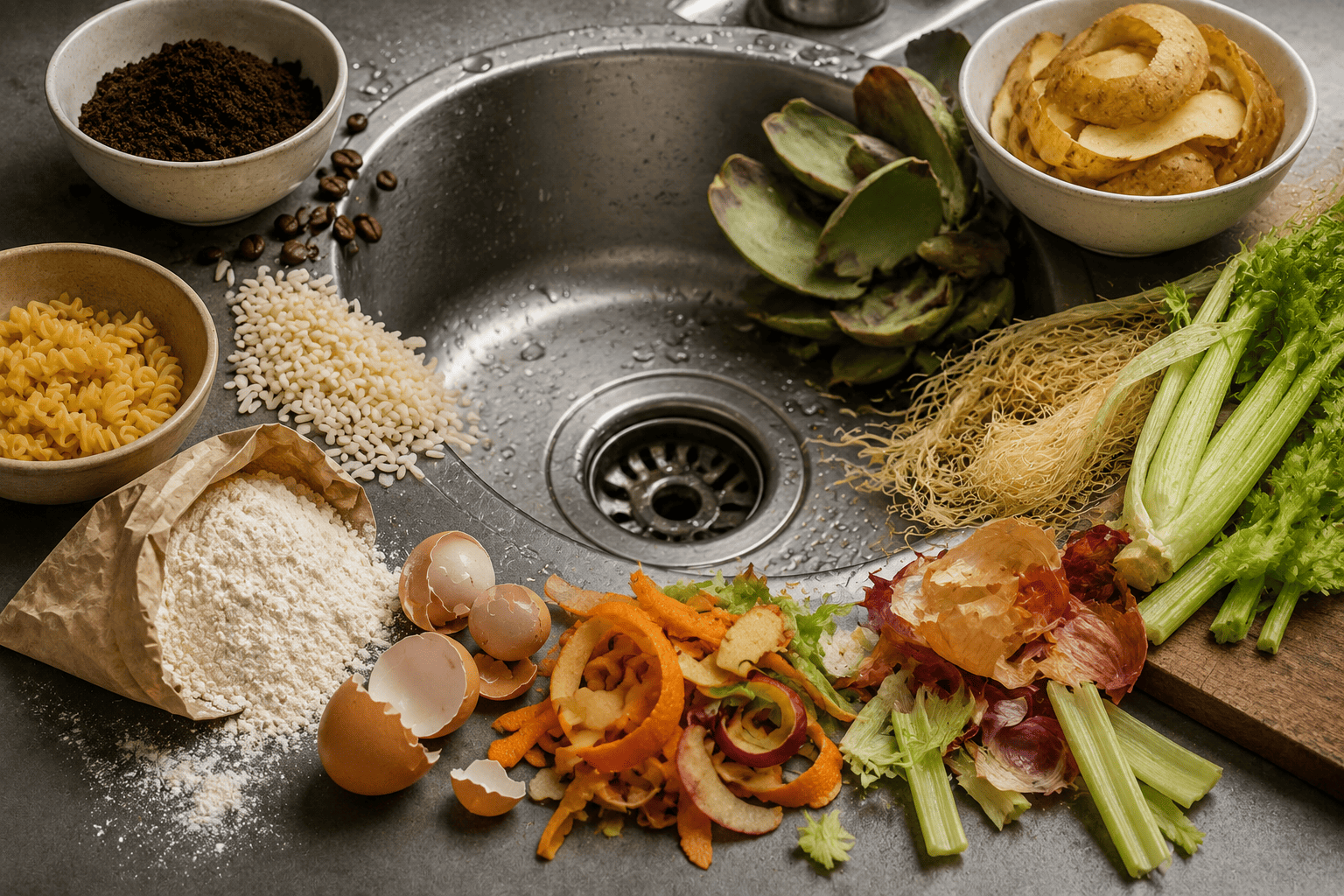
Many kitchen drain blockages begin with food waste. While small scraps may seem harmless, certain foods behave very differently once they enter the drainage system. Rather than washing away, they can settle, expand or combine with other debris to create stubborn obstructions.
Coffee Grounds
Coffee grounds are one of the most common causes of kitchen sink problems. Unlike many people assume, they do not dissolve in water. Instead, they settle inside pipework and can collect in low-flow areas. Over time, the grounds combine with grease and other debris, creating dense deposits that restrict water flow.
Rice, Pasta and Other Starchy Foods
Rice, pasta and similar foods continue to absorb water long after they have been discarded. As they swell, they take up more space inside the pipe and can easily become trapped in existing build-ups. Even small quantities washed down the sink on a regular basis can contribute to recurring blockages.
Flour
Flour may appear harmless when dry, but when mixed with water it forms a thick paste. Inside drainage pipes, this sticky substance can cling to pipe walls and trap additional particles passing through the system. The result is often a blockage that becomes increasingly difficult to remove.
Eggshells
A common myth suggests that eggshells help clean drains or sharpen waste disposal blades. In reality, eggshell fragments can accumulate inside pipework and become caught in grease deposits. Their sharp edges also make it easier for other debris to collect around them, accelerating blockage formation.
Fruit and Vegetable Peelings
Potato peelings, fruit skins and vegetable scraps should always be disposed of in food waste bins or compost containers rather than washed down the sink. These materials break down slowly and can easily become trapped within the drainage system. Composting is a far more environmentally friendly disposal method and helps reduce the risk of kitchen drain blockages.
Fibrous Vegetables
Certain vegetables contain tough fibres that can create particular problems for drainage systems. Common examples include:
- Celery
- Onion skins
- Corn husks
- Artichoke leaves
These fibrous materials do not break apart easily in water. Instead, they can wrap around existing obstructions, catch on rough surfaces inside pipes and collect additional debris. As the mass grows, water flow becomes increasingly restricted, eventually leading to a blocked drain.
Bathroom Items That Should Never Be Flushed or Washed Away
Many drainage problems originate in bathrooms, where items that appear small and harmless are regularly flushed or washed into the drainage system. Unlike toilet paper, most bathroom products are not designed to break down in water and can remain intact for long periods after entering the pipework.
Wet Wipes
Wet wipes continue to be one of the leading causes of sewer blockages throughout the UK. Even products marketed as “flushable” often retain their strength after being flushed and can become entangled with other debris within the drainage network. Over time, these materials contribute to large obstructions in both private drains and public sewers.
Cotton Products
Items such as cotton wool pads, cotton buds and similar products should always be disposed of in a bin. These materials absorb water, expand and can become lodged at bends or junctions within the pipework. Once trapped, they often collect additional debris and contribute to developing blockages.
Dental Floss
Dental floss may seem insignificant due to its size, but it can create problems inside drains. Because it does not break down easily, floss can wrap around other materials travelling through the system and gradually form larger obstructions that restrict water flow.
Hair
Hair is one of the most common causes of shower, bath and bathroom sink blockages. Individual strands can combine with soap residue and other debris to form dense clumps inside waste pipes. These accumulations often develop gradually and are a frequent cause of slow-draining bathroom fixtures.
Other Personal Care Products
Many personal care and hygiene products are designed to absorb moisture or maintain their structure when wet. As a result, they do not break down in the same way as toilet paper and can remain within the drainage system for extended periods. Once trapped, they can contribute to significant blockages and costly drainage repairs.
Latex and Similar Materials
Latex products and other flexible materials should never be flushed. They do not biodegrade quickly and can travel through the drainage system largely unchanged. In addition to contributing to sewer blockages, these materials may also enter waterways and create environmental concerns if they are not removed during wastewater treatment.
The simplest rule is to remember that only human waste and toilet paper should be flushed. Everything else should be disposed of using appropriate household waste facilities.
Household Waste That Does Not Belong in Your Drain
Not all drainage problems are caused by food waste or bathroom products. Many everyday household items find their way into sinks and toilets despite being completely unsuitable for drainage systems. Because these materials do not break down naturally, they can contribute to blockages within both private drains and public sewer networks.
The following items should never be washed or flushed away:
- Produce stickers attached to fruit and vegetables. These small labels are typically made from plastic and do not biodegrade. They can pass through household pipework and interfere with wastewater treatment processes, filters and screening equipment.
- Paper towels, kitchen roll, tissues and similar paper products. Unlike toilet paper, these materials are designed to remain strong when wet. They absorb water, expand and can become trapped inside pipes, particularly where bends or existing deposits are present.
- Cat litter, including products marketed as “flushable”. Cat litter is specifically designed to absorb moisture and form clumps. When introduced into a drainage system, it can expand significantly and create stubborn obstructions that are difficult to remove.
- Pet waste products and absorbent materials. These items often contain fibres and moisture-retaining compounds that do not break down effectively in wastewater systems.
Even when an item appears small enough to pass through a drain opening, that does not mean it belongs in the drainage system. As a general rule, household waste should be disposed of through the appropriate waste collection or recycling stream rather than being washed away.
Chemicals and Liquids That Can Damage Your Drainage System
Many people assume that if a substance is liquid, it is safe to pour down a drain. Unfortunately, this is not always the case. Certain chemicals can damage pipework, affect drainage components and create environmental problems long after they leave the property.
Paint should never be poured into sinks, toilets or external drains. As it dries, it can leave residues inside pipework and contribute to restrictions within the drainage system. Paint products may also contain substances that contaminate watercourses if they enter the environment.
Solvents, paint thinners and similar products can be equally problematic. These chemicals may affect seals, joints and other drainage components, particularly in older systems. They should always be disposed of in accordance with local waste disposal guidance rather than being washed away.
Household cleaning products can also cause issues when used excessively. Strong chemicals may disrupt the natural bacterial processes inside septic tanks and place additional strain on wastewater treatment facilities. Following the manufacturer’s instructions and avoiding unnecessary use can help reduce these risks.
Unused medications and pharmaceutical products should never be flushed or poured down a drain. Wastewater treatment systems are not designed to remove all pharmaceutical compounds, meaning traces can enter rivers, lakes and other natural environments. The safest option is to return unwanted medicines to a local pharmacy that offers a safe disposal service.
Many homeowners also turn to harsh chemical drain cleaners when faced with a slow drain. While these products may provide a temporary solution, some contain aggressive ingredients that can damage pipework, particularly if used repeatedly. For minor blockages, safer alternatives include hot water, careful mechanical cleaning, drain strainers and routine maintenance. If a blockage persists, professional drain cleaning is usually a more effective long-term solution.
Common Myths About What Is Safe to Put Down the Drain
Many drainage problems develop because of common misconceptions about what household drains can safely handle. While these beliefs are widespread, they often lead to habits that increase the risk of blockages and expensive repairs.
- “Hot Water Will Wash Away Grease”. Hot water may temporarily keep grease in liquid form, but as it cools further down the pipework, the grease will solidify and begin to accumulate on pipe walls.
- “Flushable Wipes Are Safe”. Many wipes remain far stronger than toilet paper when wet. Even products labelled as flushable can contribute to blockages within private drains and public sewers.
- “Garbage Disposals Can Handle Everything”. Food waste disposal units can reduce food particles, but they do not make unsuitable materials safe for drainage systems. Certain foods can still contribute to blockages and build-up further along the pipework.
- “Eggshells Clean Pipes”. There is no evidence that eggshells help clean drains. In reality, shell fragments can collect within deposits and provide additional surfaces for debris to accumulate.
- “Small Food Scraps Cannot Cause Problems”. Individual scraps may seem insignificant, but repeated disposal of small amounts of food waste can gradually create substantial deposits inside pipes. Many serious blockages begin with materials that homeowners consider too small to matter.
Understanding the difference between fact and myth is an important part of protecting your drainage system. Simple changes in everyday habits can significantly reduce the likelihood of future drainage problems.

Warning Signs That Your Drains Are Already Developing a Blockage
Drain blockages rarely appear without warning. In most cases, the drainage system will show signs of a developing problem long before a complete obstruction occurs. Recognising these early symptoms can help prevent more serious damage and reduce the likelihood of emergency repairs.
One of the most common warning signs is slow drainage. If water takes longer than usual to leave a sink, bath or shower, it often indicates that debris is beginning to restrict the flow inside the pipework. While the fixture may still be usable, the problem is likely to worsen if left untreated.
Gurgling sounds are another indication that wastewater is struggling to move freely through the system. These noises can occur when air becomes trapped behind a developing restriction and is forced back through the drain.
Unpleasant odours should also not be ignored. Persistent smells coming from sinks, showers or external drains can suggest that organic matter is accumulating within the pipework and beginning to decompose.
Another clear warning sign is water backing up into sinks, baths or shower trays. This usually indicates that wastewater is encountering resistance further along the drainage system and can no longer flow away efficiently.
Finally, recurring minor blockages often point to a larger underlying issue. If the same drain repeatedly becomes slow or blocked despite regular cleaning, there may already be a significant build-up within the pipework that requires professional attention.
DrainBoss Insight: At DrainBoss, we regularly attend properties where minor drainage symptoms have been ignored for weeks or even months. In many cases, a slow-draining sink or occasional bad smell is the first indication of a much larger blockage developing within the system. Early investigation can often prevent more extensive cleaning work and help avoid costly repairs later on.
What Is Safe to Put Down the Drain?
After looking at the many items that can cause drainage problems, homeowners often ask what is actually safe to put down the drain. In general, drainage systems are designed to carry a relatively limited range of materials:
- Clean water from sinks, baths and showers
- Wastewater generated through normal household activities such as washing and cleaning
- Human waste through toilets
- Toilet paper, which is specifically manufactured to break down quickly in water
Anything outside these categories should be carefully considered before disposal. If there is any doubt about whether an item will dissolve, biodegrade or safely pass through the drainage system, it is usually better to dispose of it through household waste, recycling or another appropriate disposal method.
Taking a cautious approach helps protect your pipework, reduces the risk of blockages and supports the efficient operation of both private drainage systems and the wider sewer network.
Simple Ways to Protect Your Drains
Preventing drain blockages is usually far easier and less expensive than dealing with them after they occur. A few simple habits can significantly reduce the risk of drainage problems and help keep wastewater flowing efficiently throughout your property.
Some of the most effective preventative measures include:
- Using sink strainers in kitchens and bathrooms to catch food particles, hair and other debris before they enter the drainage system.
- Disposing of cooking fats, oils and grease in a suitable container rather than allowing them to enter pipework.
- Avoiding the flushing of non-biodegradable items and ensuring household waste is disposed of through the appropriate waste stream.
- Carrying out regular drain maintenance, including cleaning drain covers, removing visible debris and addressing minor drainage issues before they become more serious.
- Making sure everyone in the household understands what can and cannot go down sinks, showers and toilets. Consistent habits across the home can greatly reduce the likelihood of future blockages.
While no drainage system is completely immune to problems, good maintenance and responsible disposal practices can help extend the life of your pipework and minimise the need for emergency drain cleaning services.
Our Services:
When Should You Call a Drainage Professional?
While good maintenance can prevent many drainage problems, some situations require professional investigation and treatment. Attempting to repeatedly clear the same issue with DIY methods often provides only temporary relief while the underlying cause continues to develop.
Repeated blockages are one of the clearest signs that professional assistance may be needed. If the same sink, shower, toilet or external drain continues to become blocked, there is likely to be a deeper issue within the drainage system. Persistent unpleasant odours can also indicate hidden build-ups, damaged pipework or drainage defects that cannot be resolved through routine cleaning alone.
Homeowners should also be cautious when multiple fixtures throughout the property begin draining slowly at the same time. This often suggests a restriction further along the drainage network rather than a problem affecting a single appliance or outlet.
Professional drainage companies can use CCTV drain surveys to inspect the condition of underground pipework and accurately identify the source of recurring problems. This technology allows engineers to locate blockages, root intrusion, structural defects and other issues without unnecessary excavation.
Once the cause has been identified, professional drain cleaning methods such as high-pressure water jetting can remove stubborn deposits, grease build-up and debris far more effectively than most household products. In many cases, early intervention can prevent more extensive repairs and help restore the drainage system to full working order.
DrainBoss Expert Tip: Many drainage issues cannot be fully diagnosed from surface symptoms alone. Professional CCTV drain surveys allow engineers to identify the exact cause of recurring blockages, whether that involves grease build-up, root intrusion, damaged pipework or structural defects. Accurate diagnosis helps ensure the correct solution is applied first time, reducing both disruption and unnecessary expense.
Conclusion
Most blocked drains do not occur suddenly. In many cases, they develop gradually as a result of everyday disposal habits that allow unsuitable materials to enter the drainage system. By being more mindful about what goes down sinks, showers and toilets, homeowners can significantly reduce the risk of blockages, unpleasant drainage issues and unnecessary repair costs.
Proper waste disposal not only helps protect your own property but also supports the wider sewer network and the environment. If you notice recurring drainage problems, unpleasant odours or slow-flowing drains, it is always best to address the issue before it develops into a more serious and expensive problem.
At DrainBoss, we have more than two decades of experience helping homeowners and businesses resolve drainage issues across Sussex, Surrey, Kent, Hampshire and South London. From professional drain cleaning and high-pressure water jetting to CCTV drain surveys and drain repairs, our experienced team is available to identify the cause of drainage problems and provide effective long-term solutions. Whether you need preventative maintenance or emergency assistance, taking action early can help keep your drainage system operating efficiently and avoid costly disruption in the future.
Frequently Asked Questions About What Should Never Go Down Your Drains
Can small amounts of cooking oil really cause a blocked drain?
Yes, even small amounts of cooking oil can contribute to drainage problems over time. Although the oil may appear to flow away easily while hot, it cools and solidifies further along the pipework. Repeated disposal of oil and grease can gradually create thick deposits that restrict water flow. These deposits often become the foundation for larger blockages.
Are flushable wipes actually safe to flush?
Many products labelled as flushable do not break down as quickly as toilet paper. As a result, they can remain intact within drainage systems and become caught on other debris. Over time, wipes may contribute to blockages in both private drains and public sewers. For this reason, most drainage professionals recommend disposing of wipes in a bin rather than flushing them.
What should I do if my kitchen sink keeps blocking?
Recurring kitchen sink blockages are often a sign that deposits have already built up within the pipework. Food waste, grease and other debris can gradually accumulate and reduce the internal diameter of the drain. While temporary DIY solutions may provide short-term relief, the underlying restriction often remains. If the problem continues, a professional inspection may be required to identify and remove the blockage.
Is it safe to use chemical drain cleaners regularly?
Frequent use of strong chemical drain cleaners is generally not recommended. Some products contain aggressive ingredients that can affect pipe materials, seals and joints, particularly in older drainage systems. They may also fail to remove the root cause of a blockage, leading to recurring problems. Regular maintenance and professional drain cleaning are usually safer and more effective long-term solutions.
How can I tell if I need a professional drain inspection?
If you experience recurring blockages, persistent unpleasant smells or slow drainage affecting multiple fixtures, it may be time for a professional assessment. These symptoms can indicate a more significant issue deeper within the drainage system. A CCTV drain survey can accurately identify hidden defects, build-ups or structural problems without unnecessary excavation. Early diagnosis often helps prevent more extensive repairs and higher costs later on.