
Key Points:
- Toilet bubbling and gurgling are often early warning signs of drainage or ventilation problems rather than faults with the toilet itself.
- Partial blockages, blocked vent pipes and restrictions in the main drain are among the most common causes of recurring gurgling noises.
- Additional symptoms such as slow drainage, foul odours, fluctuating water levels and overflowing gullies can indicate a more serious underlying issue.
- Early investigation and professional diagnosis can help prevent costly drainage failures, sewage backups and extensive pipe repairs.
A bubbling or gurgling toilet is often one of the earliest signs that something is not working correctly within a property’s drainage system. While the sound itself may seem harmless at first, it usually indicates that air is moving through the pipework in an unusual way. In a properly functioning drainage system, wastewater and air flow together in a controlled manner. When that balance is disrupted, air can become trapped and may escape through the toilet bowl, creating bubbling, gurgling or burping noises.
In many cases, these sounds are caused by a developing blockage or a problem with the drainage system’s ventilation. Partial obstructions inside the pipework can restrict the movement of water and air, while blocked vent pipes may prevent pressure from equalising correctly. As a result, air is forced back through the nearest available outlet, which is often the toilet. Although the toilet may appear to be the source of the problem, the underlying cause is frequently located elsewhere within the drainage network.
An occasional brief gurgle immediately after flushing is not always a cause for concern, particularly if there are no other symptoms. However, recurring bubbling, frequent gurgling noises or sounds that occur when sinks, showers or baths are draining should never be ignored. These warning signs often indicate that a drainage issue is developing and may worsen over time if left unresolved.
How a Toilet Drainage System Works
Every time a toilet is flushed, wastewater travels through a network of underground drainage pipes before leaving the property and entering the public sewer or a private treatment system. Although this process appears simple from the user’s perspective, effective drainage depends on much more than water flow alone. A properly functioning system must allow both wastewater and air to move freely through the pipework.
Several key components work together to maintain efficient drainage:
- The toilet trap, which retains water and prevents sewer gases from entering the property.
- Branch drain pipes that carry wastewater from individual fixtures.
- Main drainage pipes that transport waste away from the building.
- Soil vent pipes that allow air to enter and leave the drainage system.
- Inspection chambers and access points that provide maintenance access.
Air movement plays a crucial role within drainage systems. As water flows through pipes, it naturally displaces air. Without adequate ventilation, pressure changes can develop inside the pipework, making it more difficult for wastewater to move efficiently. This is why most UK drainage systems include a soil vent pipe that extends above roof level. The vent allows air to circulate safely and helps maintain stable pressure throughout the network.
When ventilation becomes restricted or a blockage starts to form, the pressure inside the drainage system can become unbalanced. Instead of air moving through the vent pipe as intended, it may seek an alternative route. The toilet bowl often becomes that escape point because it is directly connected to the drainage system. As trapped air forces its way through the water inside the bowl, it creates the bubbling and gurgling sounds that homeowners frequently notice.
Why Is My Toilet Bubbling or Gurgling?
Although a bubbling toilet may seem like a problem with the fixture itself, the underlying cause is usually located somewhere within the drainage system. Anything that interferes with the normal movement of wastewater or air can create pressure changes that result in bubbling, gurgling or unusual noises from the toilet bowl. The table below outlines the most common causes and the symptoms that often accompany them.
| Cause | How It Creates Bubbling or Gurgling | Typical Signs |
| Partial blockage in the drain pipe | A build-up inside the pipe restricts the flow of wastewater. As water moves past the obstruction, air pockets can become trapped and forced back towards the toilet. | Intermittent gurgling, slower flushing, occasional drainage issues, worsening symptoms over time. |
| Blocked or faulty soil vent pipe | A vent pipe is designed to regulate airflow within the drainage system. If it becomes obstructed by leaves, bird nests, debris or storm damage, pressure cannot balance correctly. | Gurgling from multiple fixtures, slow drainage, foul odours and symptoms that vary throughout the day. |
| Main sewer line blockage | Restrictions in the property’s primary drainage connection affect wastewater flow throughout the entire system rather than a single fixture. | Several drains running slowly, repeated blockages, external gullies backing up and potential sewage overflow. |
| Shared drainage pipes and branch connections | Water discharged from one fixture can displace air within connected pipework. If airflow is restricted, the pressure may be released through the toilet bowl. | Toilet bubbling when a bath, shower, sink or washing machine drains. |
| Tree root intrusion | Tree roots can enter drains through small cracks or pipe joints. As they expand, they reduce pipe capacity and disrupt both airflow and wastewater movement. | Recurring drainage problems, slow flow, seasonal worsening of symptoms and repeated blockages. |
| Damaged or collapsed pipework | Cracked, displaced or partially collapsed pipes create physical restrictions within the drainage system. These defects are more common in older drainage networks. | Persistent bubbling, recurring blockages, localised flooding, sinking ground or unexplained drainage failures. |
In many homes, the cause begins as a relatively minor restriction and develops gradually over time. Materials such as excessive toilet paper, wet wipes, sanitary products, grease, scale deposits and general debris can accumulate inside the pipework long before a complete blockage forms. Because wastewater may still be able to pass through the affected section, the earliest indication is often a change in airflow rather than an obvious backup.
Determining which of these issues is responsible usually depends on the presence of additional symptoms elsewhere in the property. A toilet that occasionally gurgles on its own may suggest a localised restriction, while bubbling accompanied by slow-draining sinks, unpleasant odours or overflowing external drains often points to a larger problem within the drainage network.
Our Services:
Why Does My Toilet Bubble When the Shower, Bath or Sink Drains?
Many homeowners become concerned when they notice the toilet bubbling even though the toilet itself has not been flushed. In these situations, the noise often occurs when a shower is draining, a bath is emptied or a sink is used elsewhere in the property. While this may seem unusual, it is often a valuable clue that helps identify the source of the problem.
In most properties, bathroom fixtures are connected to the same drainage network. Although each fixture has its own waste pipe, these pipes eventually join larger branch drains before connecting to the main drainage system. When a large volume of water leaves a bath or shower, it moves quickly through the pipework and displaces air as it travels. Under normal conditions, this air is safely managed by the drainage system’s ventilation. However, if airflow becomes restricted, pressure changes can develop within the shared pipework.
When this happens, the toilet frequently becomes the point where those pressure fluctuations are most noticeable. Air may be drawn through the toilet trap or pushed back through the water in the bowl, creating bubbling or gurgling sounds. The toilet is not necessarily faulty. Instead, it is often acting as an indicator that something elsewhere in the drainage system is preventing air and wastewater from moving as intended.
This symptom commonly suggests a developing blockage, a ventilation problem or a restriction further along the shared drainage run. It can also indicate that multiple fixtures are being affected by the same underlying issue. For this reason, a toilet that bubbles when other appliances drain should not be viewed as an isolated problem. It is often one of the clearest signs that the drainage system requires further investigation.
Comments from DrainBoss: At DrainBoss, we regularly attend properties where homeowners initially believe the toilet is faulty, only to discover the issue originates elsewhere in the drainage system. When a toilet bubbles as other fixtures drain, the problem is often linked to shared pipework, restricted airflow or a developing blockage further along the drain. Identifying the cause early can help prevent more extensive drainage issues from developing.
Other Signs That Your Drainage System Has a Problem
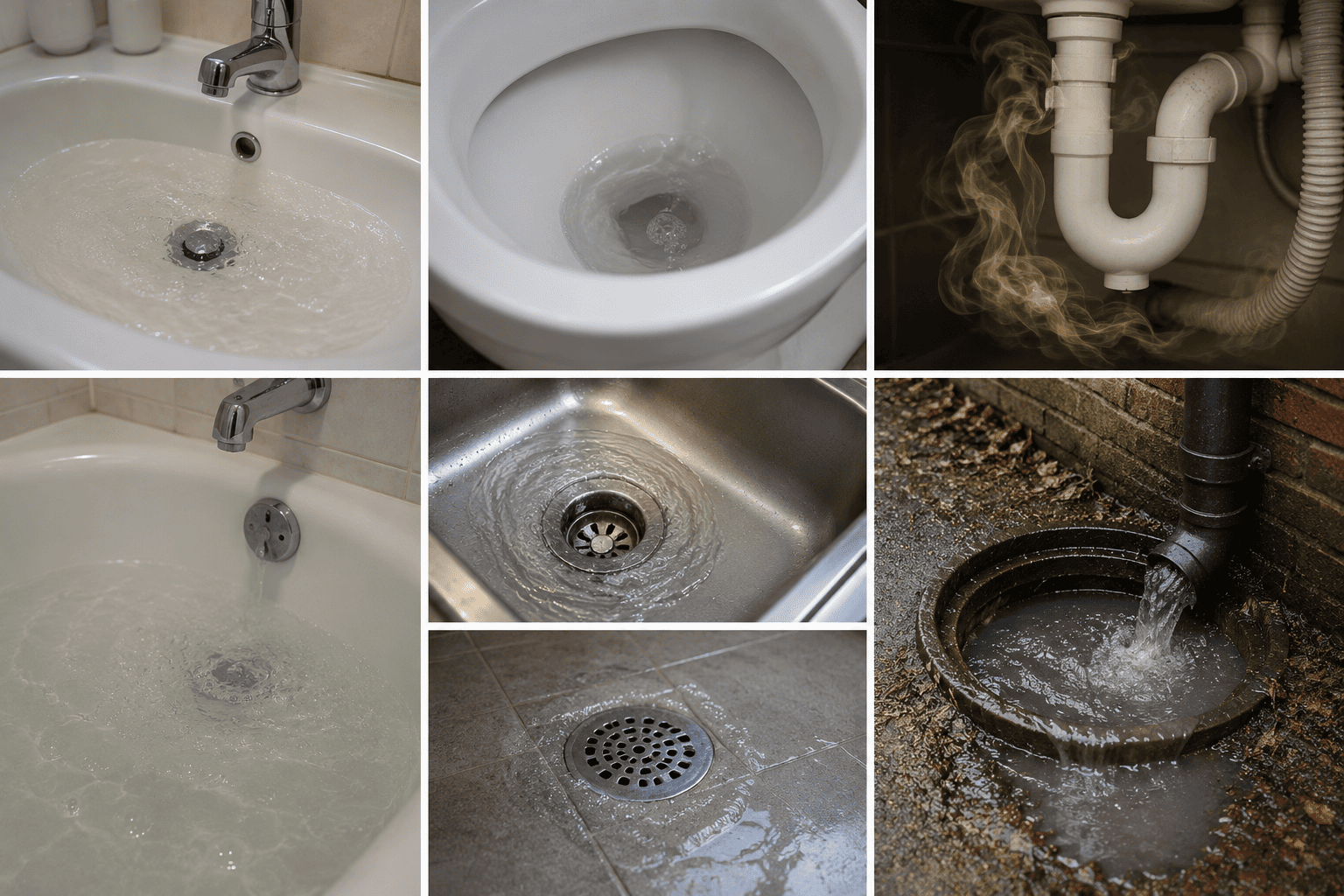
Toilet bubbling rarely occurs in isolation. In many cases, the drainage system provides several warning signs before a significant blockage or drainage failure develops. Paying attention to these symptoms can help homeowners identify problems earlier and avoid more costly repairs later.
Common signs that may accompany a bubbling or gurgling toilet include:
- Sinks, baths or showers that drain noticeably slower than usual.
- Toilet water levels that rise unexpectedly after flushing or fluctuate between uses.
- Unpleasant drain odours inside the property or around external drainage points.
- Gurgling sounds coming from sinks, baths, showers or other plumbing fixtures.
- Water backing up from outdoor drains, inspection chambers or gullies during periods of heavy use.
These symptoms often indicate that wastewater is struggling to move efficiently through the drainage system. For example, a slow-draining shower may suggest a localised blockage, but when combined with toilet gurgling and foul smells, it can point towards a larger issue affecting shared pipework. Similarly, changing water levels in the toilet bowl can indicate pressure fluctuations within the drainage network rather than a fault with the toilet itself.
Outdoor warning signs should also be taken seriously. Standing water around gullies, overflowing inspection chambers or damp areas near drainage routes may indicate that wastewater is unable to flow away properly. When several of these symptoms occur together, the likelihood of a more significant drainage problem increases considerably. In such cases, professional investigation is often the most effective way to identify the underlying cause before the situation deteriorates further.
Should You Be Concerned About a Gurgling Toilet?
Not every unusual noise from a toilet indicates a serious drainage problem. A single gurgle immediately after flushing may simply be the result of normal pressure equalisation within the pipework, particularly in larger drainage systems or properties with multiple connected fixtures. If the toilet continues to flush normally and no other drainage symptoms are present, occasional isolated noises are generally not a cause for immediate concern.
The situation becomes more significant when the gurgling starts occurring regularly or becomes increasingly noticeable. Frequent bubbling, repeated noises throughout the day, changes in toilet performance or symptoms appearing elsewhere in the property often suggest that conditions within the drainage system are deteriorating. Problems that develop gradually may remain manageable for some time, but they rarely resolve without intervention.
Ignoring persistent bubbling can allow relatively minor drainage issues to develop into more disruptive and expensive problems. A partial blockage may continue to accumulate debris until wastewater can no longer pass through effectively. Ventilation problems can place additional strain on the system, while undetected structural defects may worsen as ground movement and water infiltration continue. In the most severe cases, homeowners can face internal flooding, sewage backups, property damage and costly excavation work. For this reason, recurring gurgling should be viewed as an early warning sign rather than a problem that is likely to disappear on its own.
How to Identify the Cause of a Bubbling Toilet
While a definitive diagnosis often requires professional equipment, homeowners can perform several basic checks that may help narrow down the source of the problem. The goal is not necessarily to identify the exact fault, but to determine whether the issue appears localised to the toilet or affects the wider drainage system.
One of the simplest checks is to test nearby fixtures. Run taps for a few minutes, empty a basin, allow the shower to drain or release water from a bath while observing the toilet. If bubbling occurs when other fixtures are used, this often suggests that the issue extends beyond the toilet itself. It may indicate a restriction within shared drainage pipework or a problem affecting airflow through the system. Pay attention to how quickly water drains and whether any unusual sounds occur elsewhere in the property.
External drainage points can also provide useful clues. Homeowners can safely inspect accessible gullies and inspection chambers for signs of standing water, slow-moving flow or debris accumulation. Water that remains visible within an inspection chamber after fixtures have been used may suggest that wastewater is struggling to move away efficiently. Overflowing gullies, particularly during normal household water usage, can indicate a blockage further along the drainage line.
Ventilation issues often produce a different pattern of symptoms. In addition to toilet bubbling, occupants may notice sewer-like odours indoors, particularly around bathrooms, utility rooms or drainage access points. These smells can occur when airflow within the system is disrupted and drainage gases are unable to vent correctly. If unpleasant odours appear alongside unusual noises and there are no obvious signs of a conventional blockage, a venting problem may be contributing to the issue.
Although these observations can help identify patterns, they rarely reveal the full extent of the problem. Many drainage defects develop underground or within concealed sections of pipework, making professional investigation necessary when symptoms persist or continue to worsen.
DIY Fixes That May Help
If the bubbling appears to be linked to a minor obstruction close to the toilet, there are a few simple measures that homeowners can try before seeking professional assistance. These methods are most effective when symptoms have appeared recently and there is no evidence of a more widespread drainage problem affecting the property.
A toilet plunger is often the first tool worth trying. When used correctly, it can create enough pressure to dislodge small accumulations of paper or other debris lodged within the toilet trap or nearby pipework. For the best results, the plunger should form a complete seal around the outlet and be operated with steady, controlled movements rather than aggressive force. In some cases, several attempts may be needed before the obstruction begins to clear.
Other DIY approaches that may help include:
- Flushing the toilet after plunging to check whether drainage performance improves.
- Using a toilet auger to reach minor obstructions located beyond the trap.
- Removing any visible debris that may be restricting water flow.
- Monitoring whether bubbling decreases after a suspected local blockage has been cleared.
Many homeowners turn to chemical drain cleaners, but these products are rarely the ideal solution for toilet-related drainage issues. Chemical treatments often struggle to remove physical obstructions such as wipes, sanitary products or compacted debris. In some situations, repeated use can even damage older pipework, seals or drainage components. They may temporarily improve flow without addressing the underlying cause, allowing the problem to continue developing unnoticed.
It is also important to recognise when DIY methods are unlikely to succeed. If multiple fixtures are affected, outdoor drains are showing signs of backup, unpleasant odours are present throughout the property or the bubbling quickly returns after attempted clearing, the issue is unlikely to be a simple local blockage. Problems involving vent pipes, underground drains, structural defects or main sewer restrictions generally require specialist equipment and professional investigation to resolve effectively.
How Drainage Professionals Diagnose the Problem
When a toilet continues to bubble despite basic troubleshooting, drainage specialists use a range of diagnostic techniques to identify the precise cause. Rather than relying on assumptions, modern drainage investigations focus on locating the exact point where airflow or wastewater movement is being disrupted. This approach allows repairs to be targeted accurately and helps avoid unnecessary work.
One of the most effective diagnostic tools is a CCTV drain survey. A specialist camera is inserted into the drainage system and guided through the pipework, providing a real-time view of the drain’s internal condition. This allows engineers to identify hidden obstructions, displaced joints, pipe deformation, root intrusion and other defects that would otherwise remain concealed underground. CCTV surveys are particularly valuable when symptoms persist but the source of the problem is not immediately obvious.
High-pressure water jetting may also play a role during the investigation process. In addition to clearing accumulated debris, jetting can help expose underlying structural issues that become visible once deposits, grease and scale have been removed from the pipe walls. If drainage performance improves temporarily after jetting but symptoms later return, this can indicate that a more significant defect exists within the system.
Where the layout or condition of the drainage network is unclear, specialists may carry out drain tracing and system inspections. These techniques help determine how different fixtures connect to the drainage system, identify shared pipe runs and locate hidden access points. Understanding the route of the drainage network is often essential when investigating recurring bubbling that affects multiple areas of a property.
Professional inspections are also highly effective at identifying long-term issues that homeowners may never see directly. Tree roots can penetrate drains through tiny openings and continue growing within the pipe, gradually reducing capacity and creating repeated restrictions. Similarly, ageing drains may develop cracks, fractures or sections of partial collapse due to ground movement, settlement or material deterioration. By pinpointing these defects early, drainage specialists can recommend the most appropriate repair strategy before more extensive damage occurs.
Comments from DrainBoss: Many drainage defects remain hidden until specialist equipment is used to investigate the system. Our engineers frequently find root ingress, displaced joints and partial collapses that are impossible to identify through visual inspection alone. Modern CCTV surveys allow problems to be diagnosed accurately, helping homeowners avoid unnecessary repairs and ensuring the correct solution is applied from the outset.
When to Call a Drainage Specialist
While some minor drainage issues can be resolved with basic DIY methods, persistent symptoms usually indicate a problem that requires professional attention. Delaying an inspection may allow the issue to worsen, increasing the risk of more extensive repairs.
It is advisable to contact a drainage specialist if you notice any of the following:
- Bubbling or gurgling that continues for several days or becomes more frequent.
- Multiple fixtures, such as sinks, baths or showers, showing drainage problems.
- Blockages that repeatedly return after being cleared.
- Foul odours coming from drains or around the property.
- Overflowing gullies, inspection chambers or external drains.
- Water backing up into fixtures during normal use.
- Signs that the main drain or sewer connection may be restricted.
A professional inspection can quickly determine whether the issue is caused by a blockage, ventilation problem, root intrusion or structural damage. Identifying the cause early is often the most effective way to prevent more serious drainage failures and avoid unnecessary disruption to the property.
Our Services:
How to Prevent Toilet Gurgling and Drainage Problems
Preventing drainage problems is usually far easier and less expensive than dealing with a blocked or damaged drain. Good drainage habits can significantly reduce the risk of restrictions developing within the system and help maintain reliable wastewater flow throughout the property.
One of the most important steps is being careful about what enters the drainage system. Toilets should only be used for human waste and toilet paper. Items such as wet wipes, sanitary products, cotton buds, paper towels and other household waste do not break down properly and can contribute to blockages over time.
Kitchen waste also plays a major role in drainage problems. Grease, fats and food debris should never be poured down sinks, as they can gradually harden inside pipework and reduce the available space for wastewater to pass through. Disposing of these materials correctly helps minimise the risk of build-up further along the drainage system.
External drainage points benefit from regular attention as well. Keeping gullies, drain covers and surrounding areas free from leaves, soil and garden debris helps prevent surface water from carrying material into the drainage network. This is particularly important during autumn and after periods of severe weather.
Periodic drain inspections can also be worthwhile, especially for older properties or homes that have experienced previous drainage issues. Professional inspections can identify developing defects, root intrusion and early signs of blockage before they become serious enough to cause noticeable symptoms. Early intervention often helps homeowners avoid unexpected drainage emergencies and more costly repairs in the future.
Conclusion
A bubbling or gurgling toilet should never be dismissed as a random plumbing quirk. In most cases, it serves as an early warning sign that something within the drainage system is no longer functioning as it should. While minor restrictions can sometimes be responsible, recurring symptoms are more commonly linked to developing blockages, ventilation problems or defects within the drainage network. Identifying the cause early can help prevent more serious issues such as sewage backups, flooding and costly drain repairs.
If the bubbling persists or is accompanied by other drainage symptoms, professional investigation is often the most effective way to find the source of the problem. At DrainBoss, our experienced drainage specialists provide 24/7 assistance across Sussex, Surrey, Kent, Hampshire and South London. Using advanced CCTV drain survey equipment and modern diagnostic techniques, we can accurately identify drainage faults and recommend the most appropriate solution. Whether the issue involves a blocked drain, root intrusion, damaged pipework or a ventilation problem, early action can help restore your drainage system before a minor concern becomes a major disruption.
Frequently Asked Questions About Bubbling and Gurgling Toilets
Why does my toilet gurgle when I flush it?
A toilet that gurgles during or after flushing is often reacting to changes in airflow within the drainage system. This can happen when wastewater encounters a restriction or when the drainage system is not venting properly. The sound is created as air moves through the water inside the toilet bowl. While an occasional gurgle may not indicate a serious issue, repeated noises should be investigated.
Why does my toilet bubble when the shower or bath drains?
Bathrooms often contain fixtures that share sections of drainage pipework. When a shower or bath drains, water moving through the pipes can create pressure changes that affect nearby fixtures. If airflow within the drainage system is restricted, the toilet may become the point where that pressure is released. Bubbling during the use of other fixtures is frequently a sign of a wider drainage or ventilation issue.
Can a blocked vent pipe cause a toilet to gurgle?
Yes, a blocked vent pipe is one of the most common causes of toilet gurgling. Vent pipes allow air to move in and out of the drainage system, helping to maintain balanced pressure. If the vent becomes blocked by debris, leaves or a bird nest, air cannot circulate as intended. This often results in unusual noises, slow drainage and, in some cases, unpleasant odours around the property.
Is a bubbling toilet an emergency?
A bubbling toilet is not always an emergency, but it should not be ignored if the problem continues. Persistent bubbling can indicate a developing blockage, a sewer line issue or a defect within the drainage system. If the symptom is accompanied by slow drains, bad smells or wastewater backing up into fixtures, prompt professional attention is recommended. Early intervention can often prevent more serious and expensive problems.
How do professionals find the cause of toilet bubbling?
Drainage specialists use a range of diagnostic methods to identify the source of the problem. CCTV drain surveys are commonly used to inspect the internal condition of pipework and locate blockages, root intrusion or structural defects. Engineers may also carry out drain tracing and other system inspections to understand how the drainage network is connected. These techniques allow the exact cause to be identified and resolved efficiently.